
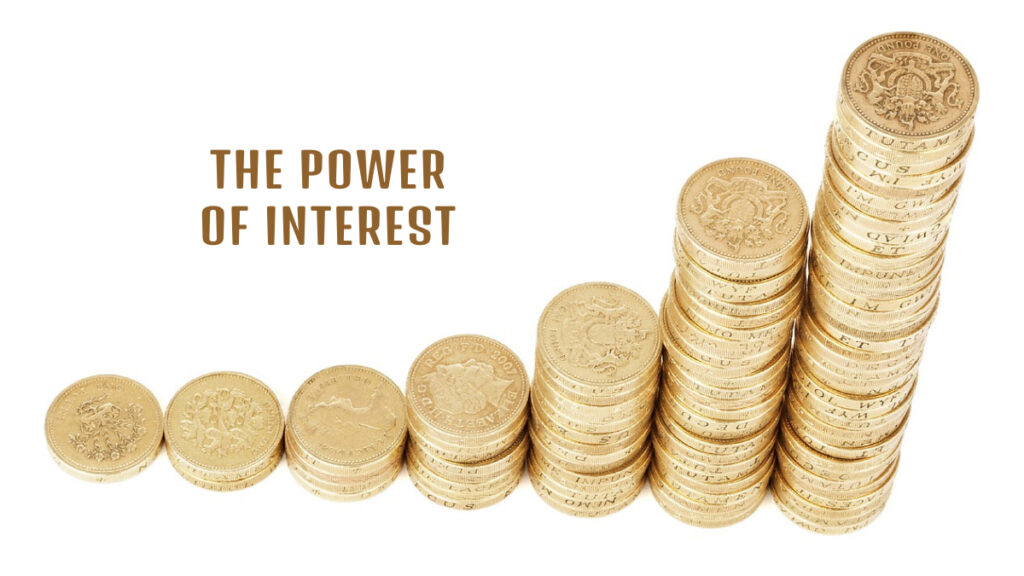
In today’s fast-paced world, the mantra of “work hard, earn more” is slowly being replaced by a more strategic approach to personal finance: “make your money work for you.” This concept isn’t about earning more through endless hours of labour but leveraging the power of interest to grow wealth effortlessly. This blog delves into how you can harness the power of interest to ensure your money works harder than you do, unlocking the potential for financial freedom and security.
Understanding Interest: The Basics
Interest, at its core, is the cost of borrowing money or the return on investment for lending money. There are two primary types of interest: simple interest and compound interest.
Simple Interest: Simple interest is calculated on the principal amount of a loan or investment.
The formula for simple interest is=P×R×T
where:
- P is the principal amount,
- R is the annual interest rate,
- T is the time the money is invested or borrowed for, in years.
For example, if you invest $1,000 at an annual interest rate of 5% for 3 years, the simple interest earned would be:
Simple Interest =$1,000×0.05×3=$150
Compound Interest: Compound interest, on the other hand, is calculated on the initial principal and also on the accumulated interest from previous periods. This means your money grows exponentially over time.
The formula for compound interest is A =P{1+ (r/n)}^(nt)
where:
- A is the amount of money accumulated after n years, including interest.
- P is the principal amount.
- r is the annual interest rate (decimal).
- n is the number of times that interest is compounded per year.
- t is the time the money is invested for, in years.
Using the same example as above, if you invest $1,000 at an annual interest rate of 5%, compounded annually, for 3 years, the compound interest would be:
A=$1,000{1+(0.05/1)}^(1×3)=$1,000×1.157625=$1,157.63
The compound interest earned would be $157.63, slightly more than the simple interest, and this difference grows significantly over time.
The Magic of Compound Interest
Albert Einstein reportedly called compound interest the “eighth wonder of the world,” and for good reason. Its magic lies in its exponential growth, which can significantly enhance your wealth if leveraged correctly. Understanding how compound interest works and employing strategies to maximize its benefits can transform your financial landscape. Here’s an explanation of how you can make the most of compound interest:
Start Early: The earlier you start investing, the more time your money has to grow through the power of compound interest. Time is a critical factor in the compound interest formula, and starting early can lead to substantial financial advantages.
Example: Consider two individuals, Alice and Bob. Alice starts investing $1,000 annually at age 25, while Bob starts at age 35. Both earn an annual return of 7%.
- Alice: By the age of 65, Alice’s investment grows to approximately $213,000.
- Bob: By the age of 65, Bob’s investment grows to around $98,000.
The ten-year difference in starting age translates to a significant disparity in the final amount, demonstrating the impact of compound interest over time.
Be Consistent: Regular contributions to your investment accounts can dramatically increase your returns. Consistency in investing, even with small amounts, can lead to substantial growth due to the cumulative effect of compound interest.
Example: If you contribute $100 monthly to an investment account with a 6% annual return:
- After 30 years, the investment grows to nearly $100,000.
This example illustrates how small, regular investments can accumulate into a significant sum over time.
Reinvest Your Earnings: Reinvesting your earnings ensures that your returns generate their own returns, fuelling exponential growth. This cycle of reinvestment is what makes compound interest so powerful. Earnings from investments, such as dividends from stocks, interest from bonds, and returns from mutual funds, should ideally be reinvested to maximize growth.
Example: Suppose you invest in a dividend-paying stock that yields a 5% annual dividend. If you own $10,000 worth of stock, you would earn $500 in dividends the first year. Instead of taking this money out, you reinvest it to buy more shares of the stock.
- Year 1: $10,000 + $500 (dividends) = $10,500
- Year 2: $10,500 + $525 (dividends on $10,500) = $11,025
This cycle continues, with each year’s dividends increasing because they are calculated on a larger amount due to reinvestment. Over time, the reinvested dividends contribute to substantial growth in the value of your investment.
Minimize Withdrawals: Withdrawing funds from your investments can interrupt the compounding process and reduce your potential gains. It’s essential to maintain discipline and avoid dipping into your investments unless absolutely necessary.
Example: Suppose you have a retirement account growing at 8% annually. If you withdraw $10,000 at age 40, you lose not only the principal amount but also the compound interest that amount would have generated over the years.
- Without Withdrawal: By age 65, the $10,000 could have grown to approximately $68,485.
Avoiding unnecessary withdrawals helps to maintain the compounding process, allowing your investments to grow to their full potential.
The Impact of Compound Interest Over Time: The true power of compound interest becomes evident when viewed over long periods. The longer your money remains invested, the more pronounced the compounding effect becomes. Here’s a hypothetical example of different investment horizons:
- 10 years: An initial $10,000 investment at an 8% annual return grows to about $21,589.
- 20 years: The same investment grows to approximately $46,610.
- 30 years: The investment balloons to around $100,627.
- 40 years: The investment swells to an impressive $217,245.
This exponential growth showcases why starting early, staying consistent, reinvesting earnings, and minimizing withdrawals are crucial strategies for maximizing the power of compound interest.
Additional Considerations
Understand the Frequency of Compounding: The frequency with which interest is compounded (annually, semi-annually, quarterly, monthly, daily) can significantly impact the growth of your investment. More frequent compounding periods result in higher returns.
Example: If $1,000 is invested at an annual interest rate of 5%, the amount after one year differs based on compounding frequency:
- Annually: =1050
- Semi-Annually: =1050.63
- Quarterly: =1050.95
- Monthly: =1051.16
While the differences might seem small over one year, they become significant over longer periods.
Leverage Tax-Advantaged Accounts: Tax-advantaged accounts, such as IRAs, 401(k)s, Roth IRAs, or similar plans can enhance the benefits of compound interest by reducing the tax impact on your investments. Contributions to traditional retirement accounts often grow tax-deferred, while Roth accounts offer tax-free growth and withdrawals.
Example: Contributing $5,000 annually to a Roth IRA with a 7% annual return:
- Tax-Free Growth: After 40 years, the investment grows to approximately $1,068,048, with tax-free withdrawals.
Strategies to Maximize the Power of Interest
To truly make your money work harder than you do, you need to adopt effective strategies that maximize the power of interest.
- High-Interest Savings Accounts: A high-interest savings account can be a great starting point. These accounts offer higher interest rates compared to traditional savings accounts. While the returns might not be as high as other investment options, they provide a safe and easily accessible place to park your money while earning interest.
- Certificates of Deposit (CDs): CDs are time deposits offered by banks with fixed interest rates and fixed maturity dates. They typically offer higher interest rates than regular savings accounts. The catch is that you commit to leaving your money in the CD for a specified period. Withdrawing early can result in penalties, but the returns are guaranteed and can be a secure way to grow your savings.
- Bonds: Bonds are debt securities issued by entities such as governments or corporations. When you buy a bond, you’re essentially lending money to the issuer in exchange for periodic interest payments and the return of the bond’s face value at maturity. Bonds can provide a steady income stream and are generally less volatile than stocks.
- Stock Market Investments: Investing in the stock market can yield higher returns compared to other investment vehicles, although it comes with higher risk. Stocks have the potential for significant growth through price appreciation and dividends. Diversifying your investments across various sectors and companies can mitigate risks and maximize returns.
- Mutual Funds and ETFs: Mutual funds and exchange-traded funds (ETFs) pool money from many investors to invest in a diversified portfolio of stocks, bonds, or other assets. These funds are managed by professional portfolio managers and can provide broad market exposure, reducing the risk of individual investments.
- Retirement Accounts: Retirement accounts like 401(k)s and IRAs offer tax advantages that can enhance your investment growth. Contributions to traditional retirement accounts are often tax-deductible, and the investments grow tax-deferred until withdrawal. Roth retirement accounts, on the other hand, provide tax-free growth and withdrawals, assuming certain conditions are met.
The Rule of 72: Estimating Doubling Time
The Rule of 72 is a simple way to estimate how long it will take for an investment to double at a given annual interest rate. By dividing 72 by the annual interest rate, you get the approximate number of years required for the investment to double.
For example, if your investment earns a 6% annual return:
Doubling Time=72/6=12 years
This rule can help you set realistic expectations and plan your financial goals accordingly.
Avoiding Common Pitfalls
While the power of interest is formidable, it’s essential to avoid common pitfalls that can undermine your financial growth.
- High-Interest Debt: Carrying high-interest debt, such as credit card debt, can negate the benefits of compound interest on your investments. The interest you pay on debt is often higher than the returns you earn on investments, leading to a net loss. Prioritize paying off high-interest debt to improve your overall financial health.
- Market Volatility: Market investments come with inherent risks, including volatility. It’s crucial to stay informed and make decisions based on your risk tolerance and financial goals. Diversifying your investments can help mitigate some risks, but it’s also important to avoid making impulsive decisions during market downturns.
- Inflation: Inflation erodes the purchasing power of your money over time. Ensuring your investments outpace inflation is critical for maintaining and growing your wealth. While traditional savings accounts may not offer sufficient returns to combat inflation, investing in assets with higher growth potential, such as stocks or real estate, can help.
- Fees and Expenses: Investment fees and expenses can eat into your returns. Be mindful of management fees, transaction costs, and other charges associated with your investments. Opt for low-cost investment options when possible to maximize your net returns.
Conclusion: Letting Your Money Work for You
The power of interest, particularly compound interest, is a potent tool for growing your wealth. By understanding and leveraging this financial principle, you can make your money work harder than you do, leading to financial stability and the potential for significant wealth accumulation. Start early, invest consistently, reinvest your earnings, and choose your investment vehicles wisely to harness the full potential of interest. Avoid common financial pitfalls and keep a long-term perspective to ensure your financial journey is both prosperous and secure. Remember, the key to making your money work for you lies in disciplined, informed, and strategic financial decisions.