
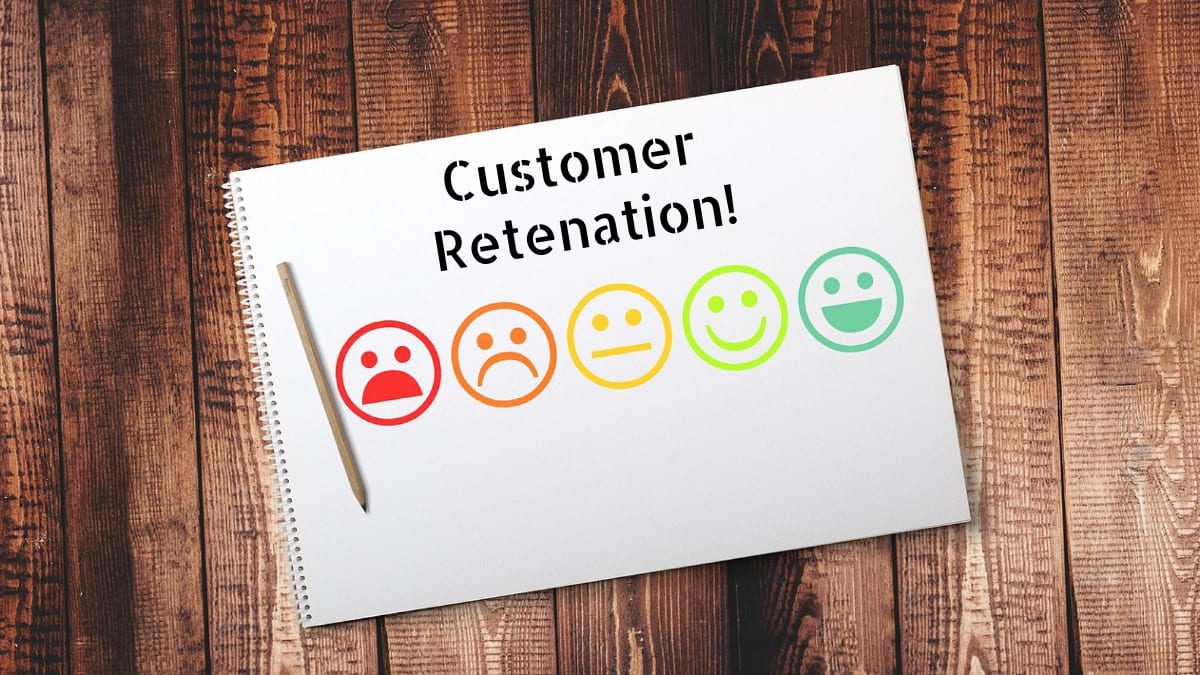
Legendary business expert Peter Drucker famously wrote many years ago that the purpose of business is to create and keep a customer. But even though no one would argue with the famous business maxim, the fact is that for most businesses, the rate of customer churn is terrible. The churn rate, sometimes known as the attrition rate, is the rate at which customers stop doing business with a company over a given period of time.
This is unfortunate because high retention is generally the deciding factor in achieving strong profitability, for any kind of company. A widely cited research by Frederick Reichheld of Bain & Company has shown that a 5 percent increase in customer retention rates increases profits by anywhere from 25 to 95 percent. The flip side is that losing customers comes at a great cost. It takes so much money to acquire a new customer, especially at a time when advertising costs are skyrocketing. And the more you have to spend upfront to attract new customers, the more costly the loss of each customer becomes.
“Even if you are on the right track, you’ll get run over if you just sit there.” – Will Rodgers
Two Case Studies
Homejoy, a home cleaning start-up, once had a bright future, raising more than $64 million from some of Silicon Valley’s best investors. But the company is a prime example of the danger of poor retention. Despite having attracted an impressive number of initial customers through an aggressive promotional discounting strategy, Homejoy failed to live up to its promise, delivering service that customers described as “hit or miss.” In addition, many customers couldn’t swallow a steep jump in price from a promotional first cleaning, at a special discounted price, to the regular price for the service; the result being that only 15 to 20 percent of customers ended up ordering a second cleaning. Meanwhile, Homejoy’s competitors were achieving retention rates double those numbers. Making matters still worse, the company had spent heavily on customer acquisition. This combination of high acquisition costs and low retention led to its rapid demise.
Amazon, in contrast, is perhaps the gold standard example of retention expertise. The company’s subscription program, Amazon Prime, has been a particular triumph in retaining customers, largely due to the two-day free shipping included on thousands of items, but also many ancillary benefits that have been added to the program, such as its video and music streaming services. Seventy-three percent of free trial subscribers convert to paying subscribers, and ninety-one percent of first-year subscribers renew for a second year. What’s even more impressive is that retention continues to increase the longer customers have been subscribers, with the renewal rate for customers heading into their third year in the program at an almost unheard-of high of 96 percent.
The Compounding Value of Retention
It should go without saying that the longer you retain customers, the more opportunity you have to earn more revenue from them, whether that’s from selling them more items or services, from ongoing subscription renewals, or from bringing in more advertising revenue due to advertisers wanting to target your large and loyal customer base. If you consider the fact that subscribers in Amazon’s Prime program purchase more than twice as much as non–Prime members, it becomes easy to imagine the compounding gains in revenue one can see from high retention rates. In fact, some analysts believe that without Amazon Prime, the company would not be profitable.
Increasing the average revenue you earn per customer in turn allows you to invest more in the growth. Amazon’s reliable earnings per subscriber have allowed the company to invest significantly in continuing to build up the Prime program, such as by adding original programming to its video streaming service. The longer you retain customers, the more you can learn about them and their needs and desires, and thus the better you can tailor services and promotions to them, which of course allows you to earn more from them. When Amazon launched Prime, some analysts argued that the company would be spending too much on free two-day shipping and discounts for Prime-eligible items and therefore the program would be unsustainable. But Amazon saw that with so many subscribers renewing and spending far above average, the program was on a highly profitable trajectory.
Yet another benefit of higher retention is that it allows you to see stronger results from both word of mouth and your viral marketing efforts because the longer users stay with your product, the more opportunities they’ll have to talk about it and even to show it to friends and others.
Powerful Habit Creation
Retention is to solidify users’ commitment to your product by making the use of it habitual for them. For some products, this means making use a daily or weekly habit, while for others, the use might be much less frequent, but simply means that regardless of frequency, whenever that customer wants to buy a product or use a service of the type you sell, they turn to you rather than a competitor. They are, in other words, loyal to you. The key to habit formation is convincing customers of the ongoing rewards they will receive from returning to your product or service.
To understand how habit formation works, think of the psychology of joining a gym. When people first decide they want to get in shape, they often need an external trigger to psych themselves up to go and work out, maybe setting alarms in their calendar or committing to a schedule with a trainer or friend. But once they receive enough of the rewards from going—feeling healthier, seeing how their muscles are firming up and their weight dropping—many people don’t need these external prompts anymore.
Amazon’s Prime program is a typical case of powerful habit creation. Recall that many analysts predicted the program would fail because the free shipping would be too expensive for Amazon to sustain. They proved wrong because of two specially designed rewards of the program. Every single time subscribers purchase an item included in the program—meaningful savings in the form of free shipping and instant gratification with two-day delivery. When they make a purchase and are shown how much they’ve saved due to the free shipping (and often additional savings from the item list price), they say to themselves, See, the $99 is so worth it because I’m saving so much.
In fact, Vijay Ravindran, the director of Amazon’s ordering systems, told Brad Stone, the author of The Everything Store, that the subscription fee “[w]as never about the seventy-nine dollars. It was really about changing people’s mentality so they wouldn’t shop anywhere else.” Indeed, the Prime program proved so habit-forming that, according to a Businessweek story, while Amazon had forecast that it would take two years to break even on the program, it did so within just three months.
Way Ahead
Of course, this model won’t work for everyone; business growth teams should map out their own engagement loop based on the core value their product delivers, and then set out to measure, monitor, and optimize it. By using data and experimenting with triggers that lead to the most valuable rewards for customers, the team can ascertain how to build habit formation around their product.
One general rule that holds true across most product types is that improving the perceived value of the rewards leads to greater retention. To make a product or service more habit-forming, growth teams should experiment with providing customers with a range of rewards, encouraging them to take action to receive them; the more action taken, the greater rewards, and the greater perceived value. They should do cohort analysis about which customers are using the product most keenly and what features they’re using most, and also which features provide the greatest reward and subsequent retention rate.
The team should also identify which customers are less active who might be motivated to make more use of the product if only they were exposed to more compelling rewards. (Excerpt is from “Hacking Growth: How Today’s Fastest-Growing Companies Drive Breakout Success” by Sean Ellis).
Featured reads

Mindful Shots, Volume-1
Most people live their entire lives without truly understanding how their minds work or the immense power they hold within. Fewer than two percent of people can confidently answer questions like: What drives my thoughts? Why do I feel resistance to my own goals? You’ve likely experienced moments when you wanted to take a bold step—perhaps starting a new business or making a life-changing decision—only to hear an inner voice warning you of failure. That voice often justifies its fears by recalling countless stories of others’ setbacks—family members, friends, society, even distant headlines. It’s as if your mind maintains a detailed archive of every failure around you, replaying them to keep you from moving forward. But what if this inner voice could be understood, reprogrammed, and even turned into your greatest ally? Imagine what would be possible if both your conscious intentions and subconscious patterns worked together instead of pulling in opposite directions. This collection, Mindful Shots, brings together some of the most insightful writings on mindfulness from Fastlane Freedom. Each piece explores practical and scientific perspectives on how the mind shapes our choices, influences our health, and even participates in physical healing. Through research-backed insights and timeless wisdom, this book will help you see that the mind isn’t just a passive observer—it’s an active force capable of changing your reality. By learning how to quiet the noise, shift your mental inputs, and harness your inner voice, you’ll gain a clearer path to personal growth, emotional balance, and a deeper understanding of what mindful living truly means.

Parenting Essentials
Parenting is a journey—one of the most rewarding, challenging, and transformative experiences life has to offer. But it’s not a path we are meant to walk alone. Essential Parenting was born out of a deep desire to support and empower parents at every stage of their journey, from the early days of pregnancy to the complex teenage years. Drawing insights from the Fastlane Freedom platform, this book brings together wisdom, mindfulness, and practical strategies to help you raise confident, emotionally strong, and value-driven children. At Fastlane Freedom, we believe that conscious parenting begins with self-awareness. Children absorb more from our behaviour than our words. It’s in our everyday actions—our calm during chaos, our patience in moments of frustration, our consistency in values—that they find their foundation. Parenting is not about being perfect; it’s about being present, intentional, and compassionate.

The Wealth Code, Volume-1
The Wealth Code: Volume-1 is a personal development and financial education book written by Vinod Singh. It is designed to empower readers by teaching them principles of wealth creation, financial freedom, and personal growth. The book offers practical strategies to achieve financial success, with a vision to uplift and transform the lives of millions by promoting financial literacy and entrepreneurial thinking. Mr. Singh's approach is rooted in inspiring individuals to take control of their financial destinies while cultivating a mindset focused on long-term success and abundance.