From childhood, most of us are quietly sold the idea that life should be linear — that if we study well, work hard, make responsible choices, and plan our days carefully, the future will unfold predictably. We grow up imagining that stability is the reward for discipline, the natural destination for good decisions. Yet reality, in its wild honesty, rarely follows that script. Jobs that once felt secure vanish overnight. Relationships change direction. Health falters. Economies swing. Even the ground beneath our feet — both literally and metaphorically — shifts without warning.
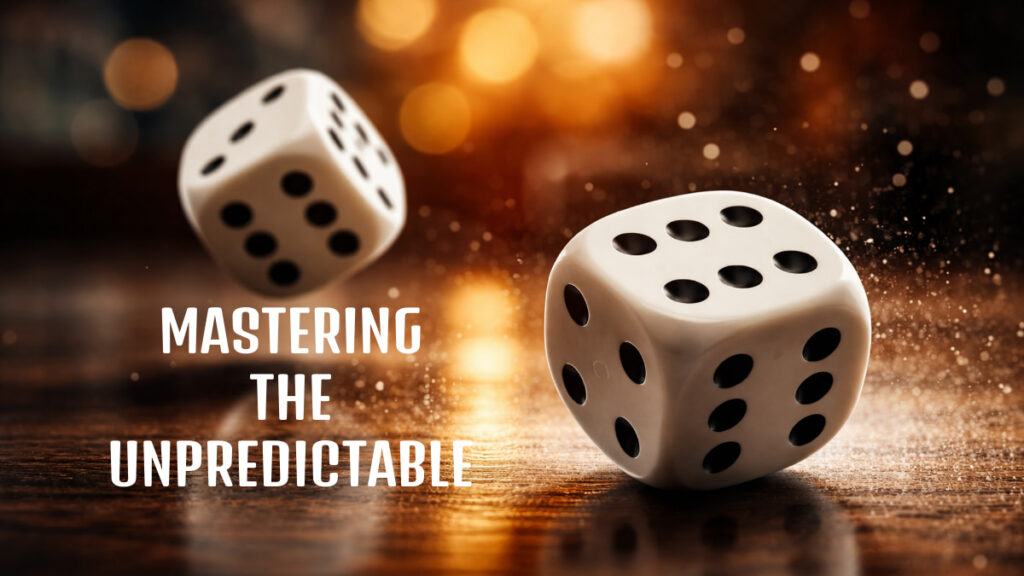
We keep chasing a state of life that doesn’t actually exist: perfect stability. It’s like trying to hold water in your hands. The tighter you grip, the more it slips away. The truth is that life is not built to stay steady. It is designed to evolve, bend, and surprise. The sooner we understand that stability is not the natural state of existence, the sooner we can stop fearing instability — and start mastering it.
The myth of stability creates disappointment not because life fails to be predictable, but because our expectations fail to be flexible. Once we release the illusion that life owes us constancy, we open the door to resilience. Change stops feeling like punishment, and begins to feel like participation in something much bigger — the constant unfolding of life itself.
And perhaps, this realization is the beginning of emotional maturity — understanding that the goal isn’t to avoid life’s waves, but to learn to surf them with grace. The sea is never still, yet those who learn to move with it find beauty even in its turbulence.
Bruce Lee once said: “Be like water, my friend. Empty your mind, be formless, shapeless, like water. You put water into a cup, it becomes the cup.”
This timeless truth reminds us that flexibility, not rigidity, is the essence of survival — and the secret to peace in an unpredictable world.
The Emotional Earthquake of Uncertainty
When life begins to wobble — whether through loss, failure, illness, or unexpected change — our first reaction is usually fear. The mind scrambles for control. The heart panics for safety. Uncertainty feels like standing in a dark room, trying to find the light switch. Our routines, which once gave comfort, start to feel meaningless. It’s tempting to interpret the chaos as a personal failure: Why can’t I keep things together? Why is this happening to me?
But uncertainty isn’t a verdict on our worth — it’s simply proof that we are alive. Every storm, every collapse, every unexpected turn is an invitation to rediscover who we are beyond our plans. Fear during uncertainty is natural, but staying trapped in that fear is optional. The more we resist uncertainty, the heavier it becomes. But when we allow it, when we stop demanding answers right away, something subtle shifts inside us. Acceptance doesn’t remove the storm, but it gives us a place to stand within it.
What’s crucial to remember is that emotional chaos is not a sign of weakness. It is part of the recalibration process. Like an earthquake, it shakes what no longer fits, what has become too rigid. It disrupts patterns that have outlived their purpose. Out of that shaking comes a deeper kind of strength — the kind that can only be built when the surface cracks open.
And yet, even in uncertainty, small things still shine — a conversation that brings comfort, a sunrise that insists on happening, a moment of laughter that cuts through the heaviness. Life, even at its most unpredictable, leaves traces of steadiness. Sometimes, holding onto those small certainties — not because they solve the chaos, but because they remind us of beauty — becomes an act of courage.
Flexibility: The Hidden Superpower
The people who thrive in uncertain times are not necessarily the strongest, richest, or smartest. They are the most adaptable. Flexibility — emotional, mental, and practical — is what keeps us steady when the world feels unstable. Think of a tree in a storm: the one that survives isn’t the stiffest, but the one that bends.
Adaptability begins with how we interpret change. When something unexpected happens, the instinct is to label it as bad or good. But flexibility requires us to drop those labels and simply ask, What can this teach me? How can I move with this instead of against it? Every twist in life offers a chance to develop new muscles — patience, creativity, courage, humility.
Flexibility also means redefining success. In stable times, success might mean progress according to plan. In unpredictable times, success might mean endurance, or learning, or even the ability to laugh despite the chaos. By staying fluid in our definitions, we stay alive to possibilities we might never have considered before.
And most importantly, flexibility grows through practice. It’s built when we let small daily challenges train us for the bigger ones. When traffic ruins our schedule, when a project fails, when a plan collapses — each moment becomes a rehearsal in letting go, adjusting, and trying again.
True flexibility is not about surrendering your dreams. It’s about learning multiple paths to reach them. The river always finds its way to the sea — not because it forces the land to change, but because it keeps flowing regardless of the obstacles.
Finding Calm in Motion
When everything around you is changing, the idea of finding calm can feel almost impossible. But calm is not the absence of movement — it’s the ability to stay centered while moving. The calm we need in chaos doesn’t come from freezing life into predictability; it comes from learning to breathe in rhythm with its motion.
Finding calm begins with attention. Our minds often amplify instability by imagining the worst possible outcomes. We spin stories faster than events themselves. By returning attention to the present — even something as simple as feeling the weight of your body in a chair, or the sound of your breath — we break the chain of mental panic. The present moment may not be perfect, but it’s usually bearable.
Rituals also help. When life feels unpredictable, grounding habits — a morning walk, journaling, prayer, or even a cup of coffee in silence — give us small islands of control. These rituals remind us that while we can’t command the storm, we can manage how we stand in it. Over time, calm stops being something we have to search for. It becomes a reflex, a habit built from hundreds of moments of choosing steadiness over panic.
Calm is not passivity. It is an active strength. It allows us to make clear decisions when others are reacting in fear. It helps us listen to life rather than fight it. And in that listening, we often discover quiet directions forward that the noise of panic would have drowned out.
In truth, calm is not found in escaping motion, but in learning its rhythm. Just as a dancer finds balance through movement, we find inner stillness not by stopping the world, but by moving with its unpredictable beat.
Resilience: The Strength Built in the Broken Places
Resilience is often mistaken for toughness — the ability to endure anything without showing emotion. But true resilience is not hardness; it’s elasticity. It’s the ability to stretch, to bend, and still return to shape. It’s not pretending we’re unaffected by life’s blows, but rather allowing those blows to reshape us into something wiser.
Every person who has ever rebuilt after loss, failure, or heartbreak knows that resilience doesn’t come from comfort. It is born in the uncomfortable spaces — the moments when we question everything, when we cry, when we doubt, when we start again from nothing. Pain refines us, if we let it. It burns away illusions, revealing the core of what truly matters.
Viktor E. Frankl wrote: “When we are no longer able to change a situation, we are challenged to change ourselves.”
This truth carries the essence of resilience — that the power to adapt often begins where control ends.
Resilience grows when we remember that we have survived before. Every past crisis we once feared we’d never overcome has already become a story we tell. That memory is proof that we are capable of more than we think. Each challenge adds to that library of endurance. When the next unpredictable moment arrives, we can draw strength not from control, but from history — from the fact that we’ve danced with chaos before and lived to tell the tale.
But resilience also includes softness — the ability to feel, to rest, to ask for help. Strength isn’t built in isolation. Sometimes resilience is simply allowing others to hold you when you’re tired of holding yourself. True endurance isn’t only about standing tall; it’s also about knowing when to kneel, breathe, and begin again.
Reframing Change as an Ally
Change is often treated like an enemy — something to resist, delay, or negotiate with. But what if we reframed it as an ally? Every unpredictable turn, no matter how uncomfortable, carries a message: something in your life is ready to evolve.
When a door closes, it might be forcing you toward a path you wouldn’t have chosen but deeply need. When a plan fails, it might be clearing space for something more aligned. When stability vanishes, it might be urging you to discover a deeper source of strength — one that doesn’t depend on external circumstances.
Reframing change doesn’t mean romanticizing suffering. It simply means recognizing that every period of instability has hidden gifts. Growth, wisdom, empathy, creativity — these qualities rarely emerge in comfort. They are carved out in the unpredictable zones of life. The caterpillar doesn’t become a butterfly by staying comfortable. Transformation always requires disruption.
When we start seeing instability not as an interruption but as part of the rhythm of living, we stop clinging so tightly to what was. We begin to meet change with curiosity instead of fear. And that simple shift — from resistance to curiosity — transforms everything.
Even nature reminds us of this truth. Seasons don’t apologize for changing. Trees shed leaves without resistance, trusting that new ones will come. If the natural world thrives on change, why should we believe that our stability depends on staying the same?
Living Courageously in an Unstable World
Mastering the unpredictable doesn’t mean becoming immune to fear or chaos. It means learning to move through them with grace. Courage, in this context, is not the absence of fear — it is the willingness to act even when fear is present. It’s the quiet confidence that even if life refuses to stay stable, we can still stay steady within ourselves.
Courageous living means embracing impermanence as the natural state of things. It means loving people and projects fully, even knowing they might change. It means showing up every day without guarantees. When we live this way, life becomes less about control and more about participation. We stop trying to predict the ocean, and start learning to surf its waves.
Maya Angelou once said: “I can be changed by what happens to me. But I refuse to be reduced by it.”
Her words echo the essence of courage — that change may shape us, but it need not define or diminish us.
The most inspiring people are rarely those who never faced instability — they are the ones who turned instability into wisdom. They refused to let uncertainty shrink them. Instead, they let it shape them into something more alive, more compassionate, more human.
To live courageously is to trust that even in the unpredictable, there is meaning. There is movement. There is growth. Every twist and turn, every loss and surprise, is an invitation to become more aware, more awake, more resilient. Stability may be rare, but strength — the kind that comes from embracing uncertainty — can be permanent.
And perhaps that’s the secret of mastering the unpredictable: not trying to win against it, but walking with it. Not demanding certainty, but developing clarity. Not expecting the world to calm down, but learning to remain calm enough to see it clearly.
Building a Life That Breathes With Change
Beyond surviving unpredictability lies something even greater — the art of designing a life that breathes with change. This doesn’t mean giving up all structure or planning nothing; it means creating systems flexible enough to adapt. A mindset that welcomes both growth and pause. A lifestyle that leaves room for surprise.
We can cultivate this by aligning with principles rather than rigid plans. Principles like kindness, consistency, curiosity, and courage never expire, even when circumstances do. When you build your life around values instead of events, unpredictability stops being a threat. It becomes part of the creative process.
A flexible life is one that learns to dance between planning and surrender — making clear choices, but holding outcomes lightly. It’s the kind of life that stays open, not because it lacks direction, but because it trusts itself to navigate whatever directions appear.
Closing Reflection
In the end, mastering the unpredictable isn’t about taming life — it’s about trusting it. We learn that chaos doesn’t arrive to destroy us, but to reveal what can’t be shaken. Every storm that breaks us also shapes us. Every unexpected turn becomes a bridge to a deeper strength. Stability may be fleeting, but resilience, courage, and faith are not.
When we stop wishing for life to stay the same and start embracing its rhythm, peace quietly returns. The world doesn’t have to be calm for us to be centered. The true art of living lies in flowing gracefully with the unknown — and finding, within every wave, the steady pulse of our own strength.