• Author
  • Copyright Report
  • Privacy Policy
  • Terms & Condition
  • Contact
  • About
Wednesday, June 24, 2026
Fastlane Freedom
No Result
View All Result
  • Mindfulness
  • Money
  • Grow Business
  • Essential Reading
  • Popular Quotes
  • Student
  • Parenting
  • Videos
  • About
  • Contact
  • Mindfulness
  • Money
  • Grow Business
  • Essential Reading
  • Popular Quotes
  • Student
  • Parenting
  • Videos
  • About
  • Contact
No Result
View All Result
Fastlane Freedom
No Result
View All Result
  • Author
  • Copyright Report
  • Privacy Policy
  • Terms & Condition
  • Contact
  • About

Home » What is Inside and Outside Money? Who is Owning the Most?

What is Inside and Outside Money? Who is Owning the Most?

Vinod Singh by Vinod Singh
May 9, 2022
Reading Time: 5 mins read
A A
0
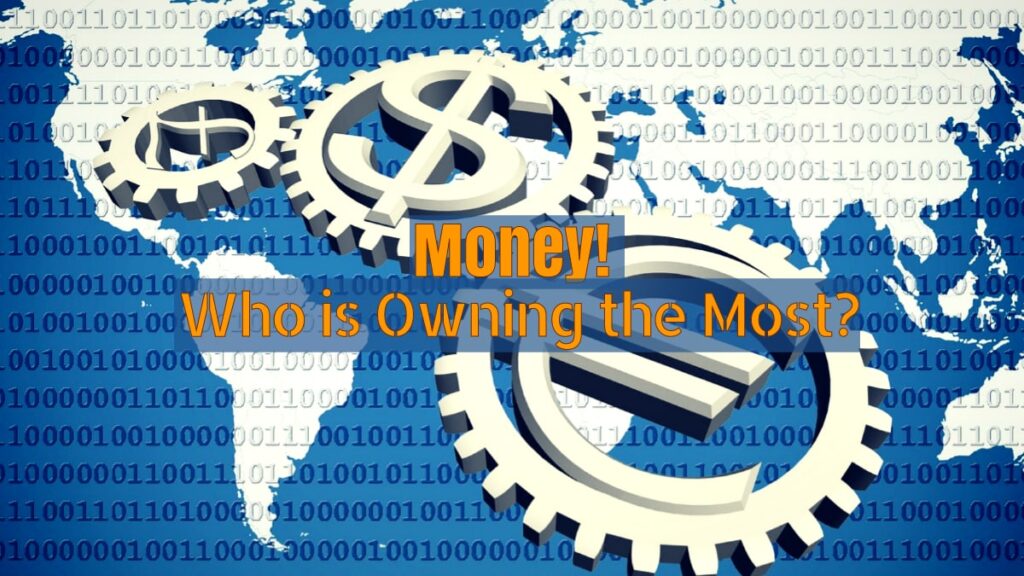
Money- Who is owning the most

Table of Contents

  • Fiat Money
  • Outside Money
  • Inside Money
  • Measures of Money
  • Money in the World

Money serves three basic functions: as a unit of account, a medium of exchange, and a store of value. A unit of account is used to denominate the prices of goods and services, creating a concrete way to express value. A medium of exchange can be used in financial transactions, including buying goods and services. A store of value is a way to maintain the purchasing power of one’s earnings or wealth over time.

Fiat Money

Money has no singular definition, it is popularly associated with currency banknotes and coins—in other words, cash. When central bankers, economists, and financial market participants talk about money, they have a much broader concept in mind. Monetary aggregates that are useful for evaluating the stance and outcomes of monetary policy, including the extent to which the creation of money supports real economic activity and affects inflation, can be classified into two categories as outside money and inside money.

Outside Money

The first category, outside money, corresponds to the popular conception. This is money issued by a central bank or other entity authorized by the government or central bank. This is called outside money because it is created outside the private sector. Such money is also referred to as fiat money because it is created by an official authority and is usually not backed by anything other than faith in the central bank or the government that stands behind it.

Fiat money comes with one major risk. If a profligate government spends more than it takes in through tax revenues, it can (through the national central bank) simply issue more currency to pay for its expenditures on various goods and services. This would cause the prices of an economy’s output to rise quickly—high inflation—and erode the purchasing power of money. The government can of course then print even more money to get the goods and services it wants, but trying to outrun inflation in this manner can quickly end in hyperinflation and economic collapse.

This loss of confidence in outside money can damage an economy because people and businesses might then lack a reliable and trustworthy medium of exchange. To avoid this problem, outside money can be explicitly backed by assets or commodities such as gold and silver. In other words, if the central bank ties its hands and limits its own ability to print money wantonly, confidence in the currency can be maintained. This was the case during the gold standard period when the central banks could issue currency only if they had enough gold in their vaults to back such currency. This approach was meant to instill monetary discipline—the central bank could not, in this setup, issue currency at will or on the government’s command.

Backing fiat money with gold or another currency has come to be seen as constraining for central banks that might need to adjust the money supply on short notice to support their economies and financial systems. Most countries have therefore abandoned any form of such backing. There are a few exceptions. A handful of economies still maintain currency board arrangements under which their domestic currencies are fully backed by a foreign one. For instance, Hong Kong has a currency board, with its central bank issuing Hong Kong dollars that are backed one for one with US dollars. Bulgaria has a currency board as well, with the issuance of the Bulgarian lev fully backed by euros. Setting a few such exceptions aside, though, unbacked fiat money has become the norm in modern economies.

Inside Money

Money is created not just by a nation’s central bank but by the private sector as well. When a commercial bank approves a loan to a household or a business and then credits that amount to the borrower’s account, it has created money in the form of a bank deposit. That money circulates within the banking system as the money is used to purchase goods and services, passing through various accounts at multiple other institutions. Thus, inside money is created by entities within the private sector and circulates among private businesses and households. It is, in effect, an asset representing or backed by any form of private credit, and it circulates as a medium of exchange.

Measures of Money

Measures of the overall amount of money in an economy, referred to as monetary aggregates, serve as both indicators and determinants of economic activity and inflation. Too little money creation, including limited credit creation by commercial banks, can dampen economic activity. Too much money creation can result in rising inflation.

Monetary aggregates typically include both outside and inside money—money issued by the central bank as well as bank deposits. Bank deposits come in various forms. They can range from money market accounts and demand deposits, which allow depositors to take money out at will, to longer-term fixed deposits, in which the money is locked in for longer periods (in some cases the deposit can be taken out before the maturity date by paying a penalty).

No template for reporting such data on monetary aggregates is followed consistently by all countries. In general, M0 characterizes currency in circulation (banknotes and coins). Certain types of bank deposits share some of the characteristics of cash—they are easily accessible and can be used to make payments. A measure of money that encompasses such deposits is M1. M1 typically includes M0, demand deposits, and checking deposits.

A broader monetary aggregate, M2, is popular in academic and policy circles because it includes central bank money and various short-term deposits, and most countries by and large define it similarly. Not surprisingly, M2 is sometimes referred to simply as broad money.

Money in the World

“The whole of the global economy is based on supplying the cravings of two percent of the world’s population.” -Bill Bryson

How much money is there in the world, and which countries account for the majority of this money? It is an interesting exercise to compare the shares of various countries in global money totals and to contrast those with their shares in global GDP.

Money Distribution

The above figure shows the global distribution of currency (banknotes and coins in circulation) or, equivalently, M0. The United States accounts for 24 percent of the global total of $8.4 trillion, about the same as its share of global GDP in 2020. The eurozone accounts for 20 percent, although its share of global GDP is only 15 percent, and China accounts for 15 percent, roughly in line with its 16 percent share of global GDP.

A sizable fraction of the currency issued by major advanced economies, particularly US dollars, and euros, is held outside their borders. Recent estimates suggest, for instance, that more than half of all US currency is held abroad. In any event, US dollars, euros, Chinese renminbi, and Japanese yen together constitute nearly three-quarters of the global supply of currency. (Excerpt is from ‘The Future of Money’ by Eswar S. Prasad)

Featured reads

Mindful Shots, Volume-1 cover
Mindful Shots, Volume-1
Vinod Singh
Self-Help, Mindfulness

Mindful Shots, Volume-1

Vinod Singh

RELATED POSTS

Stop Over-Conscious Parenting: Raising Confident Kids

Great Entrepreneurs Aren’t Perfect—But They Build the Future

Why the World Needs More Risk-Takers, Not More Critics

Escaping the Traffic Jam of Stress, Salary & Spreadsheets

Why Saving Money Is Like Dieting—Easier Said Than Done

Meetings: Where Minutes Are Taken and Hours Are Lost

4.5 · reviews

Most people live their entire lives without truly understanding how their minds work or the immense power they hold within. Fewer than two percent of people can confidently answer questions like: What drives my thoughts? Why do I feel resistance to my own goals? You’ve likely experienced moments when you wanted to take a bold step—perhaps starting a new business or making a life-changing decision—only to hear an inner voice warning you of failure. That voice often justifies its fears by recalling countless stories of others’ setbacks—family members, friends, society, even distant headlines. It’s as if your mind maintains a detailed archive of every failure around you, replaying them to keep you from moving forward. But what if this inner voice could be understood, reprogrammed, and even turned into your greatest ally? Imagine what would be possible if both your conscious intentions and subconscious patterns worked together instead of pulling in opposite directions. This collection, Mindful Shots, brings together some of the most insightful writings on mindfulness from Fastlane Freedom. Each piece explores practical and scientific perspectives on how the mind shapes our choices, influences our health, and even participates in physical healing. Through research-backed insights and timeless wisdom, this book will help you see that the mind isn’t just a passive observer—it’s an active force capable of changing your reality. By learning how to quiet the noise, shift your mental inputs, and harness your inner voice, you’ll gain a clearer path to personal growth, emotional balance, and a deeper understanding of what mindful living truly means.

Amazon Flipkart
Parenting Essentials cover
Parenting Essentials
Vinod Singh
Self-Help, Parenting

Parenting Essentials

Vinod Singh

4.5 · reviews

Parenting is a journey—one of the most rewarding, challenging, and transformative experiences life has to offer. But it’s not a path we are meant to walk alone. Essential Parenting was born out of a deep desire to support and empower parents at every stage of their journey, from the early days of pregnancy to the complex teenage years. Drawing insights from the Fastlane Freedom platform, this book brings together wisdom, mindfulness, and practical strategies to help you raise confident, emotionally strong, and value-driven children. At Fastlane Freedom, we believe that conscious parenting begins with self-awareness. Children absorb more from our behaviour than our words. It’s in our everyday actions—our calm during chaos, our patience in moments of frustration, our consistency in values—that they find their foundation. Parenting is not about being perfect; it’s about being present, intentional, and compassionate.

Amazon Flipkart
The Wealth Code, Volume-1 cover
The Wealth Code, Volume-1
Vinod Singh
Self-Help, Finance

The Wealth Code, Volume-1

Vinod Singh

4.5 · reviews

The Wealth Code: Volume-1 is a personal development and financial education book written by Vinod Singh. It is designed to empower readers by teaching them principles of wealth creation, financial freedom, and personal growth. The book offers practical strategies to achieve financial success, with a vision to uplift and transform the lives of millions by promoting financial literacy and entrepreneurial thinking. Mr. Singh's approach is rooted in inspiring individuals to take control of their financial destinies while cultivating a mindset focused on long-term success and abundance.

Amazon Flipkart
ShareSendTweetPinShareShareShareShareShareShareBookmarkShare
Vinod Singh

Vinod Singh

In 2019, Vinod Singh, a Belief Changer, founded Fastlane Freedom after 3.5 years of research on Mindfulness and its connection to money. Fastlane Freedom is driven by a vision: ‘Enhancing Lives of Millions’ by reshaping people’s beliefs to transform their financial situations. With 16 years of professional experience, Vinod dedicates himself to providing top-notch, practical content on Mindfulness, Money, Business, Parenting, Popular Quotes and Student Life.

Related Posts

Stop Over-Conscious Parenting

Stop Over-Conscious Parenting: Raising Confident Kids

June 21, 2026
Great Entrepreneurs Aren't Perfect

Great Entrepreneurs Aren’t Perfect—But They Build the Future

June 17, 2026
The World Needs More Risk-Takers

Why the World Needs More Risk-Takers, Not More Critics

June 15, 2026
Escaping the Traffic Jam of Stress, Salary & Spreadsheets

Escaping the Traffic Jam of Stress, Salary & Spreadsheets

June 7, 2026
Saving Money Is Like Dieting

Why Saving Money Is Like Dieting—Easier Said Than Done

June 6, 2026
meetings

Meetings: Where Minutes Are Taken and Hours Are Lost

June 2, 2026
Analysis paralysis

Analysis Paralysis: The Silent Success Killer Nobody Talks About

May 31, 2026
The Power of Selective Blindness

The Power of Selective Blindness: Why Success Often Requires Ignoring the Noise

May 29, 2026
The Market Rewards Patience, Not Panic

The Market Rewards Patience, Not Panic – Fastlane Freedom

May 28, 2026
Load More

Support Ad-Free Content

Dear Valued Reader,

At Fastlane Freedom, we believe in delivering the highest quality content without the distraction of ads. Our platform is dedicated to enriching your life with insightful blogs on Mindfulness, Financial Wisdom, Business Strategies, Student Success, and Effective Parenting.

To keep our content free from ads and accessible to all, we need your support. Your donation helps us maintain our commitment to providing valuable, ad-free resources that empower you to thrive in every aspect of life.

Join us in our mission to “Enhancing Lives of Millions” by fostering knowledge and growth. Every contribution is invaluable and directly enhances the quality and accessibility of our content. Donate now and help us continue to make a difference!

Support Now

Main Category

  • Mindfulness
  • Money
  • Grow Business
  • Essential Reading
  • Popular Quotes
  • Student
  • Parenting
  • Videos
  • About
  • Contact

Money

  • Power of Compounding
  • Learn from Rich People
  • Power of Saving
  • Money Tips
  • Financial Freedom
  • Debt Management

Grow Business

  • Business Tips
  • Workplace Practices
  • Marketing Tips
  • Entrepreneurship
  • Success Rules
  • Leadership
  • Productivity Improvement

Mindfulness

  • Subconscious Mind
  • Growth Mindset
  • Overcome Fear
  • Success Habits
  • Achieve Goals
  • Happiness Secrets

Parenting

  • Before Birth Facts
  • Health and Wellness
  • Parenting Tips and Strategies

Student

  • Early Success Secrets
  • Study Tips
  • Career Goals

© 2026 fastlanefreedom.com - Design and Manage by Binary Techne.

No Result
View All Result
  • Money Blogs
  • Essential Reading
  • Mindfulness
  • Grow Business
  • Parenting
  • Student
  • Popular Quotes
  • About
  • Contact

© 2026 fastlanefreedom.com - Design and Manage by Binary Techne.