
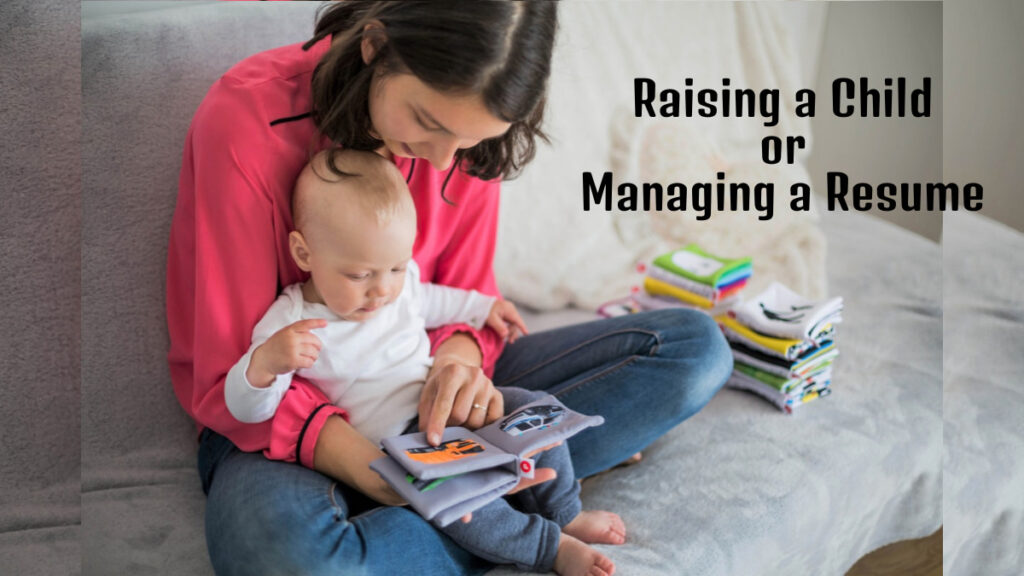
Walk into any modern household today and you will often find a child’s life organized with the precision of a corporate roadmap. Calendars are filled, weekends are booked, and every hour seems to carry a purpose. Music lessons, coding classes, sports training, competitions, and curated extracurriculars are carefully selected—not merely for enjoyment, but for what they might signal in the future. Childhood, in many ways, has become a project under management.
This quiet transformation has led to a deeper, more uncomfortable question: are we raising children as individuals, or are we managing them as future profiles?
The difference is subtle, yet profound. A resume reflects accomplishments, but it does not reflect emotional depth, resilience, curiosity, or the ability to navigate uncertainty. These are the traits that truly shape a meaningful life. As research in developmental psychology increasingly shows, an overemphasis on structured achievement may unintentionally weaken the very qualities that sustain long-term success.
“Do not train a child to learn by force or harshness; but direct them to it by what amuses their minds.” – Plato
The Rise of Resume-Driven Parenting
Parenting has always involved preparing children for the future, but the definition of “preparation” has evolved dramatically. In today’s hyper-competitive environment, success is often perceived as something that must be engineered early. The earlier a child starts, the greater the perceived advantage. This belief fuels a cycle where every activity is evaluated through the lens of utility.
Children are no longer just exploring interests; they are building portfolios. A simple hobby becomes a credential. Participation becomes performance. Even downtime is often viewed as wasted potential. Parents, driven by both fear and aspiration, attempt to optimize every stage of development.
While this approach may appear proactive, it carries an underlying assumption—that the future is predictable enough to prepare for in a linear way. Yet, the modern world rarely rewards linear paths. Many of the most valuable skills today—adaptability, creativity, problem-solving—emerge not from rigid structure but from open exploration.
Studies on parental involvement show that while support and resources can enhance outcomes, over-structuring a child’s life can reduce autonomy and intrinsic motivation. When children feel that their path is being designed for them, they may comply in the short term but struggle to take ownership in the long run.
The result is a generation that may appear highly accomplished on paper, yet uncertain about who they are beyond those accomplishments.
The Psychology of Praise, Identity, and Pressure
One of the most powerful yet overlooked forces shaping children is the way they are perceived and praised. The work of Carol Dweck highlights how children form their sense of identity based on feedback they receive from adults.
When children are consistently praised for outcomes—being “the best,” “the smartest,” or “exceptional”—they begin to equate their identity with performance. This creates a fragile self-concept. Success reinforces their identity, but failure threatens it. As a result, they may avoid challenges that could expose limitations, choosing instead to operate within safe boundaries where success is more certain.
In contrast, when children are encouraged for effort, strategy, and persistence, they develop what is known as a growth mindset. They begin to see ability as something that can evolve rather than something that must be constantly proven. This shift fundamentally changes how they approach learning and setbacks.
However, modern parenting often blends encouragement with subtle pressure. Praise is sometimes inflated, expectations are unspoken yet deeply felt, and comparisons—whether explicit or implied—create an environment where children feel constantly evaluated. Over time, this can lead to anxiety, perfectionism, and a persistent fear of falling short.
Research has also shown that excessive praise, especially when not grounded in reality, can reduce resilience. Instead of building confidence, it can create dependency on external validation. Children begin to seek approval rather than pursue mastery, and their motivation becomes tied to recognition rather than genuine interest.
The Hidden Cost of Over-Scheduling and Lost Childhood
One of the less discussed consequences of resume-driven parenting is the erosion of unstructured time. In the effort to maximize productivity, childhood itself begins to shrink.
Unstructured time—moments of boredom, play, and spontaneous exploration—is not wasted time. It is, in fact, where some of the most important developmental processes occur. During these periods, children learn to entertain themselves, solve problems creatively, and engage with their imagination.
When every moment is scheduled, children lose the opportunity to develop internal direction. They become accustomed to being told what to do, where to go, and what to achieve. This can create a dependency on external structure, making it difficult for them to navigate situations that require self-initiation.
There is also an emotional cost. Constant activity can lead to fatigue, stress, and a sense of being overwhelmed. Children may not always express this directly, but it often manifests in subtle ways—irritability, lack of enthusiasm, or disengagement.
Longitudinal studies on child well-being have shown that excessive pressure and lack of downtime are associated with higher levels of stress and burnout, even at a young age. Ironically, in trying to give children an advantage, we may be depriving them of the very experiences that build emotional strength and adaptability.
The Illusion of Achievement vs Real Growth
Achievement is visible; growth is often invisible. This distinction lies at the heart of the parenting dilemma.
A child who wins competitions, earns high grades, and collects accolades appears successful. But these markers do not always reveal how the child thinks, feels, or copes with challenges. Real growth involves developing internal capabilities—resilience, curiosity, emotional regulation, and the ability to persist despite difficulty.
The well-known marshmallow experiment conducted by Walter Mischel is frequently cited as evidence of the importance of self-control. Children who were able to delay gratification initially appeared to achieve better life outcomes. However, later research revealed that this ability was deeply influenced by environmental factors such as trust and stability.
This insight is critical. It suggests that growth is not simply a matter of training children to behave in certain ways, but of creating environments where they feel secure enough to develop those behaviours naturally.
When achievement is externally driven, children may excel in structured environments but struggle in situations that require independent thinking. They may know how to follow instructions but not how to create their own path.
Real growth, on the other hand, equips children to handle uncertainty. It prepares them not just for known challenges, but for unknown ones.
When Identity Gets Replaced by Performance
As children spend more time performing for outcomes, a subtle shift begins to occur. Their identity becomes intertwined with their achievements.
Instead of asking what they enjoy, they begin to focus on what they are good at—or more precisely, what they are recognized for. This can create a narrow sense of self, where exploration is limited by the need to maintain a certain image.
Over time, this can lead to a disconnect between external success and internal fulfilment. A child may excel in multiple areas yet feel unsure about their own interests or values. They may continue on a path not because it resonates with them, but because it has become part of their identity.
This phenomenon is particularly evident during transitions—when children move from structured environments like school to more open-ended phases of life. Without a clear sense of self, they may struggle to make decisions, take risks, or adapt to change.
Research on motivation consistently shows that intrinsic motivation—driven by curiosity and personal interest—is more sustainable than extrinsic motivation. When identity is rooted in performance, motivation becomes conditional. It depends on success, recognition, and validation.
In contrast, when identity is rooted in self-awareness, motivation becomes self-sustaining.
Redefining Success and the Role of Parenting
If the goal is not merely to build a resume, then success itself needs to be redefined. Success is not just about what a child achieves, but about who they become in the process.
This requires a shift in the role of parenting—from being a manager of outcomes to a facilitator of growth. Instead of controlling every variable, parents can focus on creating an environment that encourages exploration, supports failure, and values effort.
Allowing children to experience setbacks without immediate intervention helps them develop resilience. Encouraging curiosity without attaching it to performance fosters genuine interest. Providing guidance without imposing rigid expectations enables autonomy.
This does not mean abandoning structure or ambition. It means balancing them with flexibility and understanding. It means recognizing that development is not a linear process and that each child’s path will be unique.
Parents who adopt this approach often find that their children become more self-directed, more engaged, and more capable of handling challenges independently.
Conclusion
The question “Are you raising a child or managing a resume?” is not about choosing one extreme over the other. It is about finding balance and awareness in a world that constantly pushes toward performance.
A resume is a summary of achievements, but it is not a measure of character, resilience, or fulfilment. These qualities are built over time through experiences that cannot be quantified or scheduled.
In the end, the most valuable gift a parent can give is not a perfectly crafted profile, but a strong foundation of self-worth, curiosity, and adaptability. Because while achievements may open doors, it is the person behind those achievements who determines what happens next.
Raising a child is not about preparing them for every opportunity. It is about preparing them for life itself—complex, unpredictable, and deeply human.