
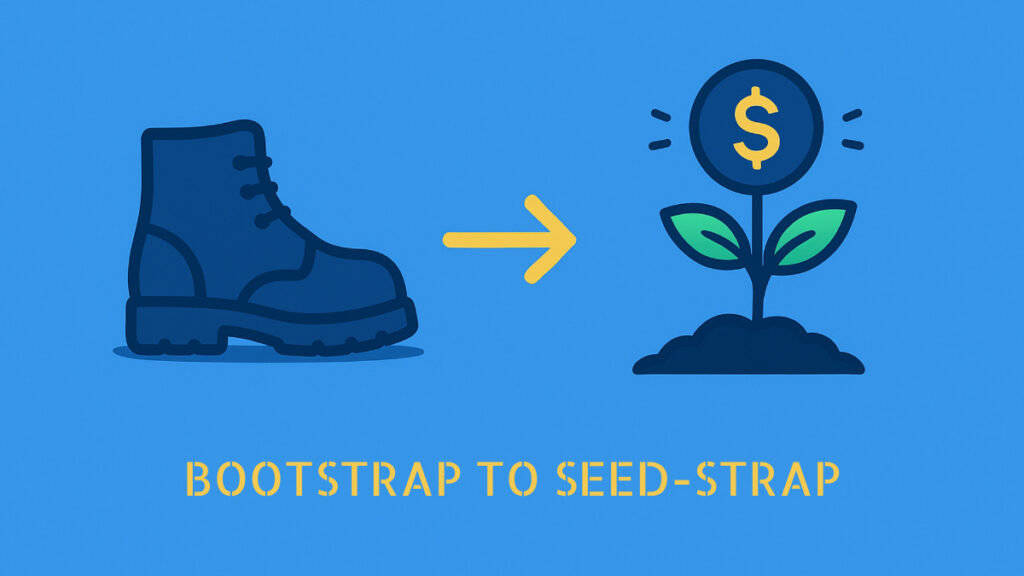
For many years, the startup world has been shaped by one dominant belief: to build a successful company, you must first raise money. People assumed that investment was the gateway to success. If a founder could convince investors to fund their idea, the business would have a future. This belief made fundraising feel like the first big step in entrepreneurship. Young founders practiced pitches more than product development. They spent more time searching for investors than searching for customers. But slowly, reality proved something different. Many well-funded startups collapsed because they had money but lacked real users. On the other hand, many small, self-funded founders quietly grew profitable companies by focusing on real customer needs. This contrast revealed a powerful truth: money alone does not build a business—value does. From this realization, a new mindset began to form. It encouraged founders to start small, move fast, prove demand, and build traction before seeking investment. This new approach is known as Seed-Strap. It combines the discipline of bootstrapping with the opportunity of seed funding, but only at the right time. Seed-Strap empowers founders to raise money from strength, not desperation. This blog explores this shift in detail—how it started, why it matters, and how it could redefine the future of entrepreneurship.
“If you are not embarrassed by the first version of your product, you’ve launched too late.” – Reid Hoffman
The End of the Old Startup Story
In the traditional startup model, everything began with an idea and a pitch. Founders created slides, practiced speeches, and tried to convince investors to believe in a vision that wasn’t yet real. The focus was on selling a dream, not solving a problem. Funding became a symbol of success. When a startup raised money, people celebrated—even if the product had no users. This created unhealthy pressure. Founders felt that fundraising was the only way forward. Many spent months chasing investors instead of building or testing their product.
This approach led to serious flaws. Companies raised large amounts of capital but did not understand their customers. They spent heavily on marketing, hiring, and expansion before proving whether anyone actually wanted their product. As a result, many collapsed once the money ran out. Investors also began to realize that funding early ideas without evidence was risky. They started asking tougher questions about traction, revenue, and retention. Meanwhile, founders without networks or connections struggled to raise funds even if their ideas were strong. This showed how the old system favoured access over ability. Over time, the world recognized that investment was not the true measure of success. What truly mattered was product-market fit—whether customers actually needed and valued the product. This marked the beginning of the end for the old startup story and opened the door for a new approach based on proof rather than promises.
The Rise of Bootstrapping as a Real Power
Bootstrapping began as a simple idea: build using what you have. It meant starting with personal savings, early revenue, or small support from friends and family. For years, it was seen as a slow and limited approach. People assumed that without funding, growth would be impossible. But technology changed everything. The cost of building products dropped dramatically. Cloud services replaced expensive servers. No-code tools allowed non-developers to build software. Social media enabled free marketing. Freelancers made it possible to work without full-time teams. Suddenly, a single founder could design, build, and launch a product with minimal expense.
Bootstrapping forced founders to be practical and customer-focused. With limited resources, they had to build only what mattered. They could not afford unnecessary features or large teams. This resulted in cleaner products and clearer priorities. Bootstrapped founders paid attention to real feedback because they could not afford mistakes. Every customer was valuable. Every sale meant survival and growth. This approach also protected founders’ ownership. They did not have to give away large parts of their company in exchange for capital. They made decisions based on long-term vision, not investor pressure. As more bootstrapped startups became profitable—sometimes even hugely successful—the world began to respect this model. It proved that money was not the starting point of success. Execution, discipline, and customer focus were far more important. Bootstrapping turned from a backup plan into a powerful and respected strategy.
The Shift Toward Seed-Strap Thinking
Seed-Strap represents a natural evolution from bootstrapping. It does not mean avoiding funding forever. Instead, it means delaying funding until the business has real traction. The core idea is simple: build first, prove later, raise only when it helps scale. Seed-Strap combines the independence of bootstrapping with the growth potential of seed investment. It changes the order of the startup journey. Instead of presenting assumptions, founders present data—users, revenue, retention, and engagement. Investors are no longer asked to take a blind risk. They can see real results.
This shift changes the power balance. In the old model, founders approached investors from a position of need. In the Seed-Strap model, founders approach from a position of strength. They can negotiate better terms, retain more ownership, and choose partners strategically. Funding becomes a tool, not a lifeline. Seed-Strap thinking also reduces waste. Instead of building large teams and complex products early, founders focus on their core value. They test ideas quickly and eliminate what doesn’t work. If the idea fails early, the loss is small. If it gains traction, the path to growth becomes clear. Seed-Strap thinking creates confidence because every step is supported by evidence, not hope. It leads to more grounded, efficient, and resilient businesses.
Why This Revolution Matters Now
This movement is happening today because the world has shifted in several major ways. First, technology has lowered the barriers to building products. Tools that once required big budgets are now free or inexpensive. A founder with a laptop and internet connection can reach global users. Second, customer behaviour has changed. People are willing to try new digital products quickly, giving immediate feedback. This makes testing and validating ideas faster than ever. Third, remote work has become normal. Startups can build teams from anywhere, reducing office costs and expanding talent options.
Another major shift is investor behaviour. After seeing many heavily funded startups fail, investors now prioritize real traction over big stories. They want proof of demand. They want numbers, not just ideas. This makes the Seed-Strap approach perfectly timed. The pandemic also played a role. It showed the importance of lean operations, flexibility, and resilience. Many people started side businesses and learned that success can begin small. The Seed-Strap revolution matters because it democratizes entrepreneurship. It gives opportunities to founders who were previously excluded due to lack of connections or capital. It rewards hard work, creativity, and real progress. It helps build stronger companies that grow sustainably instead of burning cash. Most importantly, it shifts power back to the founder—allowing them to build on their own terms.
The New Journey: From Idea to Traction to Capital
In the Seed-Strap model, the startup journey becomes more logical and less risky. It begins with discovering a real problem. Founders speak to potential users, study their frustrations, and understand their needs. Instead of building a large product based on assumptions, they create a minimal solution—often called a Minimum Viable Product (MVP). This version is simple but functional. It allows the founder to test demand without heavy cost. When real users start adopting the product, even in small numbers, it confirms that the problem exists and the solution helps.
The next step is traction—consistent usage, growth, and ideally, revenue. Even small revenue is powerful because it proves market willingness to pay. These early numbers guide future decisions. Data shows which features matter, which marketing channels work, and which customer groups respond best. Only after traction becomes clear does the founder consider raising capital. At this stage, funding is used for scaling operations—expanding marketing, improving the product, hiring key talent, or entering new markets. The business is no longer fragile. It already stands on data and customer success. This approach protects the founder from unnecessary dilution and gives investors more confidence. It creates companies that grow with purpose, not pressure. By the time funding arrives, the startup is already a business—not just an idea.
The Emotional Shift: From Permission to Power
One of the biggest changes in the Seed-Strap revolution is emotional. In the old model, founders felt they needed someone else’s approval to begin. They waited for investors to validate their idea. A rejection from an investor often felt like a rejection of their dream. This created anxiety, dependence, and self-doubt. Seed-Strap thinking frees founders from this mindset. It tells them they can start now—with action, not permission. Every step forward becomes a source of confidence. When a user signs up, when a customer pays, when feedback improves—each moment builds belief. Founders stop relying on external validation. They create their own proof.
This emotional independence is empowering. It builds resilience because the founder learns to trust the process, not opinions. It reduces fear of failure because the journey is based on learning, not approval. It makes entrepreneurship more open and accessible to people who may not have connections or prestige. Seed-Strap encourages diversity—of backgrounds, experiences, and ideas. It reminds founders that success is earned in the market, not granted in a boardroom. It turns founders into leaders who take ownership of their destiny. This emotional shift is a major driving force behind the revolution, and it may be the key reason this movement will continue to grow.
The Rise of Micro-Wins and Sustainable Growth
One of the most important ideas emerging from the Seed-Strap movement is the value of micro-wins. These are small but meaningful steps forward that build the foundation of long-term success. In the old model, progress was measured in large milestones—funding rounds, big partnerships, major product launches. Anything smaller was often ignored or undervalued. But Seed-Strap thinking recognizes that real growth is built through consistent, steady progress. A single customer paying for your product is a win. A batch of users giving positive feedback is a win. A tiny increase in retention is a win. Each micro-win provides clarity, direction, and confidence. Together, they create momentum.
Micro-wins help founders stay grounded. Instead of chasing rapid, unstable growth, they focus on building systems that last. Sustainable growth becomes the target—not overnight success. When companies grow through micro-wins, they become more stable because each step is earned and understood. They make fewer risky decisions and fewer expensive mistakes. They listen to their users and adapt quickly. This approach also reduces burnout. Founders feel a sense of progress every week, not only during big events. These small victories motivate them and remind them that they are moving forward. Micro-wins also build trust within the team. People feel proud of their contributions because they can see their impact. Over time, micro-wins compound into major achievements. They shape stronger cultures, smarter strategies, and more resilient companies. This mindset is a key part of the Seed-Strap revolution because it teaches founders that success does not need to come fast—it just needs to come consistently.
Conclusion: A Future Built by Builders
The Seed-Strap revolution marks a major turning point in the startup world. It challenges the belief that funding must come first. It proves that real success begins with customers, traction, and value—not just capital. Also, it promotes a healthier, more balanced approach to building companies. Instead of celebrating funding announcements, the world is beginning to celebrate real progress—paying users, steady revenue, and strong retention. The future of entrepreneurship will be shaped by founders who start small, learn fast, and scale wisely. Investors will look for evidence, not excitement. More founders will own more of what they build. More ideas will grow from unexpected places.
Seed-Strap is not just a business strategy—it is a cultural shift. It empowers builders. It rewards resilience. It encourages independence. Also, it opens doors for people who once felt shut out of the startup world. The revolution has begun, and its message is clear: you no longer need permission to build. Momentum is the new approval. Traction is the new pitch. Execution is the new advantage. The future belongs to those who take action first and raise later. It belongs to the Seed-Strap generation—a generation ready to transform ideas into impact, and dreams into real, thriving businesses.