
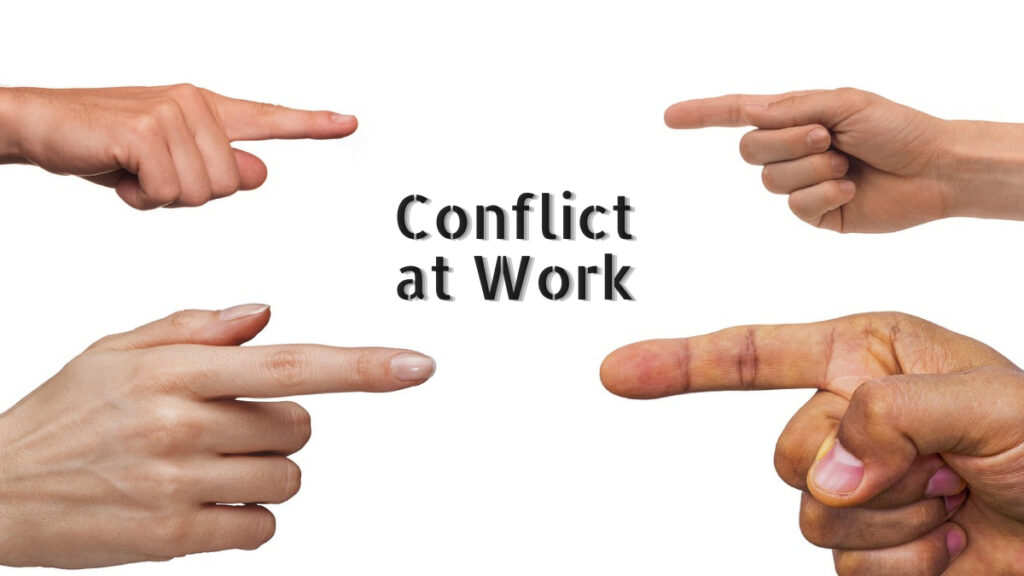
Conflict in the workplace is often viewed as something negative—an uncomfortable disruption in what should be a smooth-running machine. But the truth is, conflict is not only inevitable in professional settings, it’s also natural. When people with different backgrounds, personalities, roles, and opinions work together, differences are bound to arise. These differences may be about project direction, leadership styles, communication gaps, unmet expectations, or even clashing values.
The key issue is not whether conflict exists, but how we deal with it. Left unresolved, even a small misunderstanding can grow into a deep divide, affecting teamwork, productivity, morale, and even the mental health of those involved. However, when handled with intention and skill, conflict can actually be a catalyst for growth, innovation, and better relationships.
Numerous studies reinforce this reality. According to the CPP Global Human Capital Report, 85% of employees experience conflict at work, with 29% saying it causes them to miss deadlines. Despite this, the same report found that employees who received training in conflict resolution became more effective, collaborative, and confident.
So, rather than fearing or avoiding conflict, professionals need to learn how to manage and resolve it constructively—like a pro.
“Peace is not the absence of conflict, but the ability to handle conflict by peaceful means.” – Ronald Reagan
Understanding the Root Causes Before Reacting
Before jumping into solutions, it’s essential to understand what’s really causing the conflict. Often, what appears as a surface-level disagreement about a task or schedule hides deeper tensions—such as differing values, perceived disrespect, or unmet emotional needs.
Broadly, workplace conflicts arise from five key sources:
- Communication breakdowns: Misunderstood messages, poor listening, or different communication styles.
- Resource limitations: When time, budgets, or personnel are limited, competition and frustration can emerge.
- Role ambiguity: Unclear job responsibilities or overlapping duties can create confusion and friction.
- Personality differences: Diverse work styles and temperaments can either complement or clash.
- Power struggles: Disagreements on leadership, decision-making, or recognition often fuel resentment.
Professional conflict resolution begins with awareness. One must learn to pause, observe, and interpret the situation rather than reacting emotionally. For instance, if a team member consistently interrupts you in meetings, it may not be disrespect—it could be their style of thinking aloud, or it might reflect their anxiety about performance.
Taking time to analyse the context, the people involved, and the patterns of behaviour can transform your approach. A rushed response may escalate tension, while a thoughtful, informed strategy can defuse it early.
The Power of Active Listening and Empathy
One of the most underrated yet powerful tools in resolving workplace conflict is active listening. In most disputes, people don’t just want to “win” the argument—they want to be heard and understood.
Active listening is not the same as waiting for your turn to speak. It requires you to give your full attention, suspend judgment, and absorb the other person’s point of view. This includes maintaining eye contact, using affirmative body language, and paraphrasing to confirm understanding.
Consider this: if someone says, “I feel like my input isn’t valued on this project,” and you reply, “So you feel your contributions are being overlooked?”—you’ve instantly created a space of validation. You haven’t agreed or disagreed, but you’ve shown that you care enough to understand.
Paired with empathy, active listening becomes transformative. Empathy doesn’t mean agreeing with the other person’s stance; it means recognizing their emotional experience as valid. When people feel genuinely heard, they are more likely to lower their defenses, think rationally, and seek compromise.
Practicing empathy also shifts your mindset from “me vs. them” to “us vs. the problem,” which is the foundation of collaborative conflict resolution.
Responding, Not Reacting: The Art of Composed Communication
Emotions run high during conflict, and it’s easy to slip into defensive or aggressive communication. But reacting impulsively—whether with sarcasm, blame, or silence—almost always worsens the situation.
The hallmark of professional conflict resolution is learning how to respond calmly and constructively. This starts with managing your own emotional state. Deep breathing, pausing before speaking, and even briefly stepping away to reflect can prevent regretful words and actions.
Once composed, choose your words wisely. Use “I” statements rather than “You” accusations. For example:
- Instead of saying, “You never listen to me,” say, “I feel overlooked when my suggestions aren’t acknowledged.”
This small shift reduces defensiveness and keeps the conversation centered on impact, not blame.
Clarity and respect are key. Be assertive, not aggressive. State your concerns directly, but avoid personal attacks. Stick to facts and behaviours, not character judgments.
Additionally, be open to feedback. Conflict resolution is a two-way street. Ask questions like:
- “What’s your perspective on this?”
- “Is there something I could have done differently?”
This creates psychological safety and fosters mutual problem-solving, rather than a battle for dominance.
Seeking Win-Win Solutions Instead of Concessions
Many people view conflict resolution as a zero-sum game—one party wins, the other loses. But effective resolution isn’t about compromise in the traditional sense (where both sides give up something), it’s about collaborative problem-solving to find a mutually satisfying solution.
This is called a win-win approach, and it involves four steps:
- Define the problem clearly: Frame it in a way both parties can agree on. “We seem to have different expectations about how feedback should be delivered.”
- Explore underlying interests: Go beyond positions to understand deeper motivations. One may want recognition, another may value efficiency.
- Brainstorm together: Invite solutions from both sides without judgment. Creativity often unlocks unexpected paths forward.
- Agree on a path and follow up: Set clear responsibilities and timelines, and revisit to ensure follow-through.
A win-win solution strengthens relationships rather than weakening them. It demonstrates that both parties care about the bigger picture—team success, mutual respect, and a healthy work culture.
In teams, managers play a crucial role in facilitating such resolutions. Encouraging openness, modelling empathy, and offering neutral mediation can transform even longstanding conflicts into opportunities for team alignment and growth.
Building a Conflict-Resilient Work Culture
While it’s important to resolve conflicts effectively, it’s even better to prevent unnecessary ones. That’s where organizational culture plays a powerful role.
A workplace with psychological safety, clear expectations, strong communication norms, and respect for diversity naturally experiences fewer and less intense conflicts. Leaders and HR professionals should focus on building a culture where:
- Feedback is regular and constructive, not just given when problems arise.
- Roles and responsibilities are clearly defined, minimizing overlap and confusion.
- Team-building and training encourage empathy, collaboration, and mutual understanding.
- Conflict resolution training is part of leadership development, not just damage control.
Companies that invest in these foundations reduce turnover, increase engagement, and maintain high morale. According to Gallup, teams that effectively manage conflict experience 27% higher profitability and 21% greater productivity.
Moreover, individuals can develop their own conflict resilience by improving emotional intelligence, learning negotiation techniques, and seeking mentorship.
Ultimately, being able to resolve conflict like a pro is not just a workplace survival skill—it’s a leadership trait. The ability to transform tension into trust, friction into feedback, and disagreement into dialogue marks the difference between average professionals and inspiring ones.
Conclusion
Conflict at work isn’t the enemy—it’s a signal. A signal that something needs attention, clarity, or change. Those who run from it, suppress it, or escalate it miss a powerful chance for progress. But those who approach it with insight, empathy, and skill build stronger relationships, better teams, and more resilient organizations.
In a world that increasingly values soft skills as much as technical ability, knowing how to resolve conflict is a career superpower. It earns trust, elevates leadership, and creates workplaces where collaboration, not confrontation, is the norm.
So the next time conflict arises at work—and it will—don’t panic. Instead, take a deep breath, lean in with curiosity, and remember: the real pros don’t avoid conflict. They master it.