
• Author
  • Copyright Report
  • Privacy Policy
  • Terms & Condition
  • Contact
  • About
Thursday, June 11, 2026
Fastlane Freedom
No Result
View All Result
  • Mindfulness
  • Money
  • Grow Business
  • Essential Reading
  • Popular Quotes
  • Student
  • Parenting
  • Videos
  • About
  • Contact
  • Mindfulness
  • Money
  • Grow Business
  • Essential Reading
  • Popular Quotes
  • Student
  • Parenting
  • Videos
  • About
  • Contact
No Result
View All Result
Fastlane Freedom
No Result
View All Result
  • Author
  • Copyright Report
  • Privacy Policy
  • Terms & Condition
  • Contact
  • About

Home » Creative Imitation – A Successful Business Strategy

Creative Imitation – A Successful Business Strategy

Vinod Singh by Vinod Singh
November 3, 2022
Reading Time: 4 mins read
A A
0
creative imitation

Table of Contents

  • Implementation by IBM
  • Quartz Crisis
  • Aim of Market Leadership
  • Risk Involved in Creative Imitation

Have you heard about creative imitation? The term was coined by Theodore Levitt of the Harvard Business School. Creative imitation is clearly a contradiction in terms. What is creative must surely be original. And if there is one thing imitation is not, it is “original.” Yet the term fits. It describes a strategy that is “imitation” in its core. What the entrepreneur does is something somebody else has already done. But it is “creative” because the entrepreneur applying the strategy of “creative imitation” understands what the innovation represents better than the people who made it and who innovated.

This strategy is followed by some companies that imitate something already existing but adding value. Often the imitator has the ability to foresee, better than the original creator, how the product or service can be best suited to meet the needs of consumers, changing it to match this observation. Creative imitators do not succeed by taking away customers from the pioneers who have first introduced a new product or service; they serve markets the pioneers have created.

A classic New Yorker magazine cartoon sums this up best with the caption: “What we need, gentlemen, is a completely brand-new idea that has been thoroughly tested.”

Implementation by IBM

The foremost practitioner of this strategy and the most brilliant one is IBM. But it is also very largely the strategy that Procter & Gamble has been using to obtain and maintain leadership in the soap, detergent, and toiletries markets. And the Japanese Hattori Company, whose Seiko watches have become the world’s leader, also owes its domination of the market to creative imitation.

In the early thirties, IBM built a high-speed calculating machine to do calculations for astronomers at New York’s Columbia University. A few years later it built a machine that was already designed as a computer—again, to do astronomical calculations, this time at Harvard. And by the end of World War II, IBM had built a real computer—the first one, by the way, that had the features of the true computer: a “memory” and the capacity to be “programmed.”

As soon as it had finished its advanced 1945 computer—the first computer to be shown to a lay public in its showroom in midtown New York, where it drew immense crowds—IBM abandoned its own design and switched to the design of its rival, the ENIAC, developed at the University of Pennsylvania. The ENIAC was far better suited to business applications such as payroll, only its designers did not see this. IBM structured the ENIAC so that it could be manufactured and serviced and could do routine “numbers crunching.” When IBM’s version of the ENIAC came out in 1953, it at once set the standard for commercial, multipurpose, mainframe computers.

This is the strategy of “creative imitation.” It waits until somebody else has established the new, but only “approximately.” Then it goes to work. And within a short time, it comes out with what the new really should be to satisfy the customer, to do the work customers want and pay for. Creative imitation has then set the standard and takes over the market.

Procter & Gamble acts very much the same way in the market for detergents, soaps, toiletries, and processed foods.

Quartz Crisis

When semiconductors became available, everyone in the watch industry knew that they could be used to power a watch much more accurately, much more reliably, and much more cheaply than traditional watch movements. The Swiss soon brought out a quartz-powered digital watch. But they had so much investment in traditional (mechanical) watchmaking that they decided on a gradual introduction of quartz-powered digital watches over a long period of time, during which these new timepieces would remain expensive luxuries.

Meanwhile, the Hattori Company in Japan had long been making conventional watches for the Japanese market. It saw the opportunity and went in for creative imitation, developing the quartz-powered digital watch as the standard timepiece. By the time the Swiss had woken up, it was too late. Seiko watches had become the world’s bestsellers, with the Swiss almost pushed out of the market. In history, this movement is called the quartz crisis. Because of this, Swiss watch employment fell from 90,000 to 28,000 between 1970 and 1988. Outside Switzerland, the crisis is often referred to as the “quartz revolution”, particularly in the United States where many American companies had gone out of business or had been bought out by foreign interests by the 1960s.

Aim of Market Leadership

Creative imitation is a strategy aimed at market or industry leadership, if not at market or industry dominance. But it is much less risky. By the time the creative imitator moves, the market has been established and the new venture has been accepted. Indeed, there is usually more demand than the original innovator can easily supply. The market segmentations are known or at least knowable. By then, too, market research can find out what customers buy, how they buy, what constitutes value for them, and so on. No one has to explain any more what a personal computer or a digital watch is and what they can do. Of course, the original innovator may do it right the first time, thus closing the door to creative imitation.

The creative innovator exploits the success of others. Creative imitation is not “innovation” in the sense it is most commonly understood. The creative imitator does not invent a product or service; he perfects and positions it. In the form in which it has been introduced, it lacks something. It may be additional product features. It may be the segmentation of products or services so that slightly different versions fit slightly different markets. Or it might be the proper positioning of the product in the market.

Risk Involved in Creative Imitation

“However beautiful the strategy, you should occasionally look at the results.” – Winston Churchill

The strategy has its own risks, and they are considerable. The risk is like misreading the trend and imitating creatively what then turns out not to be the winning development in the marketplace. IBM, the world’s foremost creative imitator, exemplifies these dangers. It has successfully imitated every major development in the office-automation field. As a result, it has the leading product in every single area. But because they originated in imitation, the products are so diverse and so little compatible with one another that it is all but impossible to build an integrated, automated office out of IBM building blocks. It is thus still doubtful that IBM can maintain leadership in the automated office and provide the integrated system for it. And this risk, the risk of being too clever, is inherent in the creative imitation strategy. (Inspired by “Innovation and Entrepreneurship” by Peter Drucker).

Featured reads

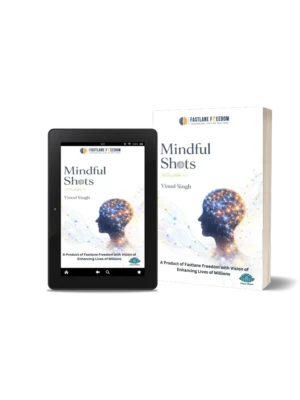
Mindful Shots, Volume-1 cover
Mindful Shots, Volume-1
Vinod Singh
Self-Help, Mindfulness

Mindful Shots, Volume-1

Vinod Singh

4.5 · reviews

Most people live their entire lives without truly understanding how their minds work or the immense power they hold within. Fewer than two percent of people can confidently answer questions like: What drives my thoughts? Why do I feel resistance to my own goals? You’ve likely experienced moments when you wanted to take a bold step—perhaps starting a new business or making a life-changing decision—only to hear an inner voice warning you of failure. That voice often justifies its fears by recalling countless stories of others’ setbacks—family members, friends, society, even distant headlines. It’s as if your mind maintains a detailed archive of every failure around you, replaying them to keep you from moving forward. But what if this inner voice could be understood, reprogrammed, and even turned into your greatest ally? Imagine what would be possible if both your conscious intentions and subconscious patterns worked together instead of pulling in opposite directions. This collection, Mindful Shots, brings together some of the most insightful writings on mindfulness from Fastlane Freedom. Each piece explores practical and scientific perspectives on how the mind shapes our choices, influences our health, and even participates in physical healing. Through research-backed insights and timeless wisdom, this book will help you see that the mind isn’t just a passive observer—it’s an active force capable of changing your reality. By learning how to quiet the noise, shift your mental inputs, and harness your inner voice, you’ll gain a clearer path to personal growth, emotional balance, and a deeper understanding of what mindful living truly means.

RELATED POSTS

Escaping the Traffic Jam of Stress, Salary & Spreadsheets

Why Saving Money Is Like Dieting—Easier Said Than Done

Meetings: Where Minutes Are Taken and Hours Are Lost

Analysis Paralysis: The Silent Success Killer Nobody Talks About

The Power of Selective Blindness: Why Success Often Requires Ignoring the Noise

The Market Rewards Patience, Not Panic – Fastlane Freedom

Amazon Flipkart
Parenting Essentials cover
Parenting Essentials
Vinod Singh
Self-Help, Parenting

Parenting Essentials

Vinod Singh

4.5 · reviews

Parenting is a journey—one of the most rewarding, challenging, and transformative experiences life has to offer. But it’s not a path we are meant to walk alone. Essential Parenting was born out of a deep desire to support and empower parents at every stage of their journey, from the early days of pregnancy to the complex teenage years. Drawing insights from the Fastlane Freedom platform, this book brings together wisdom, mindfulness, and practical strategies to help you raise confident, emotionally strong, and value-driven children. At Fastlane Freedom, we believe that conscious parenting begins with self-awareness. Children absorb more from our behaviour than our words. It’s in our everyday actions—our calm during chaos, our patience in moments of frustration, our consistency in values—that they find their foundation. Parenting is not about being perfect; it’s about being present, intentional, and compassionate.

Amazon Flipkart
The Wealth Code, Volume-1 cover
The Wealth Code, Volume-1
Vinod Singh
Self-Help, Finance

The Wealth Code, Volume-1

Vinod Singh

4.5 · reviews

The Wealth Code: Volume-1 is a personal development and financial education book written by Vinod Singh. It is designed to empower readers by teaching them principles of wealth creation, financial freedom, and personal growth. The book offers practical strategies to achieve financial success, with a vision to uplift and transform the lives of millions by promoting financial literacy and entrepreneurial thinking. Mr. Singh's approach is rooted in inspiring individuals to take control of their financial destinies while cultivating a mindset focused on long-term success and abundance.

Amazon Flipkart
ShareSendTweetPinShareShareShareShareShareShareBookmarkShare
Vinod Singh

Vinod Singh

In 2019, Vinod Singh, a Belief Changer, founded Fastlane Freedom after 3.5 years of research on Mindfulness and its connection to money. Fastlane Freedom is driven by a vision: ‘Enhancing Lives of Millions’ by reshaping people’s beliefs to transform their financial situations. With 16 years of professional experience, Vinod dedicates himself to providing top-notch, practical content on Mindfulness, Money, Business, Parenting, Popular Quotes and Student Life.

Related Posts

Escaping the Traffic Jam of Stress, Salary & Spreadsheets

Escaping the Traffic Jam of Stress, Salary & Spreadsheets

June 7, 2026
Saving Money Is Like Dieting

Why Saving Money Is Like Dieting—Easier Said Than Done

June 6, 2026
meetings

Meetings: Where Minutes Are Taken and Hours Are Lost

June 2, 2026
Analysis paralysis

Analysis Paralysis: The Silent Success Killer Nobody Talks About

May 31, 2026
The Power of Selective Blindness

The Power of Selective Blindness: Why Success Often Requires Ignoring the Noise

May 29, 2026
The Market Rewards Patience, Not Panic

The Market Rewards Patience, Not Panic – Fastlane Freedom

May 28, 2026
Phone Addiction

We Blame Kids for Phone Addiction While Adults Scroll Their Lives Away

May 27, 2026
Behind Every Successful Life

The Silent Force Behind Every Successful Life – Fastlane Freedom

May 24, 2026
From Zero to Financial Freedom

From Zero to Financial Freedom: The Real Path to Building Massive Wealth

May 23, 2026
Load More

Support Ad-Free Content

Dear Valued Reader,

At Fastlane Freedom, we believe in delivering the highest quality content without the distraction of ads. Our platform is dedicated to enriching your life with insightful blogs on Mindfulness, Financial Wisdom, Business Strategies, Student Success, and Effective Parenting.

To keep our content free from ads and accessible to all, we need your support. Your donation helps us maintain our commitment to providing valuable, ad-free resources that empower you to thrive in every aspect of life.

Join us in our mission to “Enhancing Lives of Millions” by fostering knowledge and growth. Every contribution is invaluable and directly enhances the quality and accessibility of our content. Donate now and help us continue to make a difference!

Support Now

Main Category

  • Mindfulness
  • Money
  • Grow Business
  • Essential Reading
  • Popular Quotes
  • Student
  • Parenting
  • Videos
  • About
  • Contact

Money

  • Power of Compounding
  • Learn from Rich People
  • Power of Saving
  • Money Tips
  • Financial Freedom
  • Debt Management

Grow Business

  • Business Tips
  • Workplace Practices
  • Marketing Tips
  • Entrepreneurship
  • Success Rules
  • Leadership
  • Productivity Improvement

Mindfulness

  • Subconscious Mind
  • Growth Mindset
  • Overcome Fear
  • Success Habits
  • Achieve Goals
  • Happiness Secrets

Parenting

  • Before Birth Facts
  • Health and Wellness
  • Parenting Tips and Strategies

Student

  • Early Success Secrets
  • Study Tips
  • Career Goals

© 2026 fastlanefreedom.com - Design and Manage by Binary Techne.

No Result
View All Result
  • Money Blogs
  • Essential Reading
  • Mindfulness
  • Grow Business
  • Parenting
  • Student
  • Popular Quotes
  • About
  • Contact

© 2026 fastlanefreedom.com - Design and Manage by Binary Techne.