
In today’s busy and high-tech world, many people are turning back to ancient habits that were once forgotten. These traditional ways of living—once seen as old-fashioned—are now being praised again. Why? Because modern science is finally proving what our grandparents and ancestors knew all along. Whether it’s playing in the mud, eating fermented foods, or using natural herbs, these practices are now known to help us stay healthy, calm, and connected to nature.
For a long time, people moved away from these habits in search of modern solutions—plastic, fast food, pills, and machines. But slowly, they are realizing that not all progress is better. Many simple, natural things from the past actually support better health and well-being.
In this blog, we’ll explore powerful ancient habits that are coming back into modern life—not just because they’re traditional, but because science now backs them too. These are not just trends. They are a return to balance.
“Ancient practices are not old-fashioned—they’re time-tested truths waiting to be rediscovered.” – Vinod Singh
Playing in the Mud: Why Dirt is Good for Kids
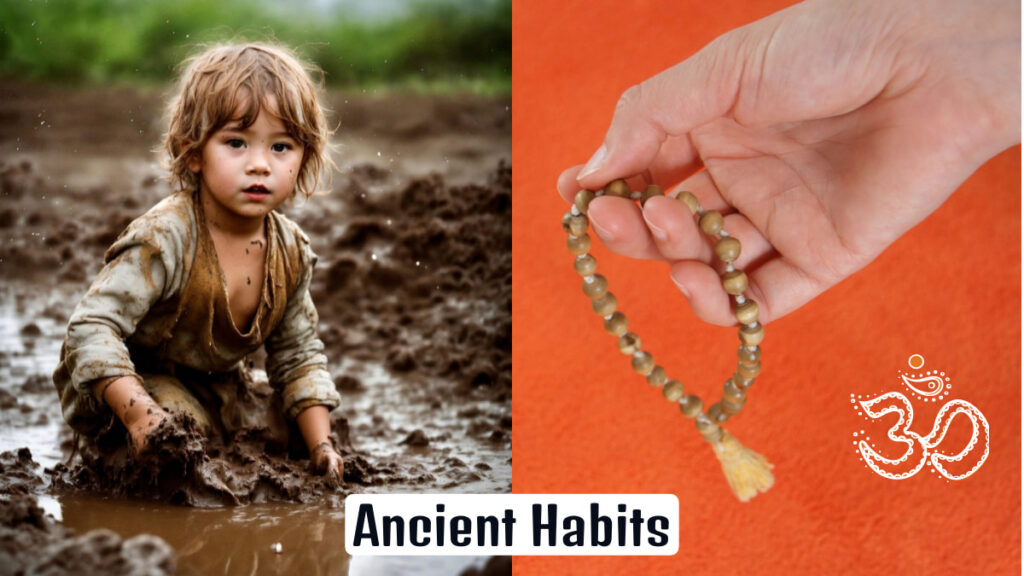
In the past, it was normal for children to play outside in the mud and dirt. It was fun and natural. But over time, modern parents started to worry about germs. They kept their kids clean and away from dirt. Now, doctors and scientists say that playing in mud can actually help children grow stronger.
Mud is full of tiny living things called microbes. Some of these microbes help build a child’s immune system. When children play in the dirt, their bodies learn how to fight off harmful bacteria and viruses. Studies show that kids who spend time outdoors and get dirty are less likely to develop allergies and autoimmune diseases. This idea is called the “hygiene hypothesis.”
So, letting kids play in mud is not just about fun. It helps their bodies become stronger and healthier. Mud is more than just dirt; it’s full of life that teaches children how to stay well.
Fermented Foods: Old Ways to Heal the Gut
Long ago, people used to ferment food to preserve it. Items like yogurt, pickles, curd, kimchi, and kanji were common in many homes. These foods were not just tasty but also helped with digestion. Over time, processed and packaged foods replaced these natural options. Now, many people have stomach problems, and gut health has become a major concern.
Modern science shows that fermented foods are rich in probiotics, which are good bacteria for the gut. These bacteria help with digestion, keep our immune system strong, and even improve mood. Some researchers call the stomach the “second brain” because it affects how we feel.
Bringing back fermented foods into our daily meals can greatly improve our health. What our ancestors ate without knowing the science is now being recommended by doctors and dieticians.
Oil Pulling: A Simple Way to Clean the Mouth
Oil pulling is an old practice from Ayurveda. It means swishing a tablespoon of oil (like coconut or sesame) in the mouth for a few minutes and then spitting it out. People once believed it could remove toxins from the body. Many modern people ignored this method, thinking it was unscientific.
But now, research has shown that oil pulling can really help clean the mouth. It removes harmful bacteria, reduces plaque, and even fights bad breath. One study found that it works as well as mouthwash in improving oral health.
This ancient habit is simple, natural, and does not cost much. With regular practice, oil pulling can keep teeth and gums healthy without using harsh chemicals.
Walking Barefoot: The Power of Grounding
Our ancestors used to walk barefoot on soil, grass, and sand. Today, we wear shoes almost all the time and mostly walk on concrete floors. This change may seem small, but it affects our health more than we realize.
Walking barefoot, also called “grounding” or “earthing,” helps connect our body to the earth. Scientists found that the earth’s surface has natural energy that can reduce stress, pain, and inflammation. When we walk barefoot, our body absorbs these energies, which can balance our systems and improve sleep.
Just spending 20-30 minutes walking barefoot on natural ground can have calming and healing effects. What was once a normal daily activity is now seen as a powerful health practice.
Turmeric: The Golden Spice with Real Power
Turmeric has been used in Indian homes for cooking and healing for centuries. It was often added to milk, food, or used on wounds. In modern times, it was seen only as a kitchen spice. But now, turmeric is gaining worldwide respect for its healing powers.
The key ingredient in turmeric is curcumin. It has strong anti-inflammatory and antioxidant properties. Studies have shown that turmeric can help with joint pain, heart health, and even brain function. Some researchers also believe it may help prevent certain types of cancer.
Now, turmeric is used not just in food but also in health drinks, capsules, and skincare products. What was once just a traditional remedy is now backed by science and accepted globally.
Intermittent Fasting: Ancient Discipline with Modern Proof
Fasting has been a part of religious and spiritual life for thousands of years. People would avoid eating for hours or days to cleanse the body and mind. Today, this old habit is gaining attention as “intermittent fasting.”
Intermittent fasting means not eating for certain hours of the day or skipping meals on specific days. Modern research shows that this practice helps the body in many ways. It improves insulin levels, burns fat, supports brain health, and even helps in slowing down aging.
Fasting allows the body to rest and repair. A process called “autophagy,” where the body cleans out damaged cells, is triggered during fasting. This process was the reason for a Nobel Prize win in medicine. Clearly, fasting is not just a spiritual habit—it is a powerful tool for health and healing.
Copper Vessels: The Smart Way to Store Water
In the past, storing water in copper vessels was a normal thing in many homes, especially in India. People believed that copper made the water healthier. With the rise of plastic and steel containers, this habit was forgotten.
But now, science has confirmed that copper has natural abilities to kill germs. Storing water in copper pots can destroy harmful bacteria like E. coli. Copper also helps with digestion, supports the heart, and improves iron absorption in the body.
As people become more aware of the dangers of plastic, copper is returning to our kitchens as a safer and smarter choice.
Sunlight: The Natural Source of Vitamin D
Earlier, people spent a lot of time outdoors—farming, walking, or working in the sun. But now, many people work indoors and avoid sunlight, fearing skin damage. As a result, Vitamin D deficiency has become common.
Sunlight, especially in the morning, helps the body produce Vitamin D, which is essential for strong bones, a healthy immune system, and good mood. Doctors now suggest getting 15 to 30 minutes of sunlight every day. Morning sunlight is best because it is gentle and helps balance the body’s internal clock, improving sleep.
Sunlight is free and natural, yet so powerful. Returning to this simple habit can fix many modern health problems.
Chanting and Mantras: Healing Through Sound
Chanting mantras has been part of spiritual life in many cultures. Whether it was the sound “Om” in Hinduism or chants in Buddhism and Christianity, repeating words or sounds was believed to bring peace. Many thought this was just a religious practice. But science now shows that chanting has real health benefits.
Chanting slows down brain activity and helps reduce stress. It can also improve focus, relax the mind, and make people feel happier. Brain scans have shown that chanting certain sounds can calm parts of the brain linked to anxiety and negative thinking.
Today, even people who are not religious use chanting as a way to meditate and feel better. Ancient sound practices are becoming modern tools for mental health.
Squatting: A Natural Position for Health
In many old cultures, people used to sit and work in a squatting position. They even used squat toilets. But modern life brought chairs, sofas, and sitting toilets. People stopped squatting, and over time, their bodies became less flexible.
Squatting is a natural position that helps the body, especially when using the toilet. It straightens the path of the colon and makes it easier to pass waste without strain. This reduces problems like constipation and piles. Doctors now agree that squatting is better for digestion and overall health.
Some people now use tools like the “squatty potty” to return to this position, even while using modern toilets. What seemed old-fashioned is now recognized as healthier.
Conclusion: Embracing the Old for a Better Future
As the world becomes more advanced, it’s surprising to see that some of the best health secrets are not new—they are very old. These ancient habits—like oil pulling, fasting, using clay pots, or wearing cotton clothes—remind us that our ancestors lived close to nature and understood the human body in a deep, practical way.
Today, backed by research, we are rediscovering the power of these simple acts. We now know that letting children play in the mud can build strong immunity, that fermented foods help the gut, and that cooking in clay pots keeps food healthier. What was once called “old-school” is now being called “smart living.”
The truth is, not everything modern is better—and not everything old should be forgotten. Some habits from the past carry deep wisdom that modern life needs more than ever. By bringing these practices back into our homes and daily routines, we’re not just looking backward—we’re moving forward with more balance, health, and harmony.
Let’s not wait for science to confirm every tradition. Sometimes, our ancestors already had the answers.