
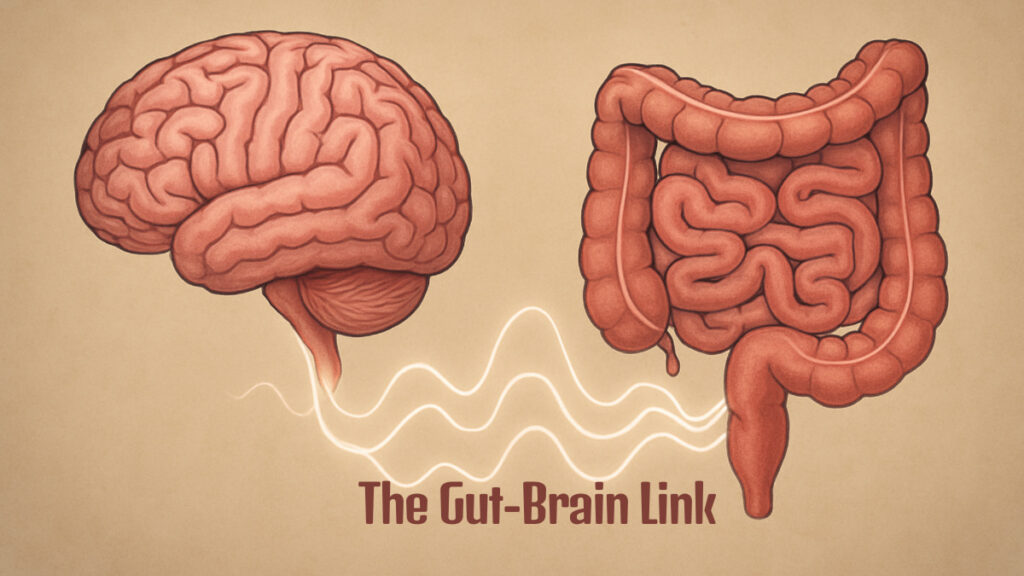
Most people don’t realize that the gut and the brain are constantly talking to each other. This back-and-forth connection is known as the gut-brain link or gut-brain axis. It plays a key role in how we feel, how we think, and how our body functions every day. From stress to mood to digestion—this powerful connection affects more than you might imagine.
“All disease begins in the gut.” – Hippocrates (Father of Medicine)
Let’s explore this fascinating link and how taking care of your gut can improve your overall well-being.
The Powerful Connection Between Gut and Brain
The gut and brain are connected by a special communication system that allows them to exchange information in real time. The main “highway” between them is a large nerve called the vagus nerve, which runs from the brain down to the gut.
Scientists have discovered that about 80% of the signals in this connection actually travel from the gut to the brain, not the other way around. That means your gut is constantly informing your brain about what’s happening inside your body.
What makes this even more interesting is that your gut has its own nervous system called the enteric nervous system, often referred to as the “second brain.” It contains more than 100 million nerve cells, which is why your gut can act independently and even react emotionally—like when you feel nervous or get stomach cramps from stress.
This connection explains why we sometimes “feel things in our gut” even before we think them through with our brain.
How the Gut Affects Mood and Emotions
The gut is not just a place where food is digested—it’s also a factory for neurotransmitters, which are chemicals that send messages throughout the brain and body.
One of the most important neurotransmitters is serotonin, often called the “feel-good chemical” because it helps regulate mood, sleep, and emotions. Surprisingly, about 90% of your body’s serotonin is made in your gut, not your brain. The gut also makes other chemicals like dopamine, which controls pleasure and reward, and GABA, which helps calm the mind.
When your gut is healthy and balanced, these chemicals are produced in the right amounts. But when the gut is irritated or inflamed, it can cause emotional changes like sadness, anxiety, or irritability. That’s why many people with gut problems also experience mental health symptoms.
In fact, new research is now showing that improving gut health can reduce symptoms of depression and anxiety in some people. This is why some doctors now recommend probiotics (good bacteria supplements) as part of treatment for mood disorders.
Why Gut Bacteria Matter So Much
Your gut is home to more than 100 trillion bacteria, along with viruses, fungi, and other tiny organisms. Together, they are called the gut microbiome. These tiny creatures are essential to your health—they help you digest food, make vitamins, control inflammation, and protect you from harmful germs.
The gut microbiome also communicates with your brain and influences your mood, memory, and immune system. A healthy microbiome helps your body and mind function properly.
But when the balance of good and bad bacteria gets disturbed—a condition called dysbiosis—it can lead to a wide range of problems:
- Stomach issues like bloating or constipation
- Mental health problems like depression or brain fog
- Weaker immunity and more frequent infections
- Increased risk of long-term diseases like diabetes or Parkinson’s
In some people, dysbiosis starts with a poor diet, stress, overuse of antibiotics, or lack of sleep. That’s why protecting your gut bacteria is one of the most important things you can do for your health.
The Food You Eat Shapes Your Gut and Brain
Your gut bacteria are directly affected by what you eat. In simple terms: good food feeds good bacteria, while junk food feeds the bad ones.
Foods like fruits, vegetables, whole grains, beans, and fermented foods (like yogurt, kefir, and kimchi) help your gut stay strong and balanced. These foods are rich in fiber, which your body cannot digest—but your gut bacteria can. Fiber is like fuel for these good bacteria, helping them grow and produce helpful chemicals.
Fermented foods contain live cultures of good bacteria, which can improve your digestion and brain health.
On the other hand, highly processed foods, sugary drinks, and fried items harm your gut. These foods increase inflammation and allow harmful bacteria to grow. Over time, this can lead to poor mental focus, low energy, and even mental health issues.
So, when you eat well, your gut stays healthy. And when your gut is healthy, your brain works better too.
Taking Care of Your Gut to Protect Your Mind
There are many simple ways to keep your gut in good shape—and doing so will also support your brain.
First, eat a diet that is rich in fiber, fruits, vegetables, fermented foods, and healthy fats (like those in nuts and fish). This helps your good bacteria grow and keeps your gut environment balanced.
Second, try to manage stress, as it can harm your gut and lead to inflammation. Practices like meditation, yoga, deep breathing, or simply walking in nature can help reduce stress levels.
Third, get enough sleep. Poor sleep affects your gut bacteria and increases stress hormones, which can hurt both your digestion and your mood.
Finally, avoid overusing antibiotics, as they kill not just bad bacteria, but the good ones too. If you need antibiotics, talk to your doctor about taking probiotics afterward to help restore balance.
By making these small changes, you support your gut, which in turn helps your brain function better.
The Gut’s Hidden Superpower
Did you know that 70% to 80% of your immune system lives in your gut? This might sound surprising, but it’s true. Your gut is the body’s first line of defense against harmful invaders like bacteria, viruses, and toxins.
Inside your gut, there is a special lining that acts like a filter. It allows nutrients to pass through into your blood, but blocks harmful substances. This lining is supported by the good bacteria and special immune cells that work 24/7 to keep your body safe.
When your gut is healthy, your immune system stays strong. But when the gut becomes irritated or inflamed—often due to a poor diet, high stress, or too many antibiotics—the gut barrier can weaken. This allows harmful substances to leak into the bloodstream, causing a condition known as leaky gut.
Leaky gut can lead to widespread inflammation, which affects not only your physical health but also your mental state. Inflammation in the body has been linked to depression, anxiety, fatigue, and even brain fog.
So, by taking care of your gut, you’re not just improving digestion or mood—you’re also boosting your immunity and lowering your risk of chronic illness. It’s one more reason why the gut-brain link is so important for overall wellness.
A Healthy Gut Leads to a Healthy Mind
The gut-brain connection is one of the most exciting health discoveries of our time. It shows us that our thoughts, emotions, and physical health are deeply connected—and much of that connection starts in the gut.
Taking care of your gut is not just about avoiding stomach problems—it’s about building a strong foundation for mental clarity, emotional stability, and long-term wellness. By eating the right foods, managing stress, getting enough rest, and supporting your immune system, you can strengthen the connection between your gut and brain.
In short: a happy gut leads to a happy mind. And now you know why.