
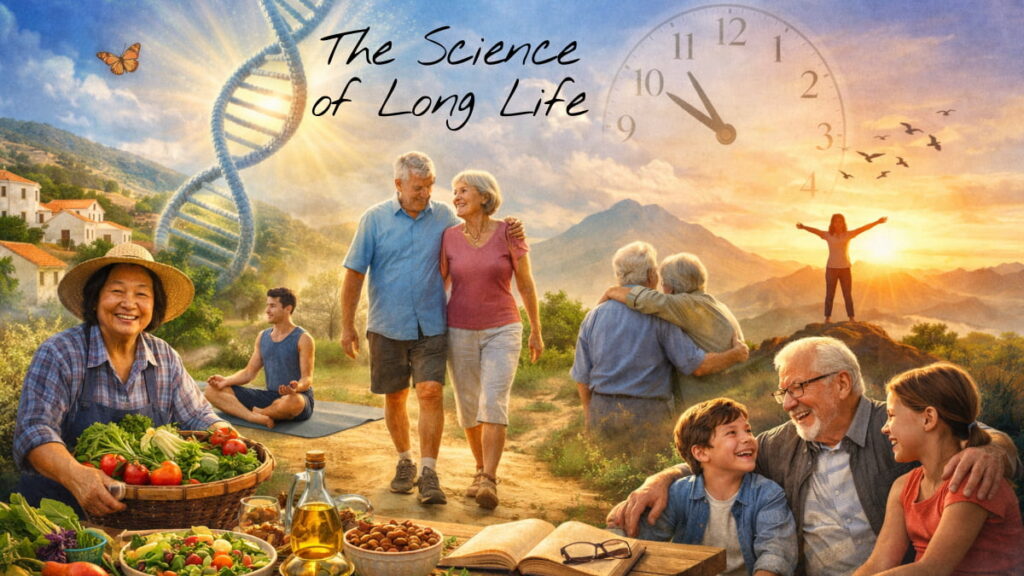
For thousands of years, human beings have searched for the secret to a long and healthy life. Ancient cultures believed that longevity was hidden in mystical herbs, sacred rituals, or divine blessings granted only to a fortunate few. Philosophers from ancient civilizations often debated what allowed some individuals to live far longer than others. Today, however, the question of longevity is no longer purely philosophical. Modern science has begun to uncover the biological and behavioural patterns that influence how long human beings live.
Through disciplines such as Gerontology, Longevity Science, and Epidemiology, researchers have studied populations across the world to understand the factors that contribute to long life. What scientists have discovered is both fascinating and encouraging. Longevity is not determined primarily by genetics alone. Instead, it is largely shaped by daily habits, social environments, mental attitudes, and long-term lifestyle patterns.
One of the most influential discoveries in longevity research comes from regions of the world where people consistently live much longer than the global average. These areas, widely known as Blue Zones, were extensively researched by Dan Buettner in collaboration with the National Geographic Society. Regions such as Okinawa, Sardinia, and Ikaria contain unusually high numbers of people who live into their nineties and even beyond one hundred years.
In addition to geographical studies, several long-term scientific investigations have tracked individuals across decades to examine how lifestyle affects aging. Institutions such as the National Institute on Aging and Harvard University have contributed valuable research demonstrating that longevity is strongly linked to patterns of living rather than rare genetic advantages.
The evidence emerging from these studies reveals an important truth: long life is not built through extraordinary discoveries but through consistent everyday practices. Nutrition, movement, relationships, purpose, mental balance, and lifelong engagement with learning all contribute to the quality and length of human life. When these factors come together, they create a powerful foundation for longevity that extends far beyond simply adding years to life. Instead, they enhance vitality, resilience, and overall wellbeing throughout the lifespan.
“Life is like riding a bicycle. To keep your balance, you must keep moving.” – Albert Einstein
Fuelling the Body for a Longer Life
Among the many factors that influence longevity, nutrition stands as one of the most fundamental. The food people consume each day becomes the raw material that sustains every biological process in the body. Over time, dietary habits shape metabolism, inflammation levels, cellular repair mechanisms, and the body’s ability to resist disease.
Scientific research conducted by the National Institute on Aging has shown that moderate calorie intake can significantly influence lifespan. In several long-term experiments, researchers observed that calorie restriction without malnutrition slows the aging process and improves metabolic health. Reduced calorie consumption decreases oxidative stress, improves insulin sensitivity, and lowers the risk of chronic diseases that often shorten human life.
Many of the longest-living populations in the world follow dietary patterns that naturally encourage moderation. Residents of Okinawa practice the cultural principle known as Hara Hachi Bu, which encourages individuals to stop eating before they feel completely full. This practice prevents overeating and allows the body to maintain metabolic balance.
In addition to moderation, longevity diets emphasize whole and natural foods. One widely studied example is the Mediterranean Diet, which focuses on vegetables, fruits, legumes, nuts, whole grains, olive oil, and moderate amounts of fish. This dietary pattern provides essential nutrients, antioxidants, and healthy fats that protect the heart and support cellular health.
The benefits of such diets extend beyond immediate nutrition. Natural foods contain compounds that help protect DNA from damage and reduce inflammation in the body. Chronic inflammation is widely recognized as a major contributor to aging and many age-related diseases, including cardiovascular illness and neurodegenerative disorders.
In contrast, modern diets dominated by highly processed foods, excessive sugars, and refined carbohydrates can accelerate aging processes. These foods disrupt metabolic balance, increase fat accumulation, and trigger inflammatory responses that gradually damage the body.
Longevity research therefore emphasizes a simple but powerful principle: the quality and moderation of daily nutrition significantly influence the pace at which the body ages. Over decades, balanced and mindful eating patterns become one of the strongest foundations for long and healthy living.
Natural Movement and Lifelong Physical Activity
Another common characteristic of long-lived populations is regular physical activity. However, longevity research reveals that extreme athletic training is not necessarily required for a long life. Instead, consistent and natural movement throughout the day appears to be far more beneficial.
In Blue Zone communities, people rarely follow structured exercise routines. Instead, they remain physically active through everyday tasks such as walking, farming, gardening, cooking, and maintaining their homes. These activities keep the body moving continuously without the strain associated with intense workouts.
Regular movement benefits nearly every system in the human body. Physical activity strengthens the heart, improves blood circulation, and enhances oxygen delivery to tissues. These effects help maintain cardiovascular health and reduce the risk of heart disease, which remains one of the leading causes of death worldwide.
Movement also supports metabolic efficiency. When muscles are regularly engaged, the body becomes more effective at regulating blood sugar levels and maintaining a healthy weight. This reduces the likelihood of metabolic disorders such as diabetes and obesity.
Another important effect of physical activity occurs at the cellular level. Exercise stimulates the production of mitochondria, the structures within cells responsible for generating energy. Healthy mitochondrial function is closely associated with slower biological aging and improved physical endurance.
In addition to physical benefits, movement also supports mental wellbeing. Physical activity increases blood flow to the brain and stimulates the release of chemicals that enhance mood and cognitive function. Over time, this helps maintain memory, concentration, and emotional stability.
Longevity research therefore highlights a crucial insight: the human body is designed for movement. When activity becomes a natural and consistent part of daily life, it strengthens resilience and helps sustain health across many decades.
The Human Connection to Longevity
While nutrition and exercise are widely recognized as contributors to health, one of the most powerful predictors of longevity is social connection. Human beings are inherently social creatures, and meaningful relationships play a profound role in both emotional and physical wellbeing.
One of the most comprehensive studies on this subject is the Harvard Study of Adult Development conducted by Harvard University. This research project followed individuals for more than eighty years, examining how relationships, lifestyle, and mental health influence aging. The study’s most striking conclusion was that strong relationships are the most consistent predictor of long-term happiness and health.
People who maintain close friendships, supportive families, and active social networks tend to experience lower levels of stress and stronger immune function. Social interaction stimulates mental engagement and provides emotional support during challenging times.
Communities in Sardinia and Ikaria demonstrate how social structures contribute to longevity. In these cultures, elderly individuals remain integrated into daily community life. They participate in family gatherings, share meals with neighbours, and continue to contribute their knowledge and experience to younger generations.
By contrast, chronic loneliness has been linked to numerous health problems, including depression, cardiovascular disease, and cognitive decline. Social isolation increases stress hormones and weakens the immune system, making individuals more vulnerable to illness.
Relationships also influence behaviour. People embedded in supportive communities are more likely to adopt healthy habits, seek medical care when needed, and maintain emotional resilience.
Thus, longevity research emphasizes that human connection is far more than a source of comfort. It is a powerful biological and psychological factor that protects health and supports long life.
Purpose, Mindset, and Psychological Well-Being
Another essential dimension of longevity involves the human mind. Psychological wellbeing, personal purpose, and emotional balance all contribute significantly to how long and how well people live.
In Japanese culture, the concept of Ikigai represents the idea that every individual has a meaningful reason to wake up each morning. This sense of purpose motivates individuals to remain active and engaged with life regardless of age.
Research supported by the American Psychological Association suggests that individuals who possess a strong sense of purpose experience lower mortality rates and improved mental health. Purpose encourages goal-oriented behaviour, motivates healthy routines, and strengthens resilience during difficult times.
Mindset also plays a crucial role in how individuals experience aging. Studies conducted at Yale University discovered that people who view aging positively tend to live several years longer than those who associate aging with decline. A positive outlook influences cardiovascular health, immune function, and stress regulation.
Stress management represents another important psychological factor. Chronic stress accelerates biological aging through mechanisms involving telomeres, the protective caps on chromosomes. Research conducted by Elizabeth Blackburn and Elissa Epel demonstrated that prolonged stress can shorten telomeres, increasing the risk of disease and early mortality.
Practices such as meditation, mindfulness, reflection, and time spent in nature help regulate stress hormones and promote emotional stability. When individuals cultivate calmness and purpose in their lives, the body benefits through improved hormonal balance and reduced inflammation.
Psychological wellbeing therefore represents a powerful yet often overlooked component of longevity. A meaningful life nourishes the mind, and a healthy mind contributes significantly to a longer life.
Rest, Recovery, and Healthy Biological Rhythms
While activity and engagement are essential for health, rest and recovery are equally important. The human body requires periods of restoration to repair tissues, regulate hormones, and maintain mental clarity.
Sleep plays a central role in these processes. Research conducted by the National Sleep Foundation shows that adults who consistently obtain seven to eight hours of sleep each night experience significantly lower risks of cardiovascular disease, metabolic disorders, and cognitive decline.
During sleep, the body performs critical maintenance functions. The brain clears metabolic waste, tissues repair themselves, and hormones responsible for growth and immune function are released. Without adequate sleep, these restorative processes become impaired, leading to fatigue, weakened immunity, and accelerated aging.
Another aspect of recovery involves maintaining stable biological rhythms. Human physiology operates according to circadian cycles that regulate sleep, metabolism, and hormonal balance. Consistent daily routines, including regular meal times and exposure to natural daylight, help synchronize these rhythms.
Healthy habits also include avoiding behaviours that harm long-term health. According to the World Health Organization, smoking, excessive alcohol consumption, and sedentary lifestyles remain major contributors to premature death worldwide.
Longevity therefore depends on balance. Just as activity strengthens the body, rest restores it. Together, they create a sustainable rhythm that supports health throughout life.
Lifelong Learning, Curiosity, and Cognitive Engagement
An additional factor gaining increasing attention in longevity research is the importance of mental stimulation. Just as the body benefits from physical exercise, the brain thrives on intellectual engagement and continuous learning.
Research conducted by Harvard Medical School suggests that individuals who remain intellectually active throughout life maintain stronger cognitive function and experience slower rates of mental decline. Activities such as reading, learning new skills, solving puzzles, engaging in creative arts, and participating in meaningful discussions stimulate neural pathways and support brain health.
The human brain possesses remarkable adaptability, known as neuroplasticity. This ability allows neurons to form new connections and reorganize themselves in response to learning and experience. Intellectual engagement strengthens these connections and enhances the brain’s resilience against age-related degeneration.
In many long-lived communities, older adults remain mentally active by sharing stories, teaching traditional skills, and participating in cultural practices. Their continued involvement in learning and mentoring younger generations keeps their minds engaged and reinforces their sense of purpose.
Curiosity itself appears to be a powerful driver of longevity. People who remain curious about the world tend to stay mentally engaged, socially connected, and emotionally motivated. This combination contributes to both cognitive health and overall wellbeing.
Thus, lifelong learning becomes more than a pursuit of knowledge. It becomes a tool for maintaining mental vitality and preserving the brain’s ability to function effectively throughout life.
Conclusion
The mystery of human longevity has fascinated thinkers and scientists for centuries. Modern research now provides compelling evidence that long life is not determined solely by genetics or medical interventions. Instead, it emerges from a complex interaction of lifestyle, psychological, and social factors that shape health across decades.
Studies conducted by institutions such as the National Institute on Aging and Harvard Medical School suggest that genetics accounts for only a small portion of human lifespan. The majority of longevity is influenced by daily habits and environmental conditions.
Balanced nutrition, moderate calorie intake, natural physical movement, strong social relationships, meaningful purpose, emotional resilience, sufficient sleep, and lifelong intellectual engagement collectively form the foundation of long life. These principles appear repeatedly in communities where people consistently live beyond ninety or even one hundred years.
Perhaps the most encouraging discovery from longevity science is its simplicity. The factors that support long life are not hidden secrets available only to a few. They are choices available to almost everyone through everyday actions.
Each meal, each conversation, each step taken, and each moment spent learning or reflecting contributes to the health of our future selves. Longevity therefore becomes not merely the extension of life but the cultivation of a life filled with vitality, meaning, and connection.
When these elements come together, human life does not simply become longer. It becomes richer, deeper, and far more fulfilling.