
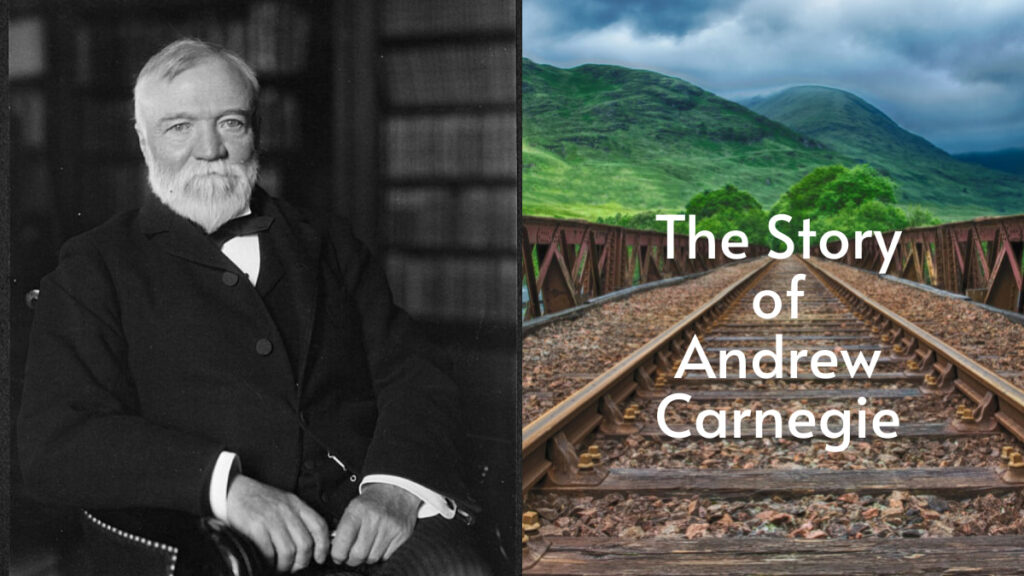
Andrew Carnegie is a name that stands tall in the annals of history as one of the greatest industrialists and philanthropists of all time. His journey from a poor Scottish immigrant to one of the wealthiest men in the world is not only inspiring but also full of valuable lessons on the principles of masterminding and organized planning. This blog delves into the life of Andrew Carnegie, exploring how his determination, strategic thinking, and collaboration with brilliant minds led him to monumental success. (Image Credit- Wikipedia)
“The men who have succeeded are men who have chosen one line and stuck to it.” — Andrew Carnegie
Early Life and Immigration
Andrew Carnegie was born on November 25, 1835, in Dunfermline, Scotland, into a family that faced significant financial hardships. His father, William Carnegie, was a weaver, and his mother, Margaret, supplemented the family’s income by binding shoes. The advent of industrialization rendered his father’s weaving business obsolete, plunging the family into poverty.
In 1848, seeking better opportunities, the Carnegie family immigrated to the United States. They settled in Allegheny, Pennsylvania, where Andrew, then only 13 years old, took his first job as a bobbin boy in a cotton factory, earning a meager $1.20 per week. Despite the harsh working conditions, young Carnegie was determined to help his family and improve their situation.
Early Career and Education
Andrew Carnegie had a thirst for knowledge and self-improvement. Despite his long working hours, he found time to educate himself. He borrowed books from a local benefactor’s private library, which he was allowed to access, and read voraciously. This habit of continuous learning played a crucial role in his future success.
Carnegie’s next job was as a telegraph messenger boy, where he impressed his employers with his hard work and quick learning ability. He taught himself to operate the telegraph and soon secured a position as a telegraph operator. His diligence and networking skills caught the attention of Thomas A. Scott, a superintendent of the Pennsylvania Railroad Company, who hired Carnegie as his personal assistant and telegraph operator.
Rise in the Railroad Industry
Working under Thomas A. Scott was a turning point in Carnegie’s life. Scott became a mentor to Carnegie, teaching him the intricacies of the railroad industry and management. Carnegie quickly rose through the ranks, and by the age of 24, he became the superintendent of the Pittsburgh Division of the Pennsylvania Railroad.
During his tenure, Carnegie displayed remarkable foresight and innovation. He introduced several cost-saving measures and improved the efficiency of the railroad operations. One of his key achievements was the development of a system for using railroad cars more effectively, which significantly reduced transportation costs.
The Leap into Investments
Carnegie’s success in the railroad industry gave him the confidence to venture into investments. With Scott’s encouragement, he invested in several industries related to railroads, including iron, bridges, and oil. One of his notable investments was in the Woodruff Sleeping Car Company, which manufactured luxury sleeping cars for railroads. This investment proved highly profitable and provided Carnegie with the capital to explore further opportunities.
Carnegie’s investment strategy was based on thorough research and calculated risks. He was not afraid to invest in new technologies and industries that he believed had great potential. His ability to identify lucrative opportunities and his willingness to invest in them played a significant role in his accumulation of wealth.
The Birth of the Steel Empire
In the 1860s, Carnegie recognized the growing importance of steel in the industrialization of the United States. He foresaw that steel would become a fundamental material in building railroads, bridges, buildings, and machinery. Acting on this insight, he founded the Keystone Bridge Company, which aimed to replace wooden bridges with stronger steel ones.
Carnegie’s vision extended beyond just bridge construction. He sought to control the entire steel production process, from raw materials to manufacturing. To achieve this, he established the Edgar Thomson Steel Works in 1875, named after the president of the Pennsylvania Railroad. This steel mill utilized the Bessemer process, a new technology that allowed for the mass production of steel at a lower cost.
Carnegie’s approach to business was highly strategic. He believed in vertical integration, where he controlled all aspects of production, from raw material extraction to the manufacturing of finished products. This approach not only reduced costs but also ensured high-quality control. Carnegie’s steel operations expanded rapidly, and he soon established several more mills and related enterprises.
Masterminding and Collaboration
One of the key factors behind Carnegie’s success was his ability to mastermind and collaborate with talented individuals. He surrounded himself with experts and innovators who shared his vision and drive. Carnegie understood that he could not achieve greatness alone; he needed a team of brilliant minds to help him realize his ambitions.
Carnegie’s right-hand man, Henry Clay Frick, played a crucial role in the expansion of the Carnegie Steel Company. Frick, a shrewd businessman and industrialist, managed the company’s operations and helped navigate through challenging times, including labour disputes. Although their relationship had its ups and downs, Frick’s contributions were instrumental in the company’s growth.
Carnegie also collaborated with other notable figures such as Charles M. Schwab, who later became the president of the Carnegie Steel Company, and Andrew Mellon, a financier who provided crucial funding for Carnegie’s ventures. These collaborations exemplify the principle of masterminding—bringing together talented individuals to achieve a common goal.
The Formation of U.S. Steel
By the late 19th century, Carnegie had built an enormous steel empire. However, he was not content with just being a leader in the industry; he wanted to create something even bigger. In 1901, he decided to sell his steel company to J.P. Morgan, a prominent financier and banker.
The sale led to the formation of the United States Steel Corporation, the first billion-dollar corporation in the world. Carnegie’s share of the sale was $480 million (equivalent to approximately $14 billion today), making him one of the wealthiest individuals of his time. The formation of U.S. Steel marked a significant milestone in the history of American industry and showcased Carnegie’s visionary approach to business.
Philanthropy and Legacy
With his vast fortune, Andrew Carnegie turned his attention to philanthropy. He believed that the wealthy had a moral obligation to use their riches for the betterment of society. Carnegie famously stated, “The man who dies thus rich dies disgraced.”
Carnegie’s philanthropic efforts were extensive and far-reaching. He funded the establishment of thousands of public libraries across the United States and around the world, believing that access to knowledge was crucial for personal development and societal progress. These libraries, known as Carnegie libraries, became centers of learning and community engagement.
In addition to libraries, Carnegie donated to educational institutions, founded Carnegie Mellon University, and supported scientific research through the Carnegie Institution for Science. He also established the Carnegie Endowment for International Peace to promote world peace and the resolution of conflicts through dialogue and diplomacy.
Carnegie’s philanthropy extended to the arts as well. He funded the construction of Carnegie Hall in New York City, one of the most prestigious concert venues in the world, which continues to be a hub for musical and cultural performances.
Lessons from Andrew Carnegie’s Life
Andrew Carnegie’s life story is rich with lessons that are as relevant today as they were in his time. Here are some key takeaways:
- The Power of Vision: Carnegie’s success was driven by his clear vision of the future. He foresaw the potential of the steel industry and invested in it at the right time. Having a clear vision of where you want to go and what you want to achieve is essential for success in any field.
- Persistence and Hard Work: Carnegie’s journey from a poor immigrant to a wealthy industrialist was not easy. It required immense persistence and hard work. He started with low-paying jobs and gradually climbed the ladder through his dedication and willingness to learn. His story reminds us that there are no shortcuts to success; it requires continuous effort and resilience.
- Masterminding and Collaboration: One of Carnegie’s greatest strengths was his ability to collaborate with talented individuals. He understood that success is a collective effort and that surrounding oneself with experts and visionaries can lead to remarkable achievements. The principle of masterminding—bringing together a group of people with complementary skills and knowledge—remains a powerful strategy for success.
- Strategic Thinking and Innovation: Carnegie’s approach to business was highly strategic. He identified opportunities, invested in new technologies, and implemented innovative processes to stay ahead of the competition. His emphasis on vertical integration and cost control allowed him to build a highly efficient and profitable business. Strategic thinking and innovation are essential for thriving in a competitive landscape.
- The Importance of Education and Self-Improvement: Despite his lack of formal education, Carnegie was a lifelong learner. He continuously sought knowledge and self-improvement, which played a significant role in his success. Investing in education and personal development is crucial for achieving long-term goals and adapting to changing circumstances.
- Philanthropy and Giving Back: Carnegie’s commitment to philanthropy underscores the importance of giving back to society. He believed that wealth should be used for the greater good and that those who have succeeded have a responsibility to help others. His philanthropic efforts have left a lasting legacy, and his belief in the transformative power of education and knowledge continues to inspire generations.
Conclusion
Andrew Carnegie’s story is a testament to the power of vision, persistence, collaboration, strategic thinking, and philanthropy. From his humble beginnings as a poor immigrant, he rose to become one of the wealthiest and most influential figures in history. His journey was marked by innovation, hard work, and a deep commitment to giving back to society.
Carnegie’s life and achievements offer valuable lessons for anyone striving for success. By embracing the principles of masterminding, organized planning, and continuous self-improvement, we can navigate our own paths to success and make a positive impact on the world around us. Andrew Carnegie’s legacy serves as a reminder that with determination and a clear vision, anything is possible.