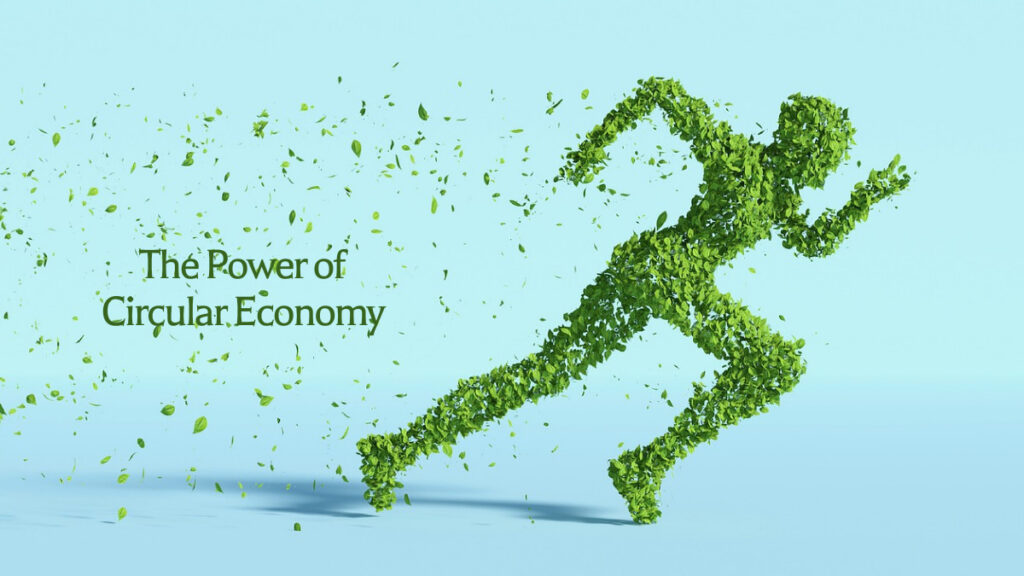
In the ongoing effort to take care of the environment and keep things sustainable, the concept of a circular economy has emerged as a beacon of hope for a world grappling with the challenges of climate change and resource depletion. Unlike the traditional linear economic model, which follows a ‘take, make, dispose’ approach, the circular economy represents a fundamental paradigm shift towards a more regenerative and restorative framework. By reimagining how we design, produce, consume, and dispose of goods and services, the circular economy aims to minimize waste, maximize resource efficiency, and promote the long-term well-being of both people and the planet. In this blog, we delve into the principles, benefits, challenges, and future prospects of embracing a circular economy, exploring how this transformative approach holds the key to unlocking sustainable prosperity for future generations.
“The circular economy is not just about sustainability; it’s about rethinking the way we do business, innovate, and interact with our environment.” – Ellen MacArthur
Understanding the Circular Economy
At its core, the circular economy is based on three key principles: designing out waste and pollution, keeping products and materials in use, and regenerating natural systems. By adopting these principles, businesses and societies can transition from a linear, consumption-driven model to one that is restorative and regenerative. This shift involves rethinking product design, manufacturing processes, consumption patterns, and waste management strategies.
One of the fundamental strategies of the circular economy is product lifecycle extension. This involves designing products that are durable, repairable, and upgradeable, thereby prolonging their useful life. Additionally, implementing reverse logistics and take-back schemes enables the recovery and refurbishment of used products, facilitating their reintroduction into the market.
Furthermore, the circular economy emphasizes the importance of resource efficiency and closed-loop systems. Instead of viewing waste as an inevitable by-product of consumption, resources are recovered, recycled, or regenerated to create new products or feed back into the production process. This not only reduces the demand for virgin materials but also minimizes the environmental impact associated with extraction and processing.
Benefits of Circular Economy
The transition to a circular economy offers a multitude of benefits across environmental, economic, and social dimensions. From an environmental standpoint, it reduces resource depletion, minimizes pollution, and mitigates greenhouse gas emissions. By keeping materials in circulation, the need for extracting and processing raw materials is significantly reduced, leading to the conservation of natural resources and the preservation of ecosystems.
Economically, the circular economy presents opportunities for innovation, job creation, and economic resilience. Adopting circular business models encourages resource optimization, fosters collaboration across value chains, and unlocks new revenue streams through product-as-a-service and sharing economy models. Moreover, by reducing dependency on finite resources and volatile commodity markets, businesses can enhance their long-term competitiveness and risk management.
On a societal level, the circular economy promotes inclusivity and equitable access to resources. By extending the lifespan of products and making them more affordable through leasing or sharing schemes, it enables broader participation in consumption while minimizing social disparities. Additionally, initiatives such as repair cafes and community recycling programs foster a sense of community engagement and empowerment.
Challenges and Barriers
Despite its immense potential, the transition to a circular economy is not without challenges. One of the primary barriers is the entrenched linear mindset prevalent in many industries and consumer behaviours. Shifting established business models and consumer preferences towards circularity requires concerted efforts in education, awareness-raising, and policy support.
Additionally, the lack of infrastructure for collection, sorting, and recycling poses significant challenges in scaling up circular initiatives. Developing efficient reverse logistics systems and investing in advanced recycling technologies are essential for closing the loop and maximizing resource recovery. Furthermore, regulatory frameworks need to be adapted to incentivize circular practices and discourage wasteful consumption patterns.
Another challenge is the complexity of global supply chains, which often hinder the transparency and traceability of materials and products. Addressing issues such as product labelling, material passports, and supply chain audits is crucial for ensuring accountability and promoting circularity throughout the value chain.
Future Prospects and Opportunities
Despite the challenges, the momentum towards a circular economy continues to grow, driven by increasing awareness of environmental issues, regulatory pressures, and market demand for sustainable products and services. Innovations in materials science, digital technologies, and business models are paving the way for more circular solutions across various sectors.
For instance, advancements in 3D printing and modular design enable on-demand manufacturing and personalized products, reducing waste and inventory overhead. Blockchain technology offers unprecedented transparency and trust in supply chains, facilitating the tracking of materials from source to end-of-life. Furthermore, collaborative platforms and sharing economy models promote resource sharing and utilization, maximizing the value of underutilized assets.
Moreover, the circular economy presents opportunities for cross-sector collaboration and knowledge sharing. Public-private partnerships, industry consortia, and multi-stakeholder initiatives play a crucial role in driving systemic change and scaling up circular solutions. By harnessing the collective expertise and resources of governments, businesses, academia, and civil society, the transition to a circular economy can be accelerated.
Real-Life Example: Patagonia
Patagonia is renowned not only for its high-quality outdoor apparel but also for its commitment to environmental sustainability and social responsibility. The company has been a pioneer in implementing circular economy principles throughout its supply chain and business operations.
Product Lifecycle Extension: Patagonia emphasizes product durability and repairability as key components of its circular economy strategy. For example, the company offers a “Worn Wear” program, where customers can return worn-out or damaged garments for repair or recycling. Skilled technicians assess and repair each item, extending its lifespan and reducing the need for new product purchases.
Closed-loop Recycling: In addition to repair services, Patagonia operates recycling programs to ensure that materials from old garments are repurposed rather than ending up in landfills. The company collects used clothing through its stores and partners with facilities that specialize in textile recycling. These materials are then sorted, processed, and transformed into new yarns or fabrics for use in manufacturing new products.
Material Innovation: Patagonia invests in research and development to explore alternative materials and manufacturing processes that align with circular economy principles. For instance, the company has experimented with using recycled polyester made from plastic bottles in its clothing lines. By closing the loop on material sourcing, Patagonia reduces its reliance on virgin resources and minimizes environmental impact.
Consumer Education and Engagement: Central to Patagonia’s circular economy efforts is its focus on educating and empowering consumers to make sustainable choices. The company provides resources and guides on garment care, repair techniques, and responsible consumption practices through its website and retail outlets. By encouraging customers to repair, reuse, and recycle their clothing, Patagonia fosters a culture of circularity and extends the lifespan of its products.
Impact and Challenges: While Patagonia’s circular economy initiatives have garnered praise for their environmental and social benefits, they are not without challenges. Scaling up recycling infrastructure, ensuring product traceability, and navigating complex supply chains remain ongoing challenges for the company. Additionally, changing consumer behaviours and attitudes towards ownership and consumption require continued effort and investment in education and outreach.
Future Outlook: Despite the challenges, Patagonia’s commitment to the circular economy serves as a model for the fashion industry and beyond. As awareness of environmental issues grows and regulatory pressures increase, more companies are likely to adopt similar approaches to sustainability and resource stewardship. By prioritizing circularity in business practices, Patagonia and other like-minded organizations contribute to a more sustainable and resilient future for generations to come.
Conclusion
In conclusion, the circular economy represents a paradigm shift towards a more sustainable, regenerative, and equitable future. By reimagining the way we design, produce, consume, and dispose of goods and services, we can create a prosperous economy that works in harmony with the planet’s finite resources. Embracing the principles of circularity offers immense opportunities for innovation, economic growth, and societal well-being. As we navigate the complexities of the 21st century, the circular economy emerges as a beacon of hope for building a resilient and thriving civilization.