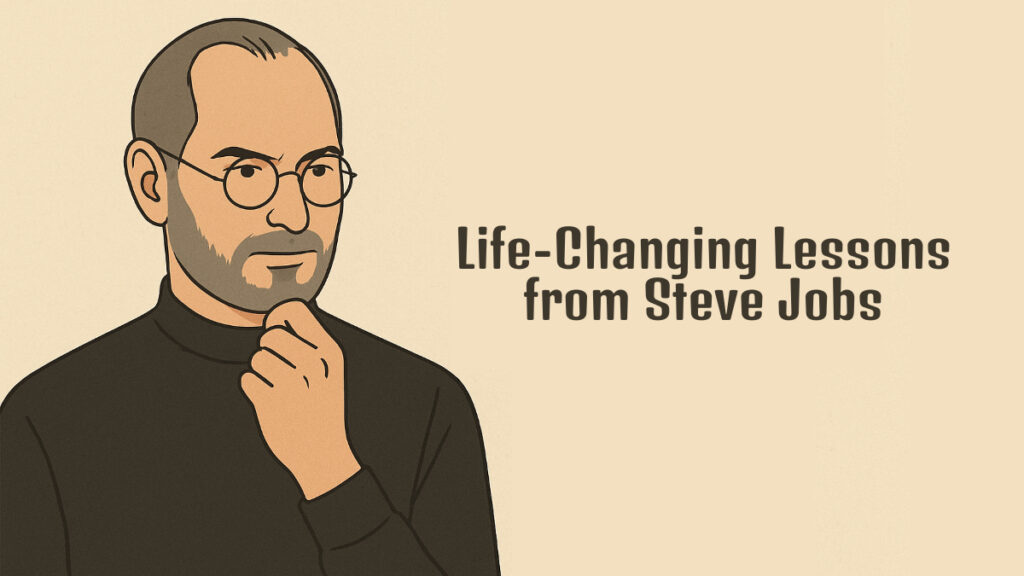
Steve Jobs, the co-founder of Apple, was much more than a tech innovator. He was a person who thought deeply about life, creativity, failure, and success. His words and actions continue to inspire millions around the world—not just in business, but in how we live our lives.
In this blog, we’ll explore 10 powerful life lessons from Steve Jobs that can help you make better decisions, live with purpose, and reach your full potential.
1. Follow Your Passion, Not the Money
Steve Jobs never started Apple to get rich. In fact, when he first worked on Apple with Steve Wozniak in his parents’ garage, they didn’t know if the company would succeed. What pushed Jobs forward was not money, but passion. He loved computers, design, and creating things that people would love to use.
“The only way to do great work is to love what you do.”
What we can learn:
Don’t pick a job just because it pays well or looks good to others. Choose something that excites you. When you enjoy your work, you’ll work harder, be more creative, and keep going even when things get tough. Money can follow later, but passion is what keeps you moving.
2. Connect the Dots Looking Back
Jobs once took a calligraphy class that had no clear use in his life at the time. But years later, it helped him design the first Mac with beautiful fonts and design features. At the time, he didn’t know how useful it would be.
“You can’t connect the dots looking forward; you can only connect them looking backward.”
What we can learn:
Sometimes you do things that don’t seem useful right away. That’s okay. Life doesn’t always make sense in the moment. But later, those experiences may become your strongest tools. So trust the process. Keep learning, exploring, and doing what feels right—even if the purpose isn’t clear right now.
3. Simplicity is Powerful
Apple products are known for their simple, clean design. That didn’t happen by accident. Jobs believed that simplicity wasn’t just about removing clutter—it was about understanding deeply enough to make something easy for others.
“Simple can be harder than complex: You have to work hard to get your thinking clean.”
What we can learn:
In a world full of noise and complexity, simplicity is a superpower. Whether you’re working on a project, solving a problem, or organizing your life, focus on clarity. Make things easy to understand and use. Remove what’s not essential. Simplicity brings peace, focus, and beauty.
4. Stay Hungry, Stay Foolish
Jobs ended his Stanford speech with this now-famous line: “Stay hungry, stay foolish.” This was a message to keep learning, keep dreaming, and never think you’ve reached the top.
What we can learn:
Always be curious. Keep asking questions. Don’t become too comfortable or think you know everything. When you stay “hungry,” you’re always looking to grow. When you stay “foolish,” you take risks, dream big, and challenge the norm. This is how progress happens.
5. Don’t Settle for Average
Jobs pushed his team hard. He had a sharp eye for detail and didn’t accept average work. He once said even the inside of a product—the part customers would never see—should be beautiful. To him, excellence wasn’t a choice, it was a habit.
“Be a yardstick of quality. Some people aren’t used to an environment where excellence is expected.”
What we can learn:
Don’t accept “good enough” when you’re capable of more. Whether it’s your work, your health, your learning, or your relationships, always strive for the best. Excellence doesn’t come from being lucky—it comes from caring deeply about what you do.
6. Use Death as Motivation
After being diagnosed with cancer, Jobs said he started living every day as if it were his last. It helped him cut out the noise, focus on what mattered, and take bold steps without fear.
“Remembering that you are going to die is the best way I know to avoid the trap of thinking you have something to lose.”
What we can learn:
Life is short. We don’t know how much time we have. Use that as motivation to stop wasting time on things that don’t matter. Speak your truth. Do meaningful work. Spend time with the people you love. Make each day count.
7. Think Different
Apple’s famous slogan was more than marketing—it was a philosophy. Jobs didn’t follow the crowd. He trusted his gut, even when others doubted him. The iPhone, the iPod, and the Mac were all products people didn’t know they needed—until Apple made them.
What we can learn:
Don’t be afraid to think differently. Challenge the usual way of doing things. Your unique view of the world is your strength. The people who make history are usually the ones who didn’t follow the rules but created their own path.
8. Failure Can Be a Gift
Getting fired from Apple—the company he helped build—was a huge blow for Jobs. But instead of giving up, he started two new companies: NeXT and Pixar. Pixar went on to become the most successful animation studio ever. And NeXT became the foundation for Apple’s comeback years later.
“It was awful-tasting medicine, but I guess the patient needed it.”
What we can learn:
Failure feels terrible in the moment, but it often leads to new growth. Don’t let failure define you. Let it teach you. Let it shape you into someone stronger, smarter, and more creative. Sometimes what looks like the end is actually a new beginning.
9. Focus Is Everything
Jobs believed that focus wasn’t just about choosing what to do—it was also about choosing what not to do. At Apple, he cancelled hundreds of projects so the team could focus on just a few great ones.
“Focus means saying no to the hundred other good ideas.”
What we can learn:
We often try to do too many things at once. But when you focus your time and energy on just a few key things, you make real progress. Choose your goals carefully. Say “no” to distractions. Success isn’t about doing more—it’s about doing what matters.
10. Leave a Legacy
Jobs didn’t just want to sell gadgets. He wanted to make a difference. He wanted to create tools that would help people do amazing things. Today, his work lives on in the way people create music, design art, communicate, and work.
“We’re here to put a dent in the universe.”
What we can learn:
Ask yourself: What do I want to leave behind? How do I want people to remember me? It doesn’t have to be something huge—it can be the kindness you show, the people you help, or the example you set. Live in a way that matters. Create something that lasts.
Bonus Lesson: Be True to Yourself
Above all, Steve Jobs believed in being authentic. He didn’t let others tell him what he should do or how he should live. He listened to his inner voice, even when it meant taking a harder road.
“Your time is limited, so don’t waste it living someone else’s life.”
What we can learn:
Trust yourself. Be honest about who you are and what you want. Don’t live for others’ approval. When you follow your own path, you’ll find real happiness and peace.
Final Thoughts: How to Apply These Lessons
Learning from Steve Jobs doesn’t mean you have to start a tech company or build the next iPhone. It means thinking deeper about how you live, work, and make choices.
Here’s how to put his lessons into action:
- Ask yourself daily: Am I doing what I love?
- Trust that today’s challenges will make sense later.
- Cut out what’s not necessary—focus on what truly matters.
- Keep learning. Stay curious.
- Don’t fear failure. Use it.
- Say “no” more often to protect your focus.
- Live every day with purpose.
- And most importantly—be yourself.
Steve Jobs lived a life full of passion, intensity, creativity, and bold decisions. His legacy isn’t just the devices we use—it’s the mindset we can adopt to build a better, more meaningful life.