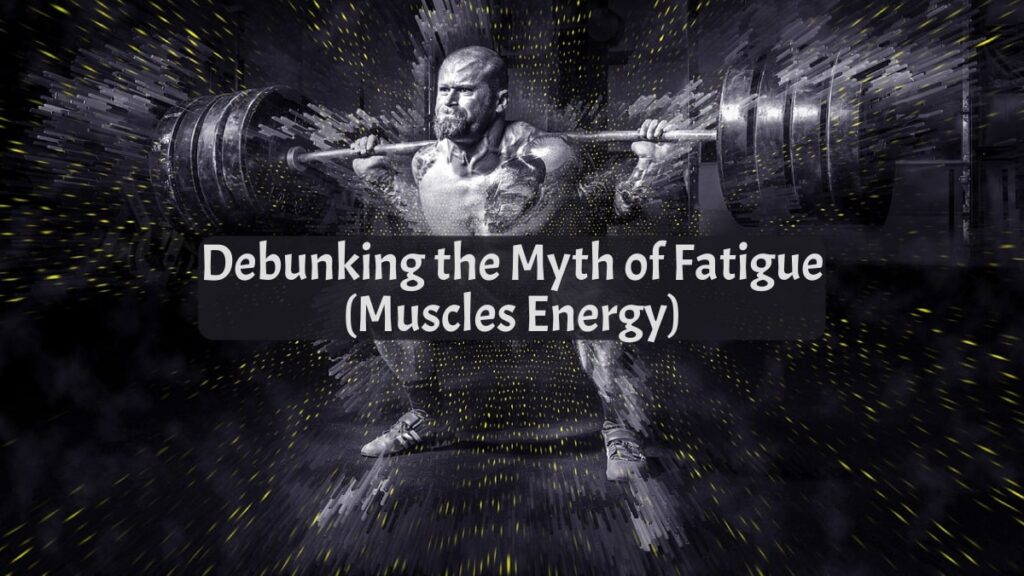
In the early 1990s, there was a scientist named Tim Noakes in South Africa. He worked in a lab where they studied how the body works. He came up with a new idea about why people feel tired when they exercise. Before that, people believed that the tiredness happened in the body. They thought that when we work our muscles really hard, they eventually stop working. This happens to athletes like runners and weightlifters. They know this feeling well. It’s not a pleasant one. At first, their muscles ache a little, but then it gets worse and worse until they can’t take it anymore. Runners slow down a lot, and weightlifters can’t lift the heavy barbell again. No matter how much they try, they run out of energy, and their muscles stop moving.
Noakes didn’t believe that tiredness happened in the body or that muscles truly ran out of energy. He wondered why many athletes, who seemed very tired, could suddenly run faster at the end of a race. If muscles were really exhausted, Noakes thought these last bursts of speed wouldn’t be possible. To show this, Noakes put sensors on athletes and told them to lift weights with their legs until they couldn’t lift anymore. When they couldn’t lift the weights and said they couldn’t move their muscles, Noakes sent an electric signal through the sensors. Surprisingly, their muscles moved, even though they couldn’t move them on their own. Noakes proved that the muscles could still do more work, even if the athletes felt tired.
Noakes did the same experiment multiple times and saw the same result. Even though people said they were completely tired and couldn’t make their muscles work more after exercising a lot, when they got an electric shock, their muscles still produced force. This made Noakes think that tiredness doesn’t come from the body getting worn out, but from the brain. Our muscles can actually do more, but our brain stops them from doing it. Noakes thinks this is a natural way to keep us safe. Our body could handle more stress, but the brain stops us before we get hurt. He calls the brain the “boss” of tiredness. It makes us feel tired when we’re scared or in danger. Basically, we’re wired to stop when things get hard. But we can learn to go past this feeling if we want to.
Purpose And Taking Control from the Main Boss
The Appalachian Trail (AT) is a long path that goes 2,185 miles from Georgia to Maine. It usually takes people around 5 to 7 months to walk the whole trail. But in 2011, a young woman named Jennifer Pharr Davis wanted to walk it really fast in under 50 days to set a new record.
Unfortunately, on the twelfth day of her attempt to break a hiking record, with more than 1,650 miles left to go, Pharr Davis was feeling very tired, weak, and ready to stop. Two problems, shin splints (pain in the front of the lower leg) and diarrhea (upset stomach), were causing a lot of trouble for her body for the past four days. She was thinking negative thoughts and feeling scared. Pharr Davis said, “Everything went wrong at the same time. I was already behind schedule and thought, ‘I can’t break the record.’ So, I gave up.” She reached a point where some roads met in New Hampshire. Her husband, Brew, who was helping her with the hike, was there. She was unhappy about quitting, but also felt relieved to be finished.
This all began 7 years ago when Pharr Davis was 21 years old. After she finished college, she realized that her education was limited and didn’t teach her much about the world outside. She felt like there was something important she was missing, and she wanted to connect with nature even though she wasn’t exactly sure why.
After finishing college in 2005, Pharr Davis started hiking on the AT for the first time. This experience taught her more than just basic backpacking skills. She met great friends and felt an amazing sense of wonder. She learned to value people and experiences more than things. Most importantly, she deeply connected with nature. She realized that nature wasn’t separate from her; she could be a part of it. Pharr Davis felt a strong connection to God while hiking. She thought that her ability to hike quickly in the wilderness might be a gift. As a Christian, she felt a responsibility to use this gift.
And she certainly used that gift. Pharr Davis really loved hiking and spent more and more time outdoors. In 2008, just a few years later, she hiked the AT in 57 days. Her new husband supported her on and off the trail. This was the fastest time a woman had ever done it. Hiking had become a big part of her life by then. She started to think, “Maybe I could break the overall record.”
The longest time anyone had done was 471⁄2 days. Strong men who were really good at enduring tough challenges had set this record before. Imagine a woman winning against all the best men in the Boston Marathon – that’s how unbelievable it seemed. But Pharr Davis believed in herself a lot and her husband Brew supported her too. They decided to try it, and for the next 3 years, they focused on getting ready and practising.
Fast-forward to June 28, 2011, when Pharr Davis’s drive and chances of breaking the overall record came to a crippling halt as she approached Brew on those New Hampshire roads. “I finally got to Brew and told him I was quitting,” she says, but “Brew was not okay with it.” Brew, who was supporting the record attempt, reminded her that he had given up so much of himself for her, and that this was a team effort. It was only then, looking into her husband’s eyes, that she realized something critical. “Until then, everything had been about me and the record,” she said. “I was a slave to the record; it was all I was thinking about.” At that moment, though, Pharr Davis had a revelation that changed everything:
I just totally released from the record. I started hiking out of a greater faith. I wanted to honor my God, to get back to the reasons that got me hooked on hiking to begin with—a love for the wilderness, a love for my husband, and to use my gift. I remembered that I feel closest to God when I am hiking up and down the trail as a part of nature, when I am loving my husband, when I am relishing in my gift. All of a sudden, the hike was no longer about a record, it was no longer about me. The whole thing became an act of worship to something greater than myself.
Even though she felt better and worse during the hike, Pharr Davis’s worries went away after she changed how she thought. When she started thinking about things other than herself, she started feeling better quickly. She felt like a new person, full of energy again. She said her tiredness got better and she could face her fears more easily. She kept hiking, thinking about her husband, nature, and her god, and that made her happy.
Thirty-four days later, after travelling more than 47 miles every day on tough terrain, Pharr Davis did something incredible. She broke the previous record by 26 hours. This amazing achievement made her the National Geographic Adventurer of the Year.
When we told Strecher, a professor at the University of Michigan who studies the meaning of life, about Pharr Davis’s story, he was really impressed. He sent a short email that said “Wow.” Later, he explained that what Pharr Davis did on the Appalachian Trail shows how she focused on her goal instead of herself. She used her strong sense of purpose to overcome her worries and uncertainties. Strecher also mentioned some new brain science that helps us understand what might have been happening in her mind.
In a recent study, scientists looked at how the brain reacts to scary messages. They used fMRI scans to see what happens inside the brain when people see these messages. People who thought a lot about their important beliefs before seeing the scary messages had parts of their brains light up. These parts are linked to positive thoughts. This means their brains became more open to the scary messages. Instead of feeling scared and stopping, their brains made them want to face the challenge. This wasn’t just in the lab. The people who thought about their beliefs were better at handling scary situations in real life compared to a group that didn’t do this.
Pharr Davis achieved amazing physical things on the AT trail. This is partly due to her genetics, which play a role in her abilities. But her mental achievements are just as impressive, and something we can all do. If we think about things beyond just ourselves and consider our important beliefs, we can face tough situations with more bravery and get better at what we do.
When we have a higher purpose, it’s not only our physical abilities that get better. A study looked at more than 200,000 workers in different jobs and found that believing our work helps others leads to better performance. Other studies show that having a clear purpose can help us avoid feeling exhausted and can also make it easier to stick to tough health goals like eating better or quitting smoking. This all makes sense because when things seem scary or too hard, our brain tries to keep us safe by avoiding failure. It stops us from trying and pushes us to take an easier path. But when we focus on a bigger purpose beyond just ourselves, we can overcome these limits and achieve more.
In a paradoxical twist, the less we think about ourselves, the better we become.
(The blog is inspired by “Peak Performance: Elevate Your Game, Avoid Burnout, and Thrive with the New Science of Success” by Brad Stulberg).