We are often taught that success comes from pushing harder, working longer, and never admitting weakness. From school to the workplace, the message is clear: limits are problems to overcome. If you feel tired, push through. If something feels difficult, try harder. If you fail, you did not want it badly enough. Over time, this way of thinking becomes so normal that we forget to question it.
But real life tells a different story. Many people burn out not because they are lazy or incapable, but because they refuse to accept that they are human. They ignore their mental, emotional, and physical limits until those limits force themselves into attention through exhaustion, frustration, or failure. Ironically, this constant struggle often leads to less creativity, poorer decisions, and average work instead of great work.
Accepting your limits does not mean giving up on ambition. It means understanding yourself clearly and working with reality rather than fighting it. When you accept where you are strong and where you are not, you stop wasting energy on pretending and start using your energy wisely. This acceptance can quietly unlock your best work, not by pushing you harder, but by helping you work smarter, calmer, and with greater focus.
“Knowing yourself is the beginning of all wisdom.” — Aristotle
Why We Fear Our Limits More Than Failure
Many people fear their limits because limits feel permanent. Failure can be explained away as bad timing or lack of effort, but limits feel like a statement about who we are. Admitting that we cannot do everything feels like admitting that we are not enough. This fear is deeply emotional, not logical.
Modern culture adds to this fear. Social media shows polished success stories, not the hidden constraints behind them. We see people who seem to work endlessly, learn everything quickly, and handle pressure effortlessly. Rarely do we see the support systems, boundaries, or sacrifices behind their success. As a result, we compare our private struggles to someone else’s public highlight reel.
This fear pushes people into constant overextension. They say yes when they should say no. They take on tasks that drain them instead of tasks that suit them. Over time, this creates resentment toward work itself. What once felt meaningful becomes heavy, not because the work is wrong, but because it is done without respect for personal limits.
When we stop fearing limits, something important happens. Limits stop feeling like walls and start feeling like guideposts. They show us where our energy flows naturally and where it leaks away. Instead of fighting ourselves, we begin to understand ourselves.
Limits Create Focus, and Focus Creates Quality
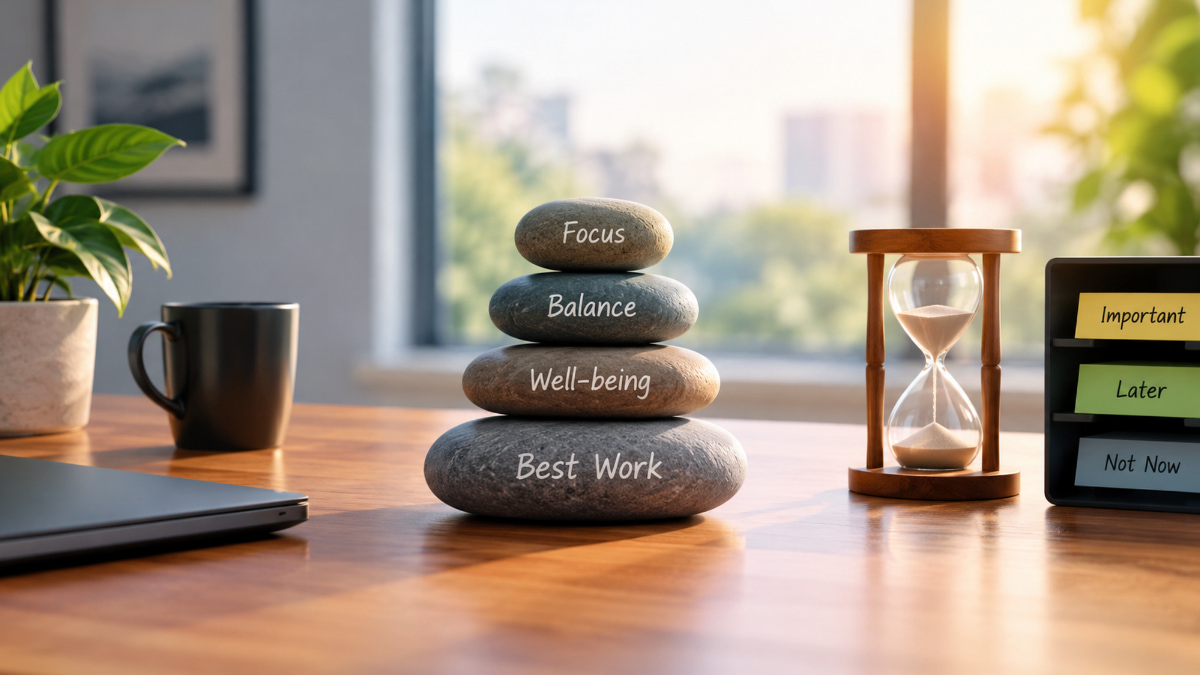
One of the biggest myths about productivity is that doing more leads to better results. In reality, most high-quality work comes from depth, not volume. Accepting your limits forces you to choose. You cannot do everything, so you must decide what truly matters. This decision-making sharpens focus.
When you accept that your time and energy are limited, you stop scattering attention across too many goals. You prioritize the work that aligns with your strengths and values. This focus allows you to go deeper, think more clearly, and refine your output. Instead of rushing from one task to another, you stay long enough with one problem to solve it well.
Creative professionals often experience this clearly. Writers, designers, researchers, and thinkers produce their best work when they respect their mental limits. They know when to stop, when to rest, and when their mind is no longer producing quality ideas. By stepping away instead of forcing output, they return with sharper insight and stronger ideas.
Limits also protect consistency. When you work within your capacity, you can show up again tomorrow. When you ignore limits, you may achieve short bursts of productivity, but you pay for it later with fatigue and loss of motivation. Accepting limits helps you build sustainable rhythms, and sustainable rhythms lead to long-term excellence.
How Self-Acceptance Reduces Stress & Improves Thinking
Stress is often not caused by the amount of work we have, but by the gap between expectations and reality. When we expect ourselves to function without limits, reality constantly disappoints us. This creates inner tension. We feel behind, inadequate, or guilty even when we are working hard.
Accepting your limits closes this gap. It replaces unrealistic expectations with honest ones. When you know what you can reasonably handle, your plans become more realistic. Your goals become achievable instead of overwhelming. This alone reduces mental stress significantly.
Lower stress improves thinking. Under constant pressure, the brain focuses on survival, not creativity or problem-solving. Decisions become reactive instead of thoughtful. When stress decreases, the mind has space to analyze, connect ideas, and see patterns. This is where high-quality thinking lives.
Acceptance also improves emotional regulation. Instead of criticizing yourself for getting tired or stuck, you respond with curiosity. You ask what support you need, not what is wrong with you. This kinder inner dialogue builds confidence, not arrogance, but a steady belief that you can work well within your human limits.
Turning Limits Into Strengths Through Alignment
Limits become powerful when they guide alignment. Alignment means matching your work to how you naturally function. Everyone has different energy patterns, skills, and tolerances. Some people thrive in fast-paced environments, while others do their best thinking in quiet, uninterrupted time. Some excel at starting ideas, while others shine at refining and completing them.
When you accept your limits, you stop trying to copy someone else’s style of success. You design your work around who you are. This might mean structuring your day differently, choosing projects more carefully, or collaborating with others who complement your weaknesses.
For example, someone who struggles with long meetings but excels in written communication can shift toward roles or processes that value clarity over constant discussion. Someone who knows they lose focus after a certain number of hours can protect their best hours for deep work instead of meetings.
This alignment turns limits into advantages. Instead of spreading yourself thin, you concentrate effort where it has the highest impact. Your work feels more natural, less forced. Over time, people begin to notice not how much you do, but how well you do it.
Sustainable Success Comes From Respect, Not Pressure
Many people reach a point in their careers where they realize that success achieved through constant pressure is fragile. It depends on perfect health, endless motivation, and circumstances that never change. This kind of success is hard to maintain and easy to lose.
Accepting your limits introduces respect into your relationship with work. You respect your need for rest, learning time, and recovery. You respect that growth happens in phases, not in a straight line. This respect creates resilience.
Sustainable success is built on systems that support you when motivation is low or life becomes difficult. These systems are only possible when you acknowledge limits honestly. You plan for rest instead of treating it as a reward. You allow space for mistakes instead of hiding them. You adjust goals when reality changes instead of forcing old plans to fit new conditions.
Over time, this approach leads to deeper satisfaction. Work stops feeling like a constant test and starts feeling like a meaningful contribution. You may not do everything, but what you do carries weight and intention.
Conclusion
Accepting your limits is not a retreat from excellence; it is a return to it. When you stop fighting who you are, you gain access to your full capacity. You free yourself from unrealistic expectations and redirect energy toward work that truly matters.
Your limits define the shape of your best work. They help you focus, reduce stress, improve thinking, and build sustainable success. Instead of seeing them as weaknesses, you begin to see them as boundaries that protect quality and meaning.
In a world that constantly tells you to do more, faster, and better, choosing acceptance is a quiet act of strength. It allows you to work with clarity instead of pressure, intention instead of fear. And in that space, your best work does not just become possible, it becomes natural.