
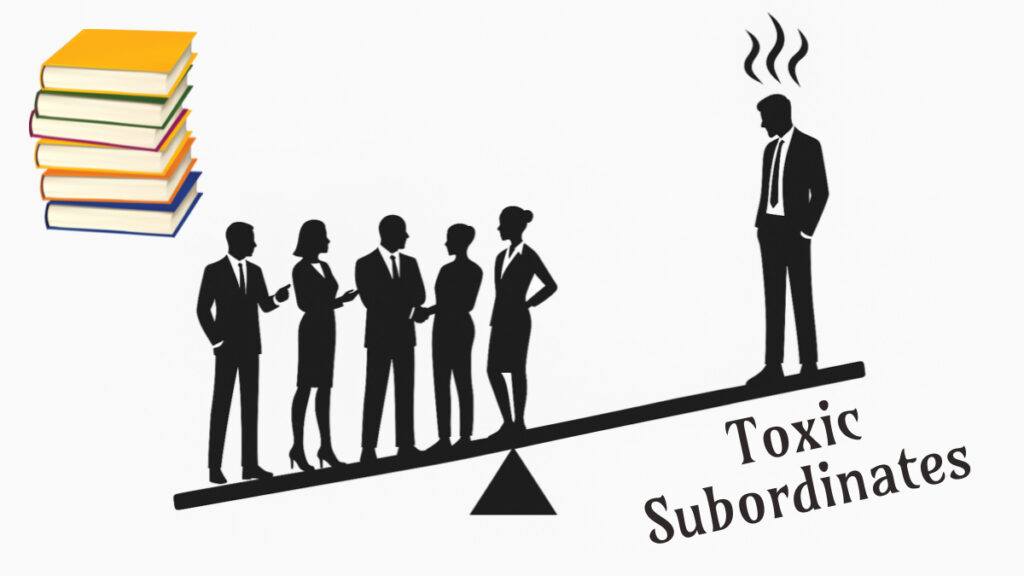
In most workplace stories, the spotlight usually falls on bad bosses. But the negative behaviour of subordinates—if ignored—can be just as harmful. A difficult subordinate may not shout in meetings or directly oppose authority. Instead, their damage can be quiet and hidden: constant complaining, passive resistance, secret agendas, spreading gossip, or quietly working against teammates.
This behaviour often grows in silence, slowly breaking trust and teamwork from inside. What makes it more dangerous is the belief that problems only flow from the top down. Leaders may avoid addressing it directly because they fear being seen as unfair or harsh.
Examples of difficult subordinate behaviour include:
- Regularly resisting team decisions
- Deliberately hiding information
- Quietly working against peers or managers
- Crossing authority in tricky ways
- Acting like a victim when confronted
Spotting this behaviour early is the first step of smart leadership. The solution is not reacting harshly but finding the real reason behind it—often rooted in insecurity, desire for control, or lack of recognition.
“The rotten apple spoils the rest.” – Benjamin Franklin
The Impact on Teams
A toxic subordinate is like a drop of ink in a clear glass of water—it doesn’t take long to change the whole atmosphere. While top performers bring energy, negative individuals slowly drain it, especially if they remain unnoticed or unchallenged.
Their presence can create confusion and tension among teams. Colleagues may start questioning leaders for ignoring the issue. Teamwork fades. Blame replaces responsibility. Soon, even the best performers may lose interest, wondering if honesty and hard work matter at all.
The damage goes beyond personal issues—it can be measured:
- Work slows down due to emotional stress.
- Employees leave for healthier workplaces.
- Creativity dies because people fear criticism or hidden sabotage.
- Customer service suffers when the team itself is unstable.
If a leader stays silent or does nothing, it can look like support for the behaviour. That is why smart leaders act—not only to protect results but also to keep the safe environment every team requires.
Diagnose Before You Act
Before jumping into conflict or strict discipline, a wise leader takes time to see the full picture. Smart leadership means understanding, not acting on impulse. Not all difficult subordinates are toxic—some are simply misunderstood, underused, or silently struggling.
Leaders should ask themselves:
- Has this person always behaved like this, or is it a recent change?
- Could personal or professional stress be causing it?
- Is the team structure, communication style, or leadership itself adding to the problem?
- Has this employee tried raising concerns that were ignored?
This careful approach does not excuse poor behaviour—it ensures leaders address root causes, not just surface issues. It also helps separate true toxicity from temporary stress or role mismatch.
Once patterns are clear—through observation, peer feedback, or performance data—the leader can respond with knowledge, not anger.
Direct, Calm, and Clear
Having the right conversation is a skill. Done poorly, it can make things worse. Avoiding it completely allows the negative behaviour to grow. Smart leaders neither attack nor delay—they address issues with clarity, calmness, and confidence.
Steps to follow:
- Speak in private—never in public or in heated moments.
- Use facts, not feelings. Instead of “You’re always negative,” say, “In the last three meetings, I noticed you interrupted twice and rejected two proposals.”
- Treat it as teamwork. The aim is not punishment but progress. Ask: “What’s been driving your resistance? How can we fix this?”
- Set clear expectations. Define behaviour standards and consequences firmly.
People are more likely to change if they feel heard—even when their actions must stop. Smart leadership blends empathy with responsibility.
Redirecting Energy
Sometimes, negative behaviour is a sign of misplaced energy. Smart leaders redirect that energy into productive work. A defiant team member may be seeking recognition. A constant complainer may have useful insights but feels ignored. A know-it-all may want more responsibility.
Changing their role and giving fresh tasks—within clear boundaries—can turn resistance into contribution.
For example:
- A disruptive employee who always criticizes processes could lead a project on improving them.
- Someone who dislikes micromanagement could be trusted with an independent project but required to give updates.
The key is to:
- Turn complaints into constructive contributions
- Focus emotional energy into meaningful projects
- Provide freedom while maintaining structure
This doesn’t always succeed—but when it does, it transforms a challenge into an advantage and creates a strong leadership story.
Knowing When to Let Go
Smart leadership isn’t only about fixing—it’s also about knowing when to end things. Not every toxic subordinate wants or deserves a second chance. If coaching, guidance, and redirection fail, it may be time to remove them—not as punishment but to protect the team.
Leaders often hesitate due to emotional or political reasons:
- “What will HR say?”
- “We’ve already invested so much in them.”
- “It will disrupt things temporarily.”
But keeping a toxic person too long sends the wrong message—that results matter more than values, or that bad behaviour is acceptable if performance is high.
Before letting go, smart leaders ensure:
- Proper documentation aligned with HR rules.
- The team is reassured and supported.
- The organization’s values are reinforced.
Often, removing a toxic subordinate brings relief to the whole team. It resets standards and shows employees that they are valued and protected.
Building a Culture That Prevents Toxicity
The best way to handle toxic subordinates is to stop them from appearing in the first place. Smart leadership is proactive, not just reactive. It builds a culture where toxicity cannot grow.
This involves:
- Embedding clear values and behaviour standards in hiring, training, and reviews—not just writing them on walls.
- Protecting psychological safety so employees can speak against negativity without fear.
- Encouraging open communication so frustrations don’t build up silently.
- Using peer recognition to build respect and prevent power games.
Leaders must also set the example. If fairness, respect, and openness are visible in leadership actions, the same spreads in the team. Toxic people then either adapt or leave.
Most importantly, leaders must reward teamwork more than individual show-offs. When collaboration is valued higher than competition, toxicity loses its influence.
Conclusion: The Sign of Smart Leadership
Handling toxic subordinates is not about control—it’s about guidance, clarity, and courage. Smart leaders don’t just remove problems; they find hidden potential, reset standards, and protect their culture with commitment.
Modern leadership is not about position or title. It is about emotional understanding, smart decision-making, and shaping workplace culture. Toxicity tests all three. But with the right approach, even tough situations can become turning points for growth—for both the subordinate and the leader.
In the end, the way a leader deals with toxic subordinates becomes a lasting mark of their leadership style.