
• Author
  • Copyright Report
  • Privacy Policy
  • Terms & Condition
  • Contact
  • About
Wednesday, June 24, 2026
Fastlane Freedom
No Result
View All Result
  • Mindfulness
  • Money
  • Grow Business
  • Essential Reading
  • Popular Quotes
  • Student
  • Parenting
  • Videos
  • About
  • Contact
  • Mindfulness
  • Money
  • Grow Business
  • Essential Reading
  • Popular Quotes
  • Student
  • Parenting
  • Videos
  • About
  • Contact
No Result
View All Result
Fastlane Freedom
No Result
View All Result
  • Author
  • Copyright Report
  • Privacy Policy
  • Terms & Condition
  • Contact
  • About

Home » The Cocktail Party Effect: A Deep Dive into Selective Attention

The Cocktail Party Effect: A Deep Dive into Selective Attention

Vinod Singh by Vinod Singh
September 11, 2024
Reading Time: 6 mins read
A A
0
The Cocktail Party Effect

Table of Contents

  • Understanding the Cocktail Party Effect
  • The Science Behind the Effect
  • Selective Attention and the Brain
  • Practical Implications of the Cocktail Party Effect
  • Challenges and Limitations
  • The Role of Attention and Conscious Awareness
  • Conclusion: The Remarkable Human Ability

Imagine yourself at a lively party. The room is filled with people chatting, music playing in the background, and the general hum of activity. Yet, amid all this noise, if someone across the room mentions your name, your ears perk up, and your attention immediately shifts to that conversation. This phenomenon, where we can focus on a specific auditory stimulus in a noisy environment, is known as the “Cocktail Party Effect.” It’s a testament to the remarkable ability of the human brain to filter and prioritize information in complex environments.

“The ability to focus on a single conversation in a crowded room is a testament to the brain’s remarkable capacity for selective attention.”

Understanding the Cocktail Party Effect

The Cocktail Party Effect was first coined in the early 1950s by British cognitive scientist Colin Cherry, who was studying how people could follow one conversation in a crowded room filled with various other conversations. Cherry’s work was among the earliest investigations into what we now understand as selective attention—the brain’s ability to focus on a particular object or conversation while filtering out a range of other stimuli.

The effect is an example of how our auditory system can detect and identify relevant sounds from a mix of competing background noises. Even though multiple conversations, music, and other noises are happening simultaneously, the brain manages to filter out the irrelevant noise and focus on the sound that is most significant to us, like our name being mentioned.

The Science Behind the Effect

The Cocktail Party Effect highlights the efficiency and sophistication of the auditory processing system. The brain uses a variety of cues to focus on the relevant sounds:

  • Sound Localization: The brain can determine where a sound is coming from, which helps us focus on a conversation coming from a specific direction while ignoring noise from other directions. This is due to the difference in the time it takes for sound to reach each ear, known as interaural time difference, and the difference in sound intensity between the ears, known as interaural level difference.
  • Voice Pitch and Timbre: Our brains can differentiate between different voices based on pitch, timbre, and other vocal characteristics. This allows us to separate one person’s voice from another’s, even if they are talking at the same time.
  • Context and Familiarity: Our brains also use context and familiarity with certain voices or sounds to focus on them more easily. For instance, you’re more likely to pick up on a conversation if it involves people you know or topics you are interested in.
  • Attention and Memory: The brain’s ability to focus on a particular stimulus is also influenced by attention and memory. If you’re expecting to hear your name, or if you’re particularly interested in a certain topic, your brain is more likely to detect those specific words amid background noise.

Selective Attention and the Brain

The Cocktail Party Effect is closely related to the concept of selective attention, which is the process by which the brain filters out irrelevant information to focus on what’s important. Selective attention involves several parts of the brain, including the auditory cortex, which processes sound, and the prefrontal cortex, which is involved in decision-making and attention control.

Studies using functional magnetic resonance imaging (fMRI) have shown that when people are focusing on a particular sound, there is increased activity in the brain regions associated with attention and auditory processing. This suggests that the brain is actively working to enhance the perception of the desired sound while suppressing the background noise.

Practical Implications of the Cocktail Party Effect

The Cocktail Party Effect has significant implications in various areas, from daily social interactions to the design of hearing aids and other auditory technologies. Here’s a closer look at some of its practical applications:

  • Social Interactions: The ability to focus on a specific conversation in a noisy environment is crucial for effective communication in social settings. It allows us to engage in meaningful conversations even in crowded and noisy environments, such as parties, restaurants, or busy offices.
  • Hearing Aids: Understanding the Cocktail Party Effect has been instrumental in the development of modern hearing aids. These devices now often include directional microphones and advanced signal processing algorithms that help users focus on sounds coming from a specific direction, improving their ability to follow conversations in noisy environments.
  • Voice Recognition Technology: The principles behind the Cocktail Party Effect are also applied in voice recognition systems, such as those used in virtual assistants like Siri or Alexa. These systems are designed to recognize and respond to a user’s voice even in environments with background noise, making them more effective and user-friendly.
  • Cognitive Psychology and Neuroscience: The Cocktail Party Effect has provided valuable insights into how the brain processes and prioritizes information. This has implications for understanding cognitive disorders where attention is impaired, such as in ADHD (Attention Deficit Hyperactivity Disorder).

Challenges and Limitations

While the Cocktail Party Effect is a powerful demonstration of our brain’s capabilities, it’s not without its challenges and limitations. There are situations where the brain’s ability to filter out noise can be overwhelmed, leading to difficulties in focusing on the desired sound. This is particularly true in environments with very high levels of background noise or when multiple conversations are happening at similar volumes and pitches.

Additionally, individuals with certain hearing impairments or neurological conditions may find it more difficult to experience the Cocktail Party Effect. For instance, people with sensorineural hearing loss often struggle with speech discrimination in noisy environments, making it harder for them to focus on a single conversation.

Aging also affects the brain’s ability to filter out background noise. As we grow older, the natural decline in cognitive and auditory processing abilities can make it more difficult to experience the Cocktail Party Effect, leading to challenges in social situations where multiple conversations are happening simultaneously.

The Role of Attention and Conscious Awareness

One of the fascinating aspects of the Cocktail Party Effect is its connection to both conscious and unconscious processing. While much of the filtering happens automatically, we also have some conscious control over what we focus on. This duality shows how attention operates on multiple levels.

For example, you might be engaged in a conversation at a party, but if someone mentions your name across the room, your attention might momentarily shift to that conversation without you consciously deciding to do so. This shift can happen so quickly and automatically that you may not even be aware of it.

However, once your attention is drawn to the new conversation, you can make a conscious decision to either continue focusing on it or return to your original conversation. This interplay between automatic and controlled processes is a key feature of how selective attention works and illustrates the complexity of the Cocktail Party Effect.

Conclusion: The Remarkable Human Ability

The Cocktail Party Effect is a remarkable demonstration of the human brain’s ability to filter and prioritize auditory information in complex environments. It underscores our brain’s sophistication in processing sounds, recognizing familiar voices, and focusing on what matters most, even in the midst of overwhelming noise.

This phenomenon not only highlights the power of selective attention but also reveals much about how we interact with the world around us. From enhancing social communication to improving auditory technologies, the Cocktail Party Effect continues to be a topic of great interest in psychology, neuroscience, and engineering. Understanding this effect allows us to appreciate the incredible capabilities of the human brain and opens up new possibilities for improving our interactions with the increasingly noisy world we live in.

Featured reads

RELATED POSTS

Stop Over-Conscious Parenting: Raising Confident Kids

Great Entrepreneurs Aren’t Perfect—But They Build the Future

Why the World Needs More Risk-Takers, Not More Critics

Escaping the Traffic Jam of Stress, Salary & Spreadsheets

Why Saving Money Is Like Dieting—Easier Said Than Done

Meetings: Where Minutes Are Taken and Hours Are Lost

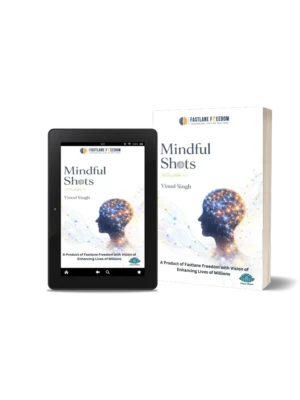
Mindful Shots, Volume-1 cover
Mindful Shots, Volume-1
Vinod Singh
Self-Help, Mindfulness

Mindful Shots, Volume-1

Vinod Singh

4.5 · reviews

Most people live their entire lives without truly understanding how their minds work or the immense power they hold within. Fewer than two percent of people can confidently answer questions like: What drives my thoughts? Why do I feel resistance to my own goals? You’ve likely experienced moments when you wanted to take a bold step—perhaps starting a new business or making a life-changing decision—only to hear an inner voice warning you of failure. That voice often justifies its fears by recalling countless stories of others’ setbacks—family members, friends, society, even distant headlines. It’s as if your mind maintains a detailed archive of every failure around you, replaying them to keep you from moving forward. But what if this inner voice could be understood, reprogrammed, and even turned into your greatest ally? Imagine what would be possible if both your conscious intentions and subconscious patterns worked together instead of pulling in opposite directions. This collection, Mindful Shots, brings together some of the most insightful writings on mindfulness from Fastlane Freedom. Each piece explores practical and scientific perspectives on how the mind shapes our choices, influences our health, and even participates in physical healing. Through research-backed insights and timeless wisdom, this book will help you see that the mind isn’t just a passive observer—it’s an active force capable of changing your reality. By learning how to quiet the noise, shift your mental inputs, and harness your inner voice, you’ll gain a clearer path to personal growth, emotional balance, and a deeper understanding of what mindful living truly means.

Amazon Flipkart
Parenting Essentials cover
Parenting Essentials
Vinod Singh
Self-Help, Parenting

Parenting Essentials

Vinod Singh

4.5 · reviews

Parenting is a journey—one of the most rewarding, challenging, and transformative experiences life has to offer. But it’s not a path we are meant to walk alone. Essential Parenting was born out of a deep desire to support and empower parents at every stage of their journey, from the early days of pregnancy to the complex teenage years. Drawing insights from the Fastlane Freedom platform, this book brings together wisdom, mindfulness, and practical strategies to help you raise confident, emotionally strong, and value-driven children. At Fastlane Freedom, we believe that conscious parenting begins with self-awareness. Children absorb more from our behaviour than our words. It’s in our everyday actions—our calm during chaos, our patience in moments of frustration, our consistency in values—that they find their foundation. Parenting is not about being perfect; it’s about being present, intentional, and compassionate.

Amazon Flipkart
The Wealth Code, Volume-1 cover
The Wealth Code, Volume-1
Vinod Singh
Self-Help, Finance

The Wealth Code, Volume-1

Vinod Singh

4.5 · reviews

The Wealth Code: Volume-1 is a personal development and financial education book written by Vinod Singh. It is designed to empower readers by teaching them principles of wealth creation, financial freedom, and personal growth. The book offers practical strategies to achieve financial success, with a vision to uplift and transform the lives of millions by promoting financial literacy and entrepreneurial thinking. Mr. Singh's approach is rooted in inspiring individuals to take control of their financial destinies while cultivating a mindset focused on long-term success and abundance.

Amazon Flipkart
ShareSendTweetPinShareShareShareShareShareShareBookmarkShare
Vinod Singh

Vinod Singh

In 2019, Vinod Singh, a Belief Changer, founded Fastlane Freedom after 3.5 years of research on Mindfulness and its connection to money. Fastlane Freedom is driven by a vision: ‘Enhancing Lives of Millions’ by reshaping people’s beliefs to transform their financial situations. With 16 years of professional experience, Vinod dedicates himself to providing top-notch, practical content on Mindfulness, Money, Business, Parenting, Popular Quotes and Student Life.

Related Posts

Stop Over-Conscious Parenting

Stop Over-Conscious Parenting: Raising Confident Kids

June 21, 2026
Great Entrepreneurs Aren't Perfect

Great Entrepreneurs Aren’t Perfect—But They Build the Future

June 17, 2026
The World Needs More Risk-Takers

Why the World Needs More Risk-Takers, Not More Critics

June 15, 2026
Escaping the Traffic Jam of Stress, Salary & Spreadsheets

Escaping the Traffic Jam of Stress, Salary & Spreadsheets

June 7, 2026
Saving Money Is Like Dieting

Why Saving Money Is Like Dieting—Easier Said Than Done

June 6, 2026
meetings

Meetings: Where Minutes Are Taken and Hours Are Lost

June 2, 2026
Analysis paralysis

Analysis Paralysis: The Silent Success Killer Nobody Talks About

May 31, 2026
The Power of Selective Blindness

The Power of Selective Blindness: Why Success Often Requires Ignoring the Noise

May 29, 2026
The Market Rewards Patience, Not Panic

The Market Rewards Patience, Not Panic – Fastlane Freedom

May 28, 2026
Load More

Support Ad-Free Content

Dear Valued Reader,

At Fastlane Freedom, we believe in delivering the highest quality content without the distraction of ads. Our platform is dedicated to enriching your life with insightful blogs on Mindfulness, Financial Wisdom, Business Strategies, Student Success, and Effective Parenting.

To keep our content free from ads and accessible to all, we need your support. Your donation helps us maintain our commitment to providing valuable, ad-free resources that empower you to thrive in every aspect of life.

Join us in our mission to “Enhancing Lives of Millions” by fostering knowledge and growth. Every contribution is invaluable and directly enhances the quality and accessibility of our content. Donate now and help us continue to make a difference!

Support Now

Main Category

  • Mindfulness
  • Money
  • Grow Business
  • Essential Reading
  • Popular Quotes
  • Student
  • Parenting
  • Videos
  • About
  • Contact

Money

  • Power of Compounding
  • Learn from Rich People
  • Power of Saving
  • Money Tips
  • Financial Freedom
  • Debt Management

Grow Business

  • Business Tips
  • Workplace Practices
  • Marketing Tips
  • Entrepreneurship
  • Success Rules
  • Leadership
  • Productivity Improvement

Mindfulness

  • Subconscious Mind
  • Growth Mindset
  • Overcome Fear
  • Success Habits
  • Achieve Goals
  • Happiness Secrets

Parenting

  • Before Birth Facts
  • Health and Wellness
  • Parenting Tips and Strategies

Student

  • Early Success Secrets
  • Study Tips
  • Career Goals

© 2026 fastlanefreedom.com - Design and Manage by Binary Techne.

No Result
View All Result
  • Money Blogs
  • Essential Reading
  • Mindfulness
  • Grow Business
  • Parenting
  • Student
  • Popular Quotes
  • About
  • Contact

© 2026 fastlanefreedom.com - Design and Manage by Binary Techne.