
• Author
  • Copyright Report
  • Privacy Policy
  • Terms & Condition
  • Contact
  • About
Wednesday, June 24, 2026
Fastlane Freedom
No Result
View All Result
  • Mindfulness
  • Money
  • Grow Business
  • Essential Reading
  • Popular Quotes
  • Student
  • Parenting
  • Videos
  • About
  • Contact
  • Mindfulness
  • Money
  • Grow Business
  • Essential Reading
  • Popular Quotes
  • Student
  • Parenting
  • Videos
  • About
  • Contact
No Result
View All Result
Fastlane Freedom
No Result
View All Result
  • Author
  • Copyright Report
  • Privacy Policy
  • Terms & Condition
  • Contact
  • About

Home » When Behaviour Hurts More Than Fever: A Double Standard in School Absences

When Behaviour Hurts More Than Fever: A Double Standard in School Absences

Vinod Singh by Vinod Singh
April 21, 2025
Reading Time: 9 mins read
A A
0
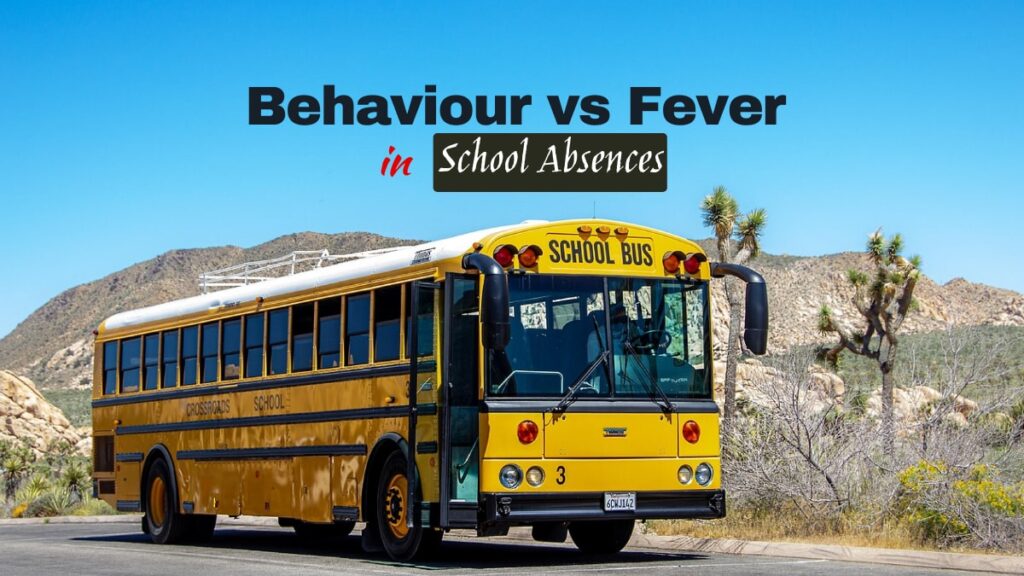
Behaviour vs Fever in School Absences

Table of Contents

  •  What Makes This a Double Standard?
  • Changing the Perspective: One Day Off Can Help
  • Why Parents React Strongly to Behavioural Absences
  • Behaviour Is a Form of Communication
  • School Refusal Isn’t Always About Laziness
  • Emotional Health Is Real Health
  • A Simple Day Off Can Be Powerful
  • What Children Need from Parents
  • What Schools Can Do Better
  • Long-Term Impact: What Message Are We Sending?
  • Final Thoughts: Let’s Replace Judgment with Understanding

Most parents don’t hesitate to keep their child home from school if the child wakes up sick—burning with a fever, coughing badly, or too tired to get out of bed. In such cases, care takes priority. The child rests, gets some soup, maybe visits a doctor, and nobody questions the need to stay home.

But what happens when a child says they can’t go to school—not because of a cold or flu, but because they’re feeling overwhelmed, anxious, or emotionally drained?

That’s when the mood in the house often changes. A single day missed due to behaviour, stress, or emotional struggle can lead to anger, lectures, and guilt. Parents who were calm and nurturing during a physical illness suddenly feel frustrated and worried when the issue is emotional or behavioural.

This is the double standard we rarely talk about. One type of struggle is met with empathy. The other often gets met with blame.

“The way we talk to our children becomes their inner voice.”– Peggy O’Mara

 What Makes This a Double Standard?

Physical illness is easy to see and easy to explain. A thermometer shows a high temperature. A cough can be heard. A pale face says enough.

But emotional struggles are invisible. You can’t measure anxiety. You can’t see fear in a chart. When a child says, “I can’t go to school today because I feel too stressed,” there’s nothing to prove it.

That makes it easier for parents to doubt, dismiss, or get frustrated.

Many parents think:

  • “They’re just trying to avoid school.”
  • “They’re lazy today.”
  • “They need more discipline.”

But the child might be struggling deeply. School might feel unsafe, overwhelming, or exhausting—not because of germs, but because of what’s going on inside their mind.

Changing the Perspective: One Day Off Can Help

Here’s an important shift in thinking that can help parents respond with more compassion:

What if we treated emotional sick days the same way we treat physical ones?

Let’s say your child tells you they’re feeling too anxious or stressed to go to school. Instead of reacting with anger, what if you responded like you would if they had a fever?

You might say:

  • “Okay, let’s take today to rest.”
  • “Let’s talk later and see how you’re feeling.”
  • “Is there anything you need right now?”

A single day off won’t break their education. But it could give them the mental and emotional space they need to recover—just like rest helps a fever go down or a headache fade.

This kind of response shows your child that their feelings are valid and that mental health matters too.

Why Parents React Strongly to Behavioural Absences

Most parents care deeply about their child’s future. That’s why school feels so important. Missing a day due to illness is easy to accept. But missing school due to emotions or behaviour triggers fear:

RELATED POSTS

Stop Over-Conscious Parenting: Raising Confident Kids

Great Entrepreneurs Aren’t Perfect—But They Build the Future

Why the World Needs More Risk-Takers, Not More Critics

Escaping the Traffic Jam of Stress, Salary & Spreadsheets

Why Saving Money Is Like Dieting—Easier Said Than Done

Meetings: Where Minutes Are Taken and Hours Are Lost

  • “They’re falling behind.”
  • “They’ll become lazy.”
  • “I’m failing as a parent.”

These fears are valid. But they often lead to harsh reactions that shut down communication. Instead of helping the child feel safe to talk, the message becomes: “You’re not allowed to struggle unless you can prove it.”

This hurts the child more in the long run.

Behaviour Is a Form of Communication

Let’s be clear: when children act out, refuse school, or seem “off,” it’s usually not just about defiance. Behaviour is a form of communication. A child might not say, “I’m feeling anxious about the math test,” but they might suddenly get a stomach-ache every morning before school.

Or they might argue, shut down, or cry. That’s not being “bad.” That’s being human.

Just like adults sometimes need a break from work or a mental health day, kids do too.

School Refusal Isn’t Always About Laziness

There’s a term called school refusal, which means a child strongly resists going to school—not out of laziness, but because of emotional distress. This can be due to:

  • Anxiety
  • Bullying
  • Academic pressure
  • Sensory overload
  • Fear of failure
  • Social stress

Punishing or forcing a child through this often makes it worse. They learn to hide their feelings, bottle them up, and suffer in silence.

But when we listen and support them, we help them face the problem without fear or shame.

Emotional Health Is Real Health

Here’s something we all need to remember:

Just because we can’t see a wound doesn’t mean it’s not there.

If your child had a broken arm, you wouldn’t expect them to write an essay or carry a backpack. So why expect a child with emotional pain to perform like nothing’s wrong?

Emotional pain affects the body, too. It causes stomach-aches, headaches, fatigue, and even weakens the immune system. Ignoring emotional health only makes things worse, both now and later.

A Simple Day Off Can Be Powerful

Taking one day off for emotional rest doesn’t mean giving up. It means recognizing the early signs of stress and choosing to respond with care before things spiral out of control.

Here’s what can happen when a parent says, “Okay, let’s take today off and talk about what’s going on.”

  • The child feels heard.
  • The parent gains insight.
  • The problem becomes easier to address.
  • Trust grows stronger.

Think of it as pressing the “reset” button. That one small act of compassion can make a big difference in how your child manages stress in the future.

What Children Need from Parents

When a child is struggling emotionally or behaviourally, they don’t need punishment. They need connection.

Here’s what you can offer:

  • Empathy: Say, “I’m here for you.”
  • Listening: Let them talk without jumping to fix or judge.
  • Support: Ask, “How can I help you feel better about school?”
  • Consistency: Keep routines, but allow flexibility when needed.

Children who feel safe expressing their emotions learn how to regulate them. That’s a skill that will serve them their whole lives.

What Schools Can Do Better

Many schools are still learning how to deal with emotional challenges in students. While most have rules for physical illnesses (like sending kids home with a fever), they often don’t have systems for emotional sick days.

Some schools are now offering:

  • Mental health counsellors
  • Quiet rooms or calming corners
  • Flexible attendance for stress-related issues
  • Mental health days written into policy

These are good steps. But schools can also work with parents to recognize when a child’s behaviour is a cry for help—not just a disruption.

Long-Term Impact: What Message Are We Sending?

Children who are shamed for emotional needs often grow into adults who ignore their own mental health. They learn to:

  • Push through burnout
  • Hide their feelings
  • Fear asking for help

But children who are supported grow into healthier, more resilient adults. They learn to:

  • Express emotions safely
  • Set boundaries
  • Recognize when they need rest

So the real question is: What kind of adult are we helping them become?

Final Thoughts: Let’s Replace Judgment with Understanding

It’s time to break the double standard.

A missed day of school due to fever is met with compassion. A missed day due to behaviour is often met with blame. But both types of struggle are real. And both deserve care.

Next time your child says they can’t go to school—not because of a cough, but because of something they feel inside—pause.

Breathe.

Ask yourself: “What if this is their version of being sick?”
“What if one day off could actually help them heal?”

That small shift in thinking could be the difference between a child who hides their pain and a child who feels safe being honest with you.

Because in the end, whether it’s fever or fear, cough or confusion—what matters most is that they feel seen, heard, and loved.

Featured reads

Mindful Shots, Volume-1 cover
Mindful Shots, Volume-1
Vinod Singh
Self-Help, Mindfulness

Mindful Shots, Volume-1

Vinod Singh

4.5 · reviews

Most people live their entire lives without truly understanding how their minds work or the immense power they hold within. Fewer than two percent of people can confidently answer questions like: What drives my thoughts? Why do I feel resistance to my own goals? You’ve likely experienced moments when you wanted to take a bold step—perhaps starting a new business or making a life-changing decision—only to hear an inner voice warning you of failure. That voice often justifies its fears by recalling countless stories of others’ setbacks—family members, friends, society, even distant headlines. It’s as if your mind maintains a detailed archive of every failure around you, replaying them to keep you from moving forward. But what if this inner voice could be understood, reprogrammed, and even turned into your greatest ally? Imagine what would be possible if both your conscious intentions and subconscious patterns worked together instead of pulling in opposite directions. This collection, Mindful Shots, brings together some of the most insightful writings on mindfulness from Fastlane Freedom. Each piece explores practical and scientific perspectives on how the mind shapes our choices, influences our health, and even participates in physical healing. Through research-backed insights and timeless wisdom, this book will help you see that the mind isn’t just a passive observer—it’s an active force capable of changing your reality. By learning how to quiet the noise, shift your mental inputs, and harness your inner voice, you’ll gain a clearer path to personal growth, emotional balance, and a deeper understanding of what mindful living truly means.

Amazon Flipkart
Parenting Essentials cover
Parenting Essentials
Vinod Singh
Self-Help, Parenting

Parenting Essentials

Vinod Singh

4.5 · reviews

Parenting is a journey—one of the most rewarding, challenging, and transformative experiences life has to offer. But it’s not a path we are meant to walk alone. Essential Parenting was born out of a deep desire to support and empower parents at every stage of their journey, from the early days of pregnancy to the complex teenage years. Drawing insights from the Fastlane Freedom platform, this book brings together wisdom, mindfulness, and practical strategies to help you raise confident, emotionally strong, and value-driven children. At Fastlane Freedom, we believe that conscious parenting begins with self-awareness. Children absorb more from our behaviour than our words. It’s in our everyday actions—our calm during chaos, our patience in moments of frustration, our consistency in values—that they find their foundation. Parenting is not about being perfect; it’s about being present, intentional, and compassionate.

Amazon Flipkart
The Wealth Code, Volume-1 cover
The Wealth Code, Volume-1
Vinod Singh
Self-Help, Finance

The Wealth Code, Volume-1

Vinod Singh

4.5 · reviews

The Wealth Code: Volume-1 is a personal development and financial education book written by Vinod Singh. It is designed to empower readers by teaching them principles of wealth creation, financial freedom, and personal growth. The book offers practical strategies to achieve financial success, with a vision to uplift and transform the lives of millions by promoting financial literacy and entrepreneurial thinking. Mr. Singh's approach is rooted in inspiring individuals to take control of their financial destinies while cultivating a mindset focused on long-term success and abundance.

Amazon Flipkart
ShareSendTweetPinShareShareShareShareShareShareBookmarkShare
Vinod Singh

Vinod Singh

In 2019, Vinod Singh, a Belief Changer, founded Fastlane Freedom after 3.5 years of research on Mindfulness and its connection to money. Fastlane Freedom is driven by a vision: ‘Enhancing Lives of Millions’ by reshaping people’s beliefs to transform their financial situations. With 16 years of professional experience, Vinod dedicates himself to providing top-notch, practical content on Mindfulness, Money, Business, Parenting, Popular Quotes and Student Life.

Related Posts

Stop Over-Conscious Parenting

Stop Over-Conscious Parenting: Raising Confident Kids

June 21, 2026
Great Entrepreneurs Aren't Perfect

Great Entrepreneurs Aren’t Perfect—But They Build the Future

June 17, 2026
The World Needs More Risk-Takers

Why the World Needs More Risk-Takers, Not More Critics

June 15, 2026
Escaping the Traffic Jam of Stress, Salary & Spreadsheets

Escaping the Traffic Jam of Stress, Salary & Spreadsheets

June 7, 2026
Saving Money Is Like Dieting

Why Saving Money Is Like Dieting—Easier Said Than Done

June 6, 2026
meetings

Meetings: Where Minutes Are Taken and Hours Are Lost

June 2, 2026
Analysis paralysis

Analysis Paralysis: The Silent Success Killer Nobody Talks About

May 31, 2026
The Power of Selective Blindness

The Power of Selective Blindness: Why Success Often Requires Ignoring the Noise

May 29, 2026
The Market Rewards Patience, Not Panic

The Market Rewards Patience, Not Panic – Fastlane Freedom

May 28, 2026
Load More

Support Ad-Free Content

Dear Valued Reader,

At Fastlane Freedom, we believe in delivering the highest quality content without the distraction of ads. Our platform is dedicated to enriching your life with insightful blogs on Mindfulness, Financial Wisdom, Business Strategies, Student Success, and Effective Parenting.

To keep our content free from ads and accessible to all, we need your support. Your donation helps us maintain our commitment to providing valuable, ad-free resources that empower you to thrive in every aspect of life.

Join us in our mission to “Enhancing Lives of Millions” by fostering knowledge and growth. Every contribution is invaluable and directly enhances the quality and accessibility of our content. Donate now and help us continue to make a difference!

Support Now

Main Category

  • Mindfulness
  • Money
  • Grow Business
  • Essential Reading
  • Popular Quotes
  • Student
  • Parenting
  • Videos
  • About
  • Contact

Money

  • Power of Compounding
  • Learn from Rich People
  • Power of Saving
  • Money Tips
  • Financial Freedom
  • Debt Management

Grow Business

  • Business Tips
  • Workplace Practices
  • Marketing Tips
  • Entrepreneurship
  • Success Rules
  • Leadership
  • Productivity Improvement

Mindfulness

  • Subconscious Mind
  • Growth Mindset
  • Overcome Fear
  • Success Habits
  • Achieve Goals
  • Happiness Secrets

Parenting

  • Before Birth Facts
  • Health and Wellness
  • Parenting Tips and Strategies

Student

  • Early Success Secrets
  • Study Tips
  • Career Goals

© 2026 fastlanefreedom.com - Design and Manage by Binary Techne.

No Result
View All Result
  • Money Blogs
  • Essential Reading
  • Mindfulness
  • Grow Business
  • Parenting
  • Student
  • Popular Quotes
  • About
  • Contact

© 2026 fastlanefreedom.com - Design and Manage by Binary Techne.