
In today’s fast-paced world, students constantly seek effective ways to study, often turning to modern technology for solutions. However, there’s a wealth of timeless wisdom from ancient scholars that can significantly enhance our learning practices. From Socrates’ art of questioning to Isaac Newton’s persistence and patience, these historical figures developed methods that remain relevant and powerful. This blog explores the study tips from some of history’s greatest minds, offering practical advice that integrates ancient wisdom into modern education to help students learn more effectively and meaningfully.
“Learning without reflection is a waste, reflection without learning is dangerous.” — Confucius
Socrates: The Art of Questioning
Socrates, a Greek philosopher from the 5th century BCE, revolutionized the way we think about learning by introducing the art of questioning, now known as the Socratic method. Socrates believed that asking questions was the most effective way to explore complex ideas and gain a deeper understanding of any topic. This method involves engaging in a dialogue where a series of probing questions are posed to stimulate critical thinking and illuminate ideas. Rather than simply accepting information at face value, Socrates encouraged his students to question their assumptions and think independently.
How to Use This Tip:
To harness the power of Socratic questioning in your studies, start by asking yourself questions about the material you are learning. For example, consider why a particular concept is important, how it relates to other knowledge you have, and what implications it might have. These questions help you move beyond rote memorization and toward a more profound comprehension of the subject. Additionally, engaging in group discussions can be highly beneficial. When you discuss topics with your peers, you can ask and answer questions together, challenging each other’s viewpoints and deepening your collective understanding. This collaborative approach not only clarifies difficult concepts but also fosters a dynamic learning environment where critical thinking thrives. By continually questioning and seeking answers, you can develop a more nuanced and thorough understanding of your studies, much like Socrates and his followers.
Confucius: Learning Through Reflection
Confucius, a renowned Chinese philosopher from the 6th century BCE, emphasized the significance of reflection in the learning process. He believed that taking the time to review and contemplate what you have learned is crucial for solidifying knowledge and achieving true understanding. Reflection allows you to process information more deeply and see how new knowledge integrates with what you already know.
How to Use This Tip:
Incorporate regular review sessions into your study routine. Spend time each day or week reflecting on the material you have covered. This can be achieved through various methods, such as summarizing your notes, explaining concepts to someone else, or simply pondering over what you have learned. Another effective practice is keeping a learning journal. In this journal, write down key points from your studies and your thoughts about them. Reflecting on your learning experiences and documenting your progress can help reinforce your understanding and identify areas that need further exploration. By regularly reviewing and reflecting, you can enhance your retention and comprehension of the material, making your learning more effective and meaningful.
Aristotle: The Power of Habit
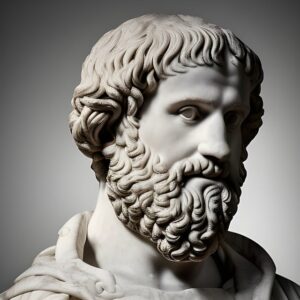
Aristotle, a Greek philosopher and student of Plato, believed that the formation of good habits is fundamental to effective learning. He argued that our actions shape our character and abilities through consistent, repeated practice. Developing a routine helps create a structured environment that is conducive to learning, making it easier to focus and retain information.
How to Use This Tip:
To apply Aristotle’s principles to your studies, create a regular study routine. Establishing a consistent schedule signals to your brain that it is time to concentrate, thereby enhancing your ability to absorb information. Additionally, setting small, manageable goals for each study session can help build a habit of success. Break down your tasks into smaller chunks, and reward yourself for completing them. This approach not only makes studying less overwhelming but also reinforces positive behaviour through regular achievements. By integrating good habits into your daily routine, you can improve your learning efficiency and build a strong foundation for academic success.
Hypatia: Embrace Multiple Disciplines
Hypatia, a female philosopher and mathematician in ancient Alexandria, was celebrated for her diverse range of knowledge and her commitment to interdisciplinary learning. She studied and taught various subjects, including mathematics, philosophy, and astronomy, underscoring the importance of a well-rounded education. Hypatia believed that exploring different fields of study enriches one’s understanding and stimulates intellectual growth.
How to Use This Tip:
To follow Hypatia’s example, diversify your studies by exploring different subjects. Don’t limit yourself to one area of knowledge; instead, seek to understand a variety of disciplines. This approach broadens your perspective and enhances your critical thinking skills. Interdisciplinary learning can also reveal connections between different fields, helping you to see how various concepts and ideas interrelate. For instance, understanding mathematical principles can improve your problem-solving skills in science, while studying philosophy can sharpen your analytical thinking in literature. By embracing multiple disciplines, you can develop a more comprehensive and versatile intellect, making your overall learning experience richer and more fulfilling.
Seneca: The Importance of Rest
Seneca, a Roman philosopher and statesman, recognized the vital role of rest in maintaining a healthy mind and body. He believed that balancing work and rest is essential for effective learning and productivity. Overworking oneself can lead to burnout and decreased efficiency, while adequate rest rejuvenates the mind, allowing for better concentration and retention of information.
How to Use This Tip:
Incorporate regular breaks into your study sessions to rest and recharge. Taking short breaks can help prevent fatigue and maintain your focus over longer periods. It is also crucial to prioritize healthy sleep habits. Ensure that you get enough sleep each night, as a well-rested mind is more capable of absorbing and retaining new information. Additionally, engage in activities that help you relax and unwind, such as exercise, meditation, or hobbies. By valuing and incorporating rest into your routine, you can enhance your learning efficiency and overall well-being, following Seneca’s timeless advice on the balance between work and rest.
Avicenna: The Use of Visual Aids
Avicenna, a Persian polymath renowned for his contributions to various fields such as medicine, philosophy, and science, recognized the power of visual aids in simplifying and clarifying complex ideas. He frequently used diagrams and illustrations to break down intricate concepts, making them more accessible and understandable. Avicenna understood that the human brain often grasps and retains information better when it is presented visually. This method allows learners to see the relationships between different elements, facilitating deeper understanding and recall.
How to Use This Tip:
To apply Avicenna’s approach in modern study practices, incorporate diagrams, charts, and other visual aids into your study routine. For instance, when tackling a challenging topic, draw a diagram that outlines the main points and how they are interconnected. Additionally, creating mind maps can be particularly effective. Mind maps are visual representations of information that show the relationships between different ideas. By organizing your thoughts visually, you can see connections more clearly and structure your learning in a way that makes it easier to remember.
Al-Kindi: The Role of Reading and Writing
Al-Kindi, an influential Arab philosopher and scientist, emphasized the critical role of reading and writing in the learning process. He believed that writing is not just a means of recording information but also a powerful tool for clarifying and reinforcing one’s understanding. Writing helps to organize thoughts, making abstract ideas more concrete and understandable.
How to Use This Tip:
To leverage Al-Kindi’s wisdom, engage actively with your reading materials. Instead of merely skimming through textbooks, take detailed notes, highlight essential points, and summarize what you’ve read in your own words. This active engagement helps reinforce the material and ensures better retention. Furthermore, practice writing to solidify your knowledge. Writing essays, summaries, and notes forces you to process information deeply and think critically about the subject matter, leading to a stronger grasp of the concepts.
Leonardo da Vinci: Curiosity and Observation

Leonardo da Vinci, the quintessential Renaissance man, was driven by an insatiable curiosity and a keen eye for observation. He believed that learning stems from a deep interest in understanding how things work and observing the world around us carefully. Da Vinci’s approach to learning was holistic, integrating observation with relentless questioning.
How to Use This Tip:
To adopt da Vinci’s method, nurture your curiosity. Always ask questions about the material you are studying and strive to understand the underlying principles. Develop the habit of careful observation, paying attention to details that others might overlook. This practice can lead to deeper insights and a more profound understanding of the subject. Whether you are studying the natural sciences or the humanities, maintaining a curious and observant mindset can enhance your learning experience.
Michel de Montaigne: Learning from Experience
Michel de Montaigne, a French Renaissance philosopher, championed the value of experiential learning. He believed that personal experience is a powerful teacher, providing insights that theoretical study alone cannot offer. Montaigne’s essays reflect his belief that engaging with the world directly leads to a deeper, more personal understanding of knowledge.
How to Use This Tip:
To implement Montaigne’s advice, seek out hands-on learning opportunities related to your studies. Participate in experiments, practical exercises, and real-world applications of theoretical concepts. This approach makes learning more tangible and relevant, helping to cement knowledge in your memory. After engaging in these activities, take time to reflect on what you have learned and how it relates to your academic goals. This reflection can enhance your understanding and help you integrate new information more effectively.
Francis Bacon: Systematic Study
Francis Bacon, an English philosopher and statesman, advocated for a systematic approach to acquiring knowledge. He believed that organizing information methodically and following a structured plan can significantly enhance the efficiency and effectiveness of learning. Bacon’s approach involves breaking down complex information into manageable parts and studying them in a logical sequence.
How to Use This Tip:
To apply Bacon’s systematic study method, start by organizing your study materials. Keep your notes, books, and other resources well-arranged, using folders, notebooks, and digital tools to categorize and store information. Develop a structured study plan that outlines what you need to learn and when you will study each topic. Sticking to this plan ensures that you cover all necessary material comprehensively and avoid last-minute cramming.
Isaac Newton: Persistence and Patience
Isaac Newton, one of the most influential scientists in history, exemplified persistence and patience in his approach to learning and discovery. Newton’s ground-breaking work in physics and mathematics was the result of sustained effort and unwavering dedication. He believed that deep understanding and significant discoveries require continuous effort over an extended period.
How to Use This Tip:
To emulate Newton’s perseverance, remain persistent in your studies, especially when facing difficult material. When you encounter challenging concepts, don’t give up. Instead, keep studying, seek help if needed, and allow yourself the time to fully grasp the material. Practice patience, understanding that learning is a gradual process that unfolds over time. Trust that your consistent efforts will eventually lead to success and a deeper comprehension of the subjects you are studying.
Conclusion
The wisdom of ancient scholars offers timeless study tips that are still relevant today. By asking questions, reflecting on what we learn, developing good habits, diversifying our studies, balancing work and rest, using visual aids, reading and writing actively, staying curious, learning from experience, studying systematically, and being persistent and patient, we can harness the power of ancient wisdom to enhance our modern learning practices. These methods have stood the test of time and can help us become more effective and successful learners.