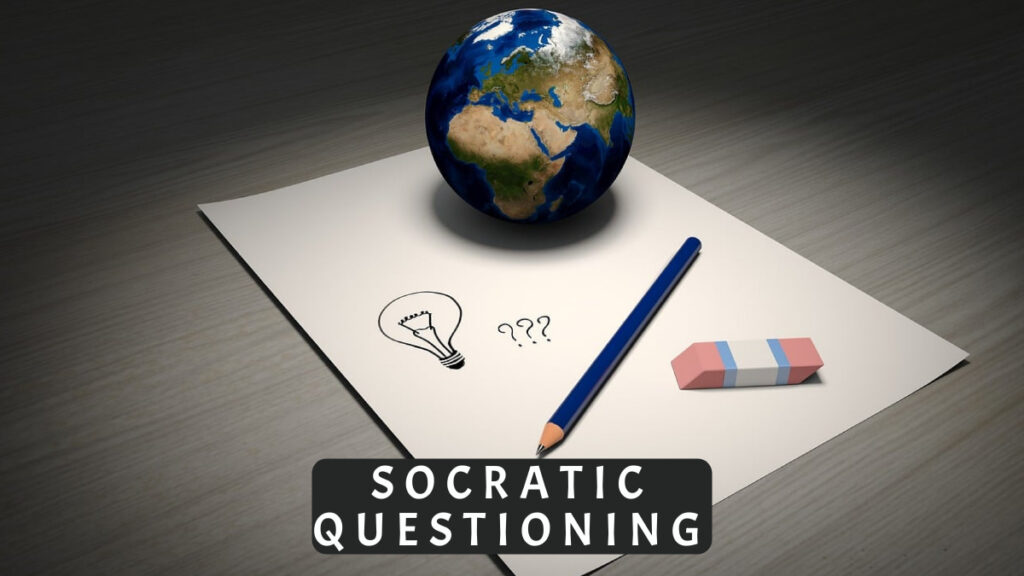
Socratic questioning is a method of inquiry rooted in the teaching philosophy of the ancient Greek philosopher Socrates. It involves asking and answering questions to stimulate critical thinking, illuminate ideas, and uncover underlying assumptions. This approach fosters deeper understanding, encourages thoughtful reflection, and promotes meaningful dialogue. In today’s fast-paced world inundated with information, mastering the art of Socratic questioning is invaluable. This blog explores the principles, benefits, and techniques of engaging in Socratic questioning to enhance critical thinking and facilitate more profound insights.
“I cannot teach anybody anything. I can only make them think.” – Socrates
Understanding Socratic Questioning
Socratic questioning is not about providing answers but rather about guiding individuals to discover answers for themselves. It involves asking a series of open-ended questions that challenge assumptions, clarify concepts, and encourage reasoned responses. Rather than accepting information passively, Socratic questioning prompts individuals to explore ideas, evaluate evidence, and arrive at well-reasoned conclusions.
At the heart of Socratic questioning are six types of questions:
Clarification Questions: Clarification questions are designed to address vague or ambiguous statements. When someone makes a statement that lacks clarity, a clarification question seeks to elicit further explanation or detail. By asking for elaboration, the questioner encourages the speaker to provide more specific information, helping to ensure mutual understanding. For instance, if someone says, “I don’t like this idea,” a clarification question could be, “Can you elaborate on what you mean by ‘this idea’?” This prompts the individual to specify which aspects of the idea they find objectionable, facilitating clearer communication and a deeper exploration of their perspective.
Probing Assumptions: Probing assumptions involves questioning the underlying beliefs or presuppositions that inform someone’s argument or perspective. Assumptions are often implicit and taken for granted, but by bringing them to light, Socratic questioning encourages critical examination. For example, if someone asserts, “We should implement policy X because it’s always been done that way,” a probing assumptions question could be, “What assumptions are you making about the effectiveness of policy X and the reasons for its historical implementation?” This prompts the individual to articulate and justify the assumptions underlying their argument, opening the door to a more rigorous evaluation of their reasoning.
Exploring Evidence: Exploring evidence entails inquiring about the factual support for a claim or assertion. This type of question encourages individuals to back up their arguments with concrete evidence or data, rather than relying solely on opinion or assertion. By examining the quality and relevance of the evidence presented, Socratic questioning promotes logical reasoning and informed decision-making. For instance, if someone asserts, “Climate change isn’t real,” a question exploring evidence could be, “What scientific studies or data do you have to support that assertion?” This challenges the individual to substantiate their claim with empirical evidence, fostering a more evidence-based discussion.
Considering Alternatives: Considering alternatives involves prompting individuals to explore different perspectives, viewpoints, or solutions. This type of question encourages creativity and open-mindedness by challenging individuals to consider options beyond their initial assumptions or preferences. By broadening the scope of inquiry, Socratic questioning fosters a richer understanding of complex issues and promotes innovative thinking. For example, if someone proposes a particular course of action, a question considering alternatives could be, “What other approaches or strategies might achieve similar objectives?” This invites the individual to consider a range of possibilities, encouraging a more comprehensive analysis of potential solutions.
Examining Implications: Examining implications involves investigating the potential consequences or ramifications of a statement, decision, or course of action. This type of question encourages individuals to think critically about the broader implications of their ideas and choices, beyond immediate concerns. By considering the long-term effects and unintended consequences, Socratic questioning promotes foresight and ethical reasoning. For example, if someone suggests a policy change, a question examining implications could be, “What are the potential social, economic, and environmental impacts of implementing this policy?” This prompts the individual to consider the multifaceted consequences of their proposal, fostering a more nuanced understanding of its implications.
Questioning the Question: Questioning the question involves scrutinizing the validity or relevance of the original inquiry itself. This meta-level questioning encourages individuals to reflect on the purpose and assumptions underlying the conversation, helping to ensure that the discussion remains focused and productive. By questioning the framing or significance of a particular question, Socratic questioning promotes clarity and precision in reasoning. For example, if someone poses a broad or ambiguous question, a question questioning the question could be, “Is this the most pertinent question to address our current objectives?” This encourages the group to evaluate the relevance and significance of the initial question, guiding the dialogue towards greater coherence and effectiveness.
Benefits of Socratic Questioning
Engaging in Socratic questioning offers a multitude of benefits that can positively impact various aspects of an individual’s personal and professional life:
Enhanced Critical Thinking: Socratic questioning is a powerful tool for cultivating critical thinking skills. By posing probing questions that challenge assumptions, analyse information, and evaluate arguments, individuals are prompted to think more deeply and critically about the subject matter at hand. This process encourages them to examine issues from multiple perspectives, identify logical fallacies, and assess the validity of evidence. As a result, individuals become more adept at reasoning logically, making informed judgments, and arriving at well-supported conclusions.
Deeper Understanding: Socratic questioning facilitates a deeper understanding of complex issues by encouraging individuals to probe assumptions and explore evidence. Rather than passively accepting information at face value, individuals are prompted to delve beneath the surface and examine the underlying principles and beliefs that shape their understanding. Through this process of inquiry, individuals gain insights into the nuances and intricacies of the subject matter, allowing for a more comprehensive and nuanced understanding. By questioning assumptions and seeking out evidence, individuals are better equipped to grasp the complexities of complex issues and make informed decisions.
Improved Communication Skills: Effective communication is essential in both personal and professional settings, and Socratic questioning plays a crucial role in fostering effective communication skills. By encouraging active listening and thoughtful responses, Socratic questioning promotes meaningful dialogue and mutual understanding. Individuals learn to express their ideas clearly and coherently, while also being attentive to the perspectives and contributions of others. This enhances their ability to communicate effectively, collaborate productively, and navigate complex interpersonal dynamics.
Conflict Resolution: Conflict is inevitable in any human interaction, but Socratic questioning can be a valuable tool for resolving conflicts and disagreements constructively. By promoting open dialogue and encouraging individuals to explore underlying assumptions and perspectives, Socratic questioning helps to uncover common ground and foster mutual understanding. Rather than resorting to adversarial tactics or escalating tensions, individuals learn to engage in constructive dialogue, address underlying issues, and work towards mutually acceptable solutions. This fosters a culture of cooperation, compromise, and mutual respect, leading to more harmonious relationships and productive outcomes.
Empowerment: One of the most profound benefits of Socratic questioning is its capacity to empower individuals to take ownership of their learning and decision-making processes. By guiding individuals to discover answers on their own through a process of inquiry and self-reflection, Socratic questioning cultivates a sense of autonomy, agency, and self-confidence. Individuals learn to trust their own judgment, think independently, and take initiative in seeking out knowledge and understanding. This empowerment not only enhances their personal growth and development but also equips them with the skills and confidence to navigate the complexities of the world around them effectively.
Innovation and Creativity: Socratic questioning stimulates innovation and creativity by encouraging individuals to consider alternatives and examine implications. By challenging conventional wisdom and exploring new possibilities, Socratic questioning inspires fresh perspectives and novel solutions to complex problems. Through a process of inquiry and exploration, individuals are able to break free from entrenched ways of thinking, embrace uncertainty, and generate creative insights. This fosters a culture of innovation, adaptability, and continuous improvement, driving positive change and progress in various domains.
Techniques for Engaging in Socratic Questioning
Mastering Socratic questioning requires practice and refinement. Here are some techniques to effectively engage in Socratic questioning:
Active Listening: Active listening is fundamental to effective communication and critical thinking. When engaging in Socratic questioning, it’s essential to pay close attention to what others are saying without interruption or distraction. By actively listening, you can identify underlying assumptions, inconsistencies, or gaps in reasoning within the dialogue. This heightened awareness enables you to ask more targeted and insightful questions that prompt deeper exploration and reflection.
Ask Open-Ended Questions: Open-ended questions are key to fostering discussion and exploration. Unlike closed-ended questions that elicit simple yes or no answers, open-ended questions encourage individuals to elaborate, analyse, and reflect on their thoughts and ideas. When practicing Socratic questioning, frame your inquiries in a way that invites diverse perspectives and encourages participants to delve deeper into the topic at hand. This approach promotes critical thinking and facilitates a more nuanced understanding of complex issues.
Avoid Leading Questions: Leading questions can unintentionally bias responses or steer the conversation in a particular direction. To maintain the integrity of Socratic questioning, refrain from asking questions that suggest a predetermined answer or agenda. Instead, keep your inquiries neutral and open-minded, allowing individuals to explore multiple viewpoints and arrive at their own conclusions. By avoiding leading questions, you create a more inclusive and intellectually stimulating environment for dialogue and inquiry.
Encourage Participation: Effective Socratic questioning thrives in an environment where all voices are valued and respected. Create a supportive atmosphere where individuals feel comfortable sharing their thoughts, insights, and concerns. Encourage active participation by acknowledging and validating diverse perspectives. By fostering a culture of inclusivity and collaboration, you can enhance the quality of dialogue and promote deeper engagement with the subject matter.
Be Patient: Socratic questioning is a process that requires time and thoughtful consideration. Avoid rushing the conversation or imposing your own conclusions prematurely. Allow individuals ample time for reflection and introspection before responding to your inquiries. Cultivate patience and receptivity, recognizing that meaningful insights often emerge through careful deliberation and dialogue. By demonstrating patience, you encourage others to engage more deeply with the topic and develop their critical thinking skills.
Model Socratic Inquiry: As a facilitator of Socratic questioning, led by example through your own questioning and reflective dialogue. Demonstrate a genuine curiosity and willingness to explore complex issues with an open mind. By modelling the principles of Socratic inquiry, you set the tone for constructive engagement and encourage others to adopt a similar approach. Be proactive in asking thoughtful questions and engaging in reflective dialogue, demonstrating the value of critical thinking and intellectual inquiry.
Provide Feedback: Constructive feedback plays a crucial role in the Socratic questioning process. Offer thoughtful insights and observations on participants’ responses, encouraging deeper reflection and critical analysis. Acknowledge strengths while also gently challenging assumptions or inconsistencies in reasoning. By providing constructive feedback, you foster a culture of continuous learning and improvement, helping individuals refine their critical thinking skills and enhance their ability to engage in meaningful dialogue.
Applications of Socratic Questioning in Modern Age
In the modern age, Socratic questioning remains a relevant and valuable tool utilized across various fields and contexts. Here are some ways people are applying Socratic questioning in today’s world:
Education: In contemporary classrooms, educators employ Socratic questioning to promote active learning and critical thinking among students. Rather than simply providing information, teachers guide students through a process of inquiry, encouraging them to ask questions, analyse evidence, and engage in meaningful discussions. This approach helps students develop essential skills such as problem-solving, decision-making, and effective communication.
Business and Leadership: In the business world, leaders use Socratic questioning to foster innovation, stimulate creativity, and improve decision-making processes. By asking probing questions, leaders encourage employees to explore new ideas, challenge assumptions, and consider alternative perspectives. This can lead to more informed and thoughtful strategies, as well as a culture of continuous improvement within organizations.
Counselling and Therapy: Therapists and counsellors incorporate Socratic questioning techniques to help clients explore their thoughts, feelings, and behaviours. By asking open-ended questions, therapists encourage clients to reflect on their experiences, examine underlying beliefs, and gain insight into their challenges. This process can lead to greater self-awareness, personal growth, and positive behavioural change.
Debate and Discussion: Socratic questioning enriches debates, discussions, and public discourse by encouraging participants to delve deeper into issues, examine different viewpoints, and critically evaluate arguments. Whether in political debates, academic forums, or community discussions, the principles of Socratic questioning promote constructive dialogue and reasoned analysis.
Problem-Solving and Decision-Making: Individuals and teams use Socratic questioning to tackle complex problems, identify root causes, and develop effective solutions. By systematically questioning assumptions, exploring evidence, and considering implications, people can approach problems with greater clarity and creativity. This leads to more robust decision-making processes and better outcomes.
Coaching and Mentoring: Coaches and mentors apply Socratic questioning techniques to help individuals clarify their goals, overcome obstacles, and achieve personal or professional development. By asking thought-provoking questions, coaches guide clients through a process of self-discovery, enabling them to tap into their strengths, values, and aspirations.
Personal Development: In everyday life, people use Socratic questioning to deepen their understanding of themselves and the world around them. Whether reflecting on personal beliefs, examining life choices, or seeking solutions to everyday challenges, individuals can employ Socratic questioning to gain clarity, insight, and perspective.
Conclusion
“An unexamined life is not worth living.” – Socrates
Engaging in Socratic questioning is a powerful tool for promoting critical thinking, fostering deeper understanding, and facilitating meaningful dialogue. By asking thought-provoking questions and encouraging reflection, individuals can unlock new insights, challenge assumptions, and arrive at well-reasoned conclusions. Whether in the classroom, the boardroom, or in everyday conversations, the principles of Socratic questioning offer a pathway to enhanced learning, communication, and decision-making. Embracing this timeless method of inquiry can lead to a more informed, empowered, and intellectually engaged society.