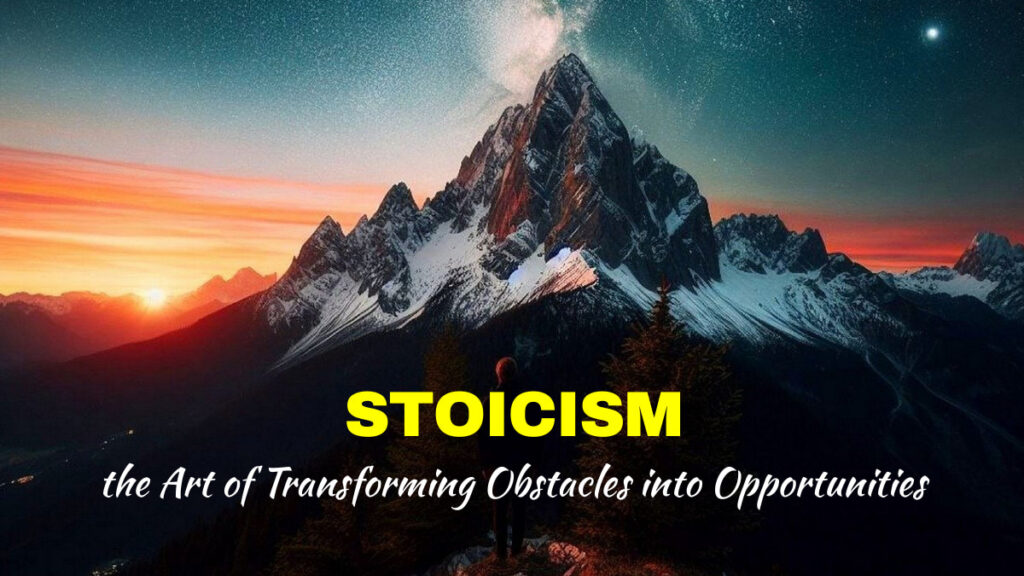
Throughout history, humans have faced countless obstacles, both great and small. The way we respond to these challenges can shape our lives, our character, and our future. One ancient philosophy that has provided timeless wisdom on handling adversity is Stoicism. Founded in Athens in the early 3rd century BC, Stoicism has guided thinkers, leaders, and ordinary individuals through turbulent times, teaching them to transform obstacles into opportunities.
“It’s not what happens to you, but how you react to it that matters.” – Epictetus
The Foundations of Stoicism
Stoicism, an ancient Greek philosophy, was founded by Zeno of Citium around 300 BC. It evolved significantly through the contributions of later Stoic philosophers such as Seneca, Epictetus, and Marcus Aurelius. At its heart, Stoicism is a practical philosophy that emphasizes personal ethics informed by a system of logic and views on the natural world. The primary aim of Stoicism is to achieve a life of tranquility and virtue by aligning oneself with the natural order of the universe.
The Core Principle: Control and Acceptance
One of the foundational principles of Stoicism is the distinction between what we can control and what we cannot. This concept is succinctly captured in the Serenity Prayer: “God grant me the serenity to accept the things I cannot change, courage to change the things I can, and wisdom to know the difference.” This dichotomy of control is central to Stoic thought and is elaborated extensively by Epictetus in his “Enchiridion.”
In Stoicism, what we can control includes our own thoughts, emotions, and actions. These are internal and subject to our will. Conversely, what we cannot control encompasses external events, the actions of others, and natural occurrences. By focusing on what is within our control, Stoics aim to maintain their composure and moral integrity, regardless of external circumstances.
The Four Cardinal Virtues
According to Stoic philosophy, the key to a fulfilling life is the cultivation of virtue. Virtue, for the Stoics, is the highest good and is sufficient for happiness. The Stoics identified four cardinal virtues:
- Wisdom (Sophia): The ability to navigate complex situations in a logical, informed, and calm manner. Wisdom involves the pursuit of knowledge and understanding, enabling individuals to make sound decisions and judgments.
- Courage (Andreia): The capacity to face fear, danger, and adversity with confidence and resolve. Courage allows individuals to take principled actions even when they are difficult or risky.
- Justice (Dikaiosyne): The commitment to fairness, integrity, and honesty in one’s dealings with others. Justice involves treating others with respect and acting in a manner that upholds social harmony and ethical standards.
- Temperance (Sophrosyne): The practice of self-control and moderation. Temperance helps individuals regulate their desires and impulses, leading to a balanced and harmonious life.
By cultivating these virtues, Stoics believe that individuals can achieve a state of inner tranquility (ataraxia) and resilience (apatheia), where they are undisturbed by external events and capable of enduring hardship with equanimity.
The Dichotomy of Control
One of the most powerful and practical concepts in Stoicism is the dichotomy of control. This idea is primarily attributed to Epictetus, who articulated it in his “Enchiridion” (Manual). The dichotomy of control divides the world into two categories: things we can control and things we cannot.
Things We Can Control: According to Stoicism, the things we can control are our own thoughts, emotions, and actions. These internal aspects are directly subject to our will and decisions. For instance, we can choose how we respond to a situation, what attitudes we adopt, and what actions we take. By focusing on these controllable aspects, we can maintain our moral integrity and peace of mind.
Things We Cannot Control: On the other hand, things we cannot control include external events, other people’s actions, and natural occurrences. These external factors are beyond our influence and are often unpredictable. Stoicism teaches that worrying about or trying to change these uncontrollable aspects is futile and leads to unnecessary distress.
Practical Application: By adhering to the dichotomy of control, Stoics aim to direct their efforts and emotions toward what they can influence. This approach not only preserves mental and emotional energy but also fosters a sense of empowerment and responsibility. When faced with a challenge, a Stoic will assess the situation by asking: “What part of this can I control?” and “How can I respond virtuously?”
For example, if someone loses their job, a Stoic would focus on their response rather than lamenting the loss. They might consider how they can use the opportunity to learn new skills, seek new employment, or reassess their career path. This mindset transforms the obstacle (job loss) into an opportunity for growth and development.
Maintaining Peace of Mind: By accepting what we cannot control and focusing on what we can, Stoics maintain their peace of mind regardless of external circumstances. This acceptance does not imply passivity or resignation; rather, it involves a proactive and rational engagement with the world. Stoics strive to act virtuously and wisely within their sphere of influence, while accepting the natural flow of events outside their control.
Embracing Adversity: The Stoic Approach
Stoicism teaches that adversity is not inherently negative; rather, it is our perception and reaction to it that matter. The Stoics believed that every obstacle presents a chance to practice and strengthen our virtues. This approach transforms adversity into a valuable opportunity for growth.
Developing Resilience: Resilience is the ability to withstand and recover from difficulties. Stoicism fosters resilience by encouraging individuals to view challenges as tests of their inner strength. Marcus Aurelius, in his “Meditations,” often reminded himself that obstacles are part of life and that they provide an opportunity to practice patience, perseverance, and fortitude.
When we encounter obstacles, instead of feeling defeated, we can adopt a Stoic mindset and see them as training grounds for resilience. Each challenge becomes a stepping stone, making us stronger and more capable of handling future difficulties.
Practicing Acceptance: Acceptance is another crucial aspect of Stoicism. It does not mean passivity or resignation but rather an acknowledgment of reality. By accepting what we cannot change, we free ourselves from unnecessary suffering and focus our energy on what we can influence.
Seneca, in his letters, emphasized the importance of accepting fate. He argued that by aligning our will with the natural course of events, we can find peace and even joy in the face of adversity. This acceptance allows us to navigate obstacles with a clear mind and a steady heart, transforming them into opportunities for practicing patience and adaptability.
Cultivating Wisdom: Wisdom, the ability to discern right from wrong and make sound judgments, is a central virtue in Stoicism. Challenges often require us to make difficult decisions, and by approaching them with a Stoic mindset, we can cultivate and exercise our wisdom.
Epictetus advised his students to reflect on their responses to obstacles and to learn from each experience. This reflective practice helps us gain insight and improve our decision-making skills. Over time, we become more adept at navigating challenges, turning each obstacle into an opportunity for gaining wisdom.
Practical Stoic Techniques
To transform obstacles into opportunities, the Stoics employed several practical techniques that are still relevant today. Here are a few:
Negative Visualization: Negative visualization involves contemplating the worst-case scenarios that could happen in any given situation. This practice, paradoxically, reduces anxiety and prepares us mentally for potential difficulties. By imagining the worst, we can better appreciate what we have and be prepared for whatever comes our way.
For example, before embarking on a new project, a Stoic might visualize potential setbacks and failures. This prepares them to handle these obstacles calmly and constructively, turning potential disasters into opportunities for improvement and learning.
Journaling: Many Stoics, including Marcus Aurelius, practiced journaling as a way to reflect on their thoughts, actions, and experiences. Writing about challenges and obstacles helps clarify our thinking and allows us to see opportunities for growth and learning.
Journaling can also help us track our progress and celebrate small victories, reinforcing a positive mindset. By regularly reflecting on our experiences, we can identify patterns and develop strategies to handle similar obstacles in the future.
Mindfulness and Presence: Stoicism teaches the importance of being present and fully engaged in the current moment. Mindfulness allows us to respond to challenges with clarity and composure rather than reacting impulsively.
By focusing on the present, we can better assess the situation and identify constructive actions. This mindful approach helps us see obstacles not as insurmountable problems but as opportunities to apply our virtues and make meaningful progress.
Modern Applications of Stoicism
Stoicism’s timeless wisdom has found applications in various modern contexts, from personal development to business and leadership. Here are a few examples:
Personal Development: Individuals use Stoic principles to build resilience, improve mental health, and achieve personal growth. Techniques like negative visualization and journaling help people manage stress, set realistic goals, and maintain a balanced perspective on life.
Business and Entrepreneurship: In the business world, leaders and entrepreneurs face numerous challenges and uncertainties. Stoicism provides a framework for making sound decisions, staying calm under pressure, and viewing setbacks as opportunities for innovation and improvement.
For example, many successful entrepreneurs embrace failure as a learning experience. By adopting a Stoic mindset, they see each setback as a chance to refine their strategies and improve their products or services.
Leadership: Effective leaders use Stoic principles to inspire and guide their teams through difficult times. By focusing on what they can control, practicing acceptance, and maintaining a positive outlook, Stoic leaders create a resilient and adaptable organizational culture.
During crises, Stoic leaders remain composed and decisive, turning obstacles into opportunities for organizational growth and development. Their example encourages others to adopt a similar mindset, fostering a collaborative and proactive approach to challenges.
Real-Life Examples of Stoic Resilience
History is replete with examples of individuals who embodied Stoic principles to transform obstacles into opportunities. Here are a few notable ones:
Nelson Mandela: Nelson Mandela, the former President of South Africa, spent 27 years in prison for his anti-apartheid activities. Instead of succumbing to bitterness and despair, Mandela used his imprisonment as an opportunity for reflection and growth. During his time in prison, he studied, wrote letters, and engaged in discussions that shaped his vision for a peaceful and democratic South Africa.
Mandela’s ability to transform his suffering into a catalyst for positive change is a powerful example of Stoic principles in action. Upon his release, instead of seeking revenge, he advocated for reconciliation and unity, leading South Africa towards a more inclusive society. His legacy continues to inspire people worldwide to see adversity as an opportunity for personal and societal transformation.
Viktor Frankl: Viktor Frankl, a psychiatrist and Holocaust survivor, chronicled his experiences in Nazi concentration camps in his seminal book “Man’s Search for Meaning.” Frankl’s Stoic mindset helped him find meaning in his suffering and maintain hope amidst the horrors of the camps. He observed that those who found a sense of purpose, even in the most dire circumstances, were more resilient and more likely to survive.
Frankl’s experience led him to develop logotherapy, a form of psychotherapy that focuses on finding meaning in life, even in the face of extreme adversity. His work has helped countless individuals turn their suffering into opportunities for personal growth and meaning, illustrating the Stoic belief that we can always choose our response to life’s challenges.
J.K. Rowling: Before achieving fame with the Harry Potter series, J.K. Rowling faced numerous rejections from publishers and struggled with poverty and depression. Instead of giving up, she persevered, using her obstacles as motivation to improve her writing and storytelling. Rowling’s journey from a struggling writer to a world-renowned author is a testament to the power of resilience and determination.
Rowling’s story encourages aspiring writers and creatives to see rejection and failure as opportunities to refine their craft and achieve their goals. Her ability to turn personal hardship into literary success exemplifies the Stoic principle of using obstacles as stepping stones to greatness.
Mahatma Gandhi: Mahatma Gandhi, the leader of the Indian independence movement, faced numerous obstacles throughout his life, including imprisonment, physical assaults, and constant opposition from both the British authorities and some segments of Indian society. Gandhi’s philosophy of Satyagraha, or non-violent resistance, was deeply influenced by Stoic principles of endurance and inner strength.
Despite the challenges, Gandhi remained steadfast in his commitment to non-violence and truth. He viewed every hardship as an opportunity to demonstrate the power of these principles. His resilience and unwavering commitment eventually led to India’s independence from British rule. Gandhi’s life is a profound example of transforming personal and collective obstacles into opportunities for profound social change.
Conclusion
Stoicism offers profound insights into transforming obstacles into opportunities. By focusing on what we can control, embracing adversity, and practicing acceptance, wisdom, and resilience, we can navigate life’s challenges with grace and determination. The practical techniques of Stoicism, such as negative visualization, journaling, and mindfulness, provide valuable tools for personal and professional growth.
In a world filled with uncertainty and change, Stoicism remains a timeless guide for turning obstacles into opportunities. By adopting a Stoic mindset, we can face life’s challenges with courage and equanimity, transforming each obstacle into a stepping stone on the path to a fulfilling and meaningful life.