Have you ever noticed that your best ideas seem to appear when you’re taking a shower, walking in nature, or simply sitting quietly with a cup of tea? Have you wondered why solutions to difficult problems suddenly come to you when you stop trying so hard? Or why, after a few minutes of deep breathing, your mind feels calmer, clearer, and more focused? These experiences are not just coincidences. They are often signs that your brain has shifted into what neuroscientists call the alpha state.
Your brain is constantly producing electrical activity known as brainwaves. Depending on what you’re doing—working, sleeping, worrying, relaxing, or meditating—different brainwave patterns become more dominant. When you’re rushing through emails, solving complex problems, or feeling stressed, your brain mainly operates in the beta state. But when you become deeply relaxed while remaining awake and alert, alpha brainwaves become more prominent.
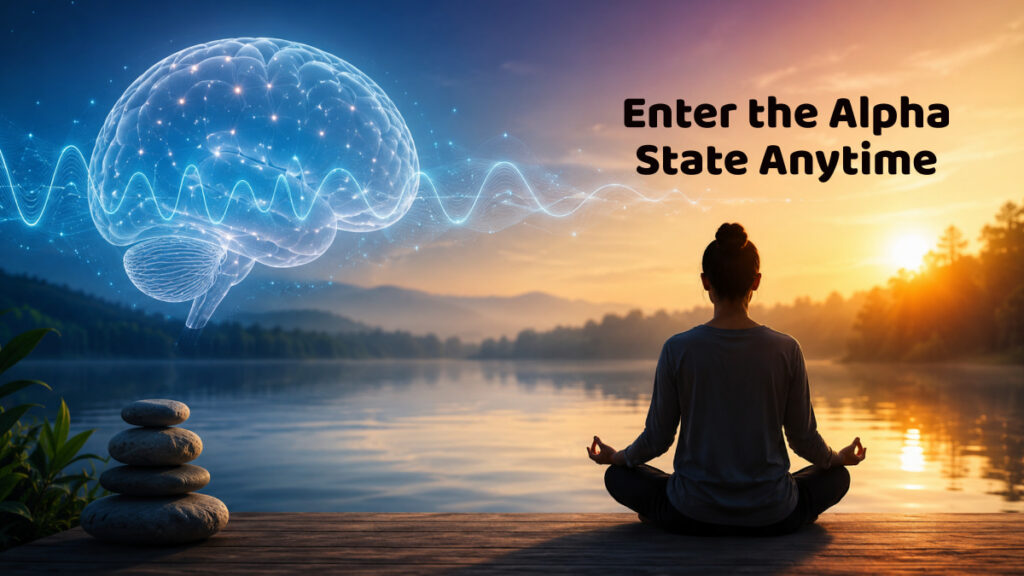
The alpha state is often described as your brain’s “secret mode” because it creates the perfect balance between relaxation and awareness. You are not asleep, yet you’re not overwhelmed by racing thoughts either. Instead, your mind becomes calm, creative, receptive, and focused. Research suggests that practices such as meditation, mindfulness, and relaxation exercises can increase alpha brainwave activity, helping improve attention, emotional regulation, and overall well-being.
The good news is that entering the alpha state doesn’t require expensive equipment, years of meditation, or extraordinary abilities. With a few simple daily habits, almost anyone can learn to access this powerful mental state.
“A calm mind isn’t an escape from reality—it is the place where your best ideas, strongest decisions, and greatest potential are born.”
Understanding the Alpha State
Imagine your brain as a car with different gears. When you’re rushing through your day, multitasking, or worrying about deadlines, your brain stays in high gear. This is useful when you need to stay alert, but remaining there all day can leave you mentally exhausted.
The alpha state is like shifting into a smoother gear. Your mind slows down just enough to reduce stress while staying fully awake and aware. This balance allows you to think more clearly, process information more efficiently, and become more open to new ideas.
Brainwaves are measured using electroencephalography (EEG), a technology that records electrical activity in the brain. Alpha brainwaves typically fall between 8 and 12 Hertz (Hz) and become more noticeable during relaxed wakefulness, meditation, quiet reflection, or when the eyes are gently closed. Scientists first identified alpha waves nearly a century ago, and numerous studies have since explored their role in attention, learning, and relaxation.
Researchers have found that experienced meditators often show increased alpha activity compared to beginners. Even people with no meditation experience can experience greater alpha activity after practicing slow breathing or mindfulness for just a few minutes. While alpha brainwaves themselves are not magical, they are a useful indicator that the brain has entered a healthier and more balanced state.
Why the Alpha State Matters
Modern life constantly demands our attention. Notifications, emails, social media, traffic, and endless to-do lists keep the brain in a state of continuous stimulation. According to the American Psychological Association, chronic stress has become a significant concern worldwide, affecting concentration, sleep, and emotional health. Living in this constant state of mental overload makes it difficult to think creatively or make wise decisions.
The alpha state provides a natural antidote to this mental noise. When your mind becomes calmer, your attention improves. You stop reacting impulsively and begin responding thoughtfully. Instead of worrying about dozens of things at once, you become fully present with the task in front of you.
Research also suggests that alpha activity plays an important role in creativity. Many artists, writers, scientists, and inventors have reported that breakthrough ideas often arrive during moments of relaxation rather than intense effort. This doesn’t mean alpha waves create genius, but they may help the brain connect ideas more freely by reducing unnecessary mental distractions.
Learning also benefits from a relaxed mind. Studies indicate that stress interferes with memory formation, while calm attention supports better learning and recall. This is one reason why students who take short relaxation breaks often perform better than those who study continuously without rest.
Emotionally, spending more time in a relaxed mental state can improve patience, reduce anxiety, and enhance relationships. When your nervous system is calmer, you’re less likely to react with anger or frustration. Instead, you become more thoughtful and emotionally balanced.
Practical Ways to Enter the Alpha State
One of the biggest misconceptions about the alpha state is that it can only be achieved by experienced meditators or people who spend hours in silence. In reality, your brain naturally slips into the alpha state several times a day. Think about those moments when you’re taking a warm shower, watching the sunset, listening to gentle rain, or simply staring out of a window without consciously thinking about anything. During these moments, your mind becomes quiet, yet you remain fully awake. The goal isn’t to create something unnatural—it’s to learn how to enter this state intentionally whenever you need it.
The simplest place to begin is with your breathing. Your breath is one of the few bodily functions that operates automatically but can also be controlled consciously. This makes it a direct bridge between your mind and your nervous system. When you’re anxious, your breathing becomes quick and shallow. Your brain interprets this as a sign of danger and keeps you in a heightened state of alertness. However, when you deliberately slow your breathing, especially by making your exhalation longer than your inhalation, you send a powerful message to your brain that you are safe. Try inhaling gently through your nose for four seconds, then exhale slowly for six seconds. Continue this rhythm for three to five minutes without forcing the breath. As your heart rate slows and your muscles begin to relax, your brain naturally starts moving toward a calmer, more relaxed pattern. Many people notice that their racing thoughts begin to slow within just a few minutes.
Another surprisingly effective technique is simply closing your eyes. We often underestimate how much information our brain processes every second through vision. Scientists estimate that the human brain receives the majority of its sensory information through the eyes. By gently closing them for even one minute, you reduce this constant stream of stimulation. EEG studies have consistently shown that alpha brainwave activity often increases when people close their eyes while remaining awake. You don’t have to stop thinking or force your mind to become blank. Instead, allow your thoughts to come and go naturally, almost like watching clouds drift across the sky. Even a sixty-second pause between meetings or work sessions can help your brain reset and prepare for the next task with greater clarity.
Mindfulness meditation is perhaps the most researched method for encouraging alpha brainwaves. Contrary to popular belief, meditation is not about eliminating every thought from your mind. That would be nearly impossible. Instead, meditation teaches you to become an observer of your thoughts rather than getting carried away by them. Find a comfortable place to sit with your back straight but relaxed. Close your eyes and focus gently on your natural breathing. Notice the cool air entering your nose and the warm air leaving it. Inevitably, your mind will wander to your work, family, or unfinished tasks. This is completely normal. The practice is simply to notice that your attention has drifted and gently guide it back to your breath without frustration or self-criticism. Over time, this simple exercise strengthens your ability to remain calm under pressure. Research from institutions such as Harvard Medical School has shown that regular mindfulness practice can reduce stress, improve emotional regulation, and increase brain activity associated with relaxed attention.
Nature offers another effortless pathway into the alpha state because our brains evolved in natural environments, not in front of computer screens. Modern cities constantly bombard us with noise, bright lights, advertisements, traffic, and digital notifications, all of which keep the brain alert. Spending time in nature has the opposite effect. A slow walk through a park, a forest, or along a beach allows your attention to soften. Instead of focusing intensely on one object, your mind begins to absorb the gentle movement of trees, the sound of birds, the rhythm of waves, or the feeling of a cool breeze. Researchers studying the Japanese practice of Shinrin-yoku, or “forest bathing,” have found that spending time among trees can lower stress hormones such as cortisol, improve mood, and restore mental energy. Even if you live in a busy city, sitting in a garden or walking through a nearby park for twenty minutes can make a noticeable difference.
Your body and mind are deeply connected, which is why physical relaxation often leads to mental relaxation. If your shoulders are tense, your jaw is clenched, and your muscles are tight, your brain assumes something is wrong. Gentle stretching, yoga, or progressive muscle relaxation helps reverse this process. As you slowly stretch your neck, shoulders, back, and legs while breathing deeply, your nervous system begins to shift from “fight or flight” into “rest and digest.” You don’t need to perform complex yoga poses. Even five to ten minutes of simple stretching after waking up or before going to bed can release accumulated tension and make it easier for your mind to settle into a peaceful rhythm.
Music can also serve as a powerful tool for entering the alpha state, provided you choose the right kind. Soft instrumental music, piano melodies, nature sounds, or gentle ambient music create an environment that encourages relaxation without demanding your attention. Unlike songs with lyrics, calming instrumental music doesn’t compete with your thoughts. It simply creates a peaceful background that helps quiet mental chatter. Many people find that listening to calming music while reading, journaling, or simply resting with their eyes closed helps them reach a deeply relaxed state more quickly.
Reading a physical book is another underrated technique. In today’s digital world, our attention constantly jumps from one notification to another. Every social media update, message, or email trains the brain to remain in a highly stimulated beta state. Reading a printed book is different. It encourages sustained attention and reduces the constant switching between tasks. After ten or fifteen minutes of uninterrupted reading, many people naturally notice that their breathing has slowed and their mind has become quieter.
One of the most overlooked habits for cultivating the alpha state is single-tasking. Modern society often celebrates multitasking as a sign of productivity, but neuroscience tells a different story. The brain doesn’t truly multitask; it rapidly switches attention between different activities. Each switch consumes mental energy and increases cognitive fatigue. Imagine trying to have a meaningful conversation while replying to emails and checking social media. Your attention becomes fragmented, and your stress level rises. Instead, choose one activity and give it your complete attention. Whether you’re writing, cooking, exercising, or simply talking with a loved one, immerse yourself fully in that moment. This focused presence naturally quiets mental noise and creates the conditions for alpha brainwaves to emerge.
Finally, don’t underestimate the power of visualization. Close your eyes and imagine yourself in a peaceful place—a quiet beach, a mountain lake, or a lush green forest. Try to involve all your senses. Hear the waves, feel the warm sunlight, smell the fresh air, and notice the colours around you. The brain responds to vivid imagination in ways that are surprisingly similar to real experiences. Athletes, musicians, and public speakers frequently use visualization to improve performance because it helps create a calm yet focused mental state. Spending just five minutes mentally visiting a peaceful place can leave you feeling refreshed and mentally recharged.
Bringing Alpha into Everyday Life
Many people believe they need to set aside an hour every day to meditate before they can experience the benefits of the alpha state. Fortunately, that isn’t true. The real secret lies in weaving small moments of relaxation throughout your day. Think of these moments as pressing a mental “reset button.” Individually they may seem small, but together they create lasting changes in how your brain responds to stress.
The first opportunity comes immediately after waking up. Most people reach for their phone within minutes of opening their eyes, instantly exposing their brain to emails, messages, social media, and news. This floods the mind with information before it has even fully awakened. Instead, give yourself the first ten minutes of the day. Sit quietly, stretch your body, take slow breaths, say a short prayer, write in a journal, or simply enjoy your morning tea in silence. This gentle start helps your brain transition naturally into the day rather than being thrown into a state of urgency.
Another excellent opportunity is before important events such as meetings, presentations, interviews, or exams. Instead of reviewing your worries repeatedly, close your eyes for two minutes and focus on slow breathing. Relax your shoulders and consciously release any tension in your face. This brief pause calms your nervous system, helping you think more clearly and speak with greater confidence. Many high-performing athletes and executives use similar breathing techniques before high-pressure situations because a calm brain consistently performs better than an anxious one.
If your work requires long periods of concentration, don’t wait until you feel mentally exhausted before taking a break. Our brains naturally function in cycles of focused attention followed by periods of recovery. Every sixty to ninety minutes, stand up, stretch your body, walk slowly for a few minutes, or simply sit quietly with your eyes closed while taking several deep breaths. These short recovery periods restore mental energy and often improve productivity far more than pushing through fatigue.
Your commute can also become an opportunity to enter the alpha state. If you’re walking, notice your footsteps, your breathing, and the environment around you instead of constantly checking your phone. If you’re traveling by train or bus, spend a few minutes looking out of the window, observing the scenery without analysing or judging it. These moments of effortless awareness help quiet the busy mind.
Even household activities can become gateways into alpha when performed mindfully. Washing dishes, watering plants, cooking dinner, or folding clothes need not be rushed. Instead of treating them as chores to finish as quickly as possible, focus completely on the movements, sounds, and sensations involved. This transforms ordinary activities into moments of active meditation.
The final opportunity comes before bedtime. Unfortunately, many people end their day the same way they began it—scrolling endlessly through social media or watching stimulating content. This keeps the brain active long after the lights are turned off. Instead, create a simple evening ritual. Turn off digital devices at least thirty minutes before sleep. Read a few pages of an inspiring book, write down three things you’re grateful for, or spend five minutes practicing slow breathing. These habits help your brain gradually transition into a relaxed state, making it easier to fall asleep and improving the quality of your rest.
Perhaps the most important lesson is that consistency matters far more than intensity. You don’t need perfect meditation sessions or hours of practice. Five or ten minutes of daily relaxation, repeated week after week, trains your brain to access the alpha state more easily. Just as physical exercise strengthens your muscles over time, regular moments of calm strengthen your brain’s ability to remain peaceful, focused, and resilient—even during life’s most challenging situations.